

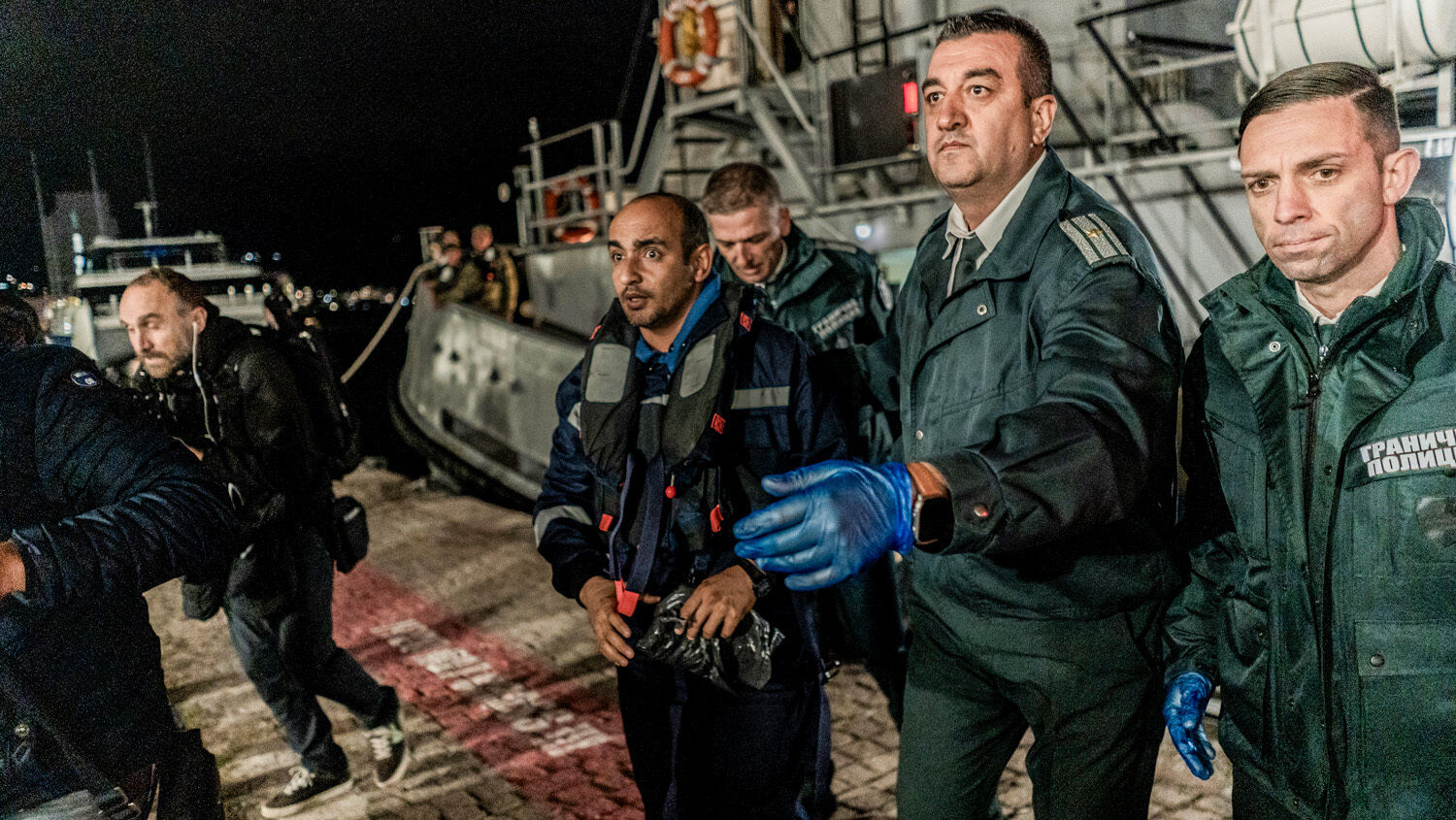
Russian Strikes Turning Black Sea Into ‘Dead Zone’
A surge of deadly drone strikes on merchant ships has turned the western Black Sea into a “dead zone,” shipping agent Todor Georgiev told Bulgarian state media this month.
The strikes have brought a new level of violence and danger to a region already destabilized by Russia’s war against Ukraine and appear to be part of Russia’s widening campaign of aggression that is increasingly spilling beyond the battlefield and across nato borders.
A Sea Under Fire
The surge began on October 5 when Royad Mammadov, a Turkish-owned cargo ship sailing under the flag of St. Kitts and Nevis, was struck by an attack drone off the coast of Romania. The vessel caught fire and sank, killing two of its 13 crewmembers.
The next day, the Togo-flagged Alfa Watan merchant vessel was hit by a drone about 70 nautical miles off Bulgaria’s coast, which caused a powerful explosion and quickly sank the ship. All 10 crewmembers remain missing and are believed to have been killed.
Minutes later, the Palau-flagged general cargo ship Able was struck in the same area off the Bulgarian coast. The vessel sustained major damage, forcing its 18 crewmembers to abandon ship; all were rescued, with several reportedly injured.
On October 12, three drones hit Chelsea-3, a Ukrainian-operated merchant vessel sailing under the Maltese flag, roughly 20 miles off Bulgaria’s coast. All 15 crewmembers—seven Ukrainians and eight Azerbaijanis—were evacuated, with five treated for minor injuries.
Five minutes later, a drone struck the Guinea-Bissau-flagged HS Dignity cargo vessel about 17 nautical miles off Bulgaria’s coast. The ship sank, and five crewmembers were rescued while 11 remain missing.
On October 14, the Comoros-flagged Yara J chemical and oil-products tanker caught fire after a drone strike near the mouth of the Sulina Canal, inside Romanian territorial waters. The crew was evacuated safely.
A day later, a San Marino-flagged chemical tanker called Wine Trader was hit in a drone strike just outside Romanian territorial waters. Five of its crewmembers were rescued; seven remain missing.
On October 23, the Comoros-flagged Khoryv dry cargo vessel was struck by a drone about 13 nautical miles off Constanța, Romania. Nine of its crew were rescued, one body was recovered, and three crewmembers remain missing.
‘Worse Than the Strait of Hormuz’
The eight attacks have left more than 30 crewmembers dead or missing and presumed dead, sent insurance costs soaring, and made seafarers and shipping operators increasingly wary of the area. The resulting decline in port calls has been precipitous.
Trade in the Black Sea has practically stopped and it is becoming a “dead zone.” Right now we are even worse than the Strait of Hormuz.
—Todor Georgiev
Though responsibility for the attacks has not been formally established, they occurred in areas where Russian forces operate and fit a broader pattern of Russian efforts to disrupt Ukrainian exports, prompting widespread suspicion of Russian involvement.
Tomas Alexa, a senior analyst at Ambrey intelligence company, told the Guardian: “The Russian intent is clear, which is to degrade the export of Ukrainian grain and agricultural products.”
On October 20, a nato military source likewise attributed the two October 15 strikes on the Yara J and Wine Trader to Russia.
Romania blamed Moscow for the October 23 drone strike that sank the Khoryv: “This attack is a new example of the tragic consequences of Russia’s aggression against Ukraine,” Romanian President Nicușor Dan said. “It is time for Russia to take peace initiatives of the United States and Europe seriously, accept the ceasefire proposals, and end the war.”
The strikes—on the doorsteps of nato members Romania and Bulgaria—also fit a wider Russian strategy of sabotage and intimidation aimed at the nato alliance.
Testing and Dividing NATO
In recent months, Russia has been linked to numerous covert attacks across Europe, including infrastructure sabotage, cyberoperations, disinformation campaigns and other acts designed to sow fear and disrupt daily life.
These operations are kept below the threshold of open warfare, and Russia often carries them out through proxies and takes other measures to preserve a degree of plausible deniability. This allows Russia to pressure its European adversaries and exploit divisions among them while limiting the risk of a direct military response.
The divisions among Europeans reflect not only differing perceptions of the Russian threat but also differing judgments about whether a forceful response would deter further aggression or provoke escalation.
Nations geographically closest to Russia tend to treat suspected acts of hybrid warfare with greater urgency and favor a more forceful response to them. Officials in Estonia, Latvia, Lithuania and Romania have repeatedly warned of Russian sabotage and interference and have emphasized that failure to confront Russia invites further aggression. By contrast, France, Germany and Italy have at times shown greater faith in restraint as a means of avoiding escalation and have been more cautious about publicly assigning blame for suspicious incidents
The Russians are well aware of these differing perceptions and seek to exploit them to weaken nato’s unity, undermining its ability to mount a unified response.
This is the essence of Russia’s so-called hybrid warfare. With cyberattacks, assassination plots, disinformation campaigns, sabotage of weapons producers and attacks on Black Sea shipping, Russia is antagonizing and putting pressure on its enemies while making it difficult for them to agree on whether—and how—to retaliate
But there is also another side to this story.
‘Reshaping Europe’
Trumpet editor in chief Gerald Flurry has warned for years that Russian aggression and dictatorialism would frighten the peoples of Europe and accelerate their militarization and unification.
For more than two decades, he has issued this Bible-based forecast. And since Russia launched its full-scale invasion of Ukraine, Germany has sharply increased military spending, Poland has built one of Europe’s largest armies, and Finland and Sweden have abandoned decades of military nonalignment to join nato. European countries are also working tightly together to integrate their defense industries and coordinate their armed forces.
And with its strikes on Black Sea shipping, Russia is giving the Europeans yet another reason to conclude that they need to be better able to defend themselves.
As the war continues to spill across their borders, we should expect Europe to invest even more heavily in firepower and military preparedness. The Scriptures reveal that the military power now being assembled will one day be unleashed on the world with devastating force.
To understand, read Mr. Flurry’s article “Russia’s War on Ukraine Is Reshaping Europe.”


