

Softening the Past—Japan Keeps Rewriting the Nanjing Massacre
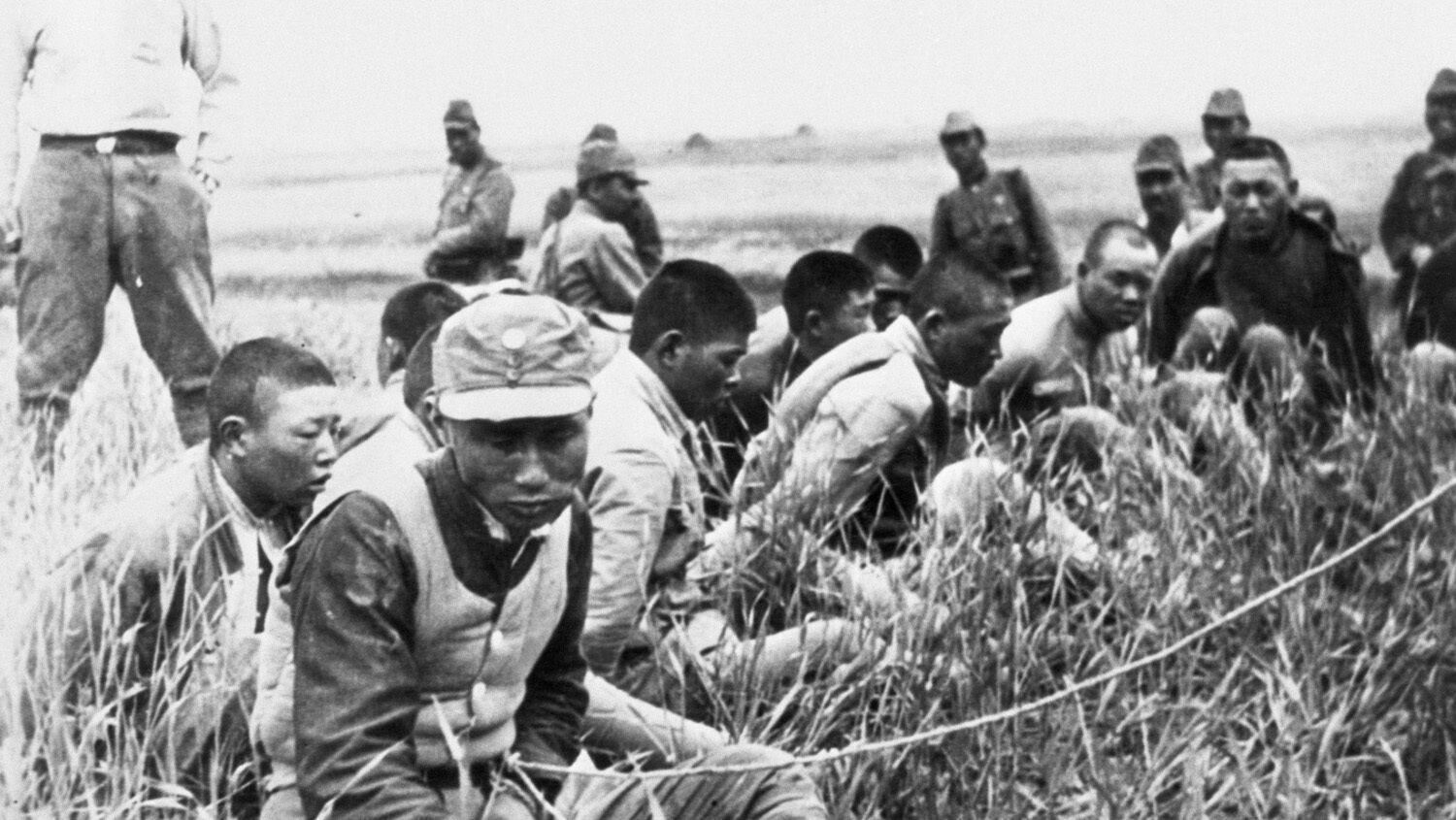
Japanese officials unveiled a plan on June 4 to rebrand the “Nanjing Massacre” in one of the nation’s most important museums as the “Nanjing Incident,” in the latest sign of modern Japan whitewashing its World War ii-era atrocities.
The proposal by Nagasaki city government officials to administrators of the Nagasaki Atomic Bomb Museum comes in advance of a major renovation project that will begin in September.
The plan is highly controversial in and outside Japan because the Nanjing Massacre left a scar on the world that has never fully healed. The Chinese government claims that during the six-week massacre, Imperial Japan’s troops killed 300,000 unarmed soldiers and Chinese civilians, including children, pregnant women and the elderly. Other estimates place the number of slain closer to 200,000, while some Japanese analysts argue that it was as low as 30,000.
Whatever the actual figure, testimony from eyewitnesses such as John Rabe, John G. Magee and Minnie Vautrin, corroborated by extensive photographic and documentary evidence, leaves no doubt that Japanese troops committed widespread and unspeakable atrocities. Even the Japanese Foreign Ministry says that “it cannot be denied that following the entrance of the Japanese Army into Nanjing in 1937, the killing of noncombatants, looting and other acts occurred.”
The evidence shows that the carnage wrought by Imperial Japan’s soldiers included torture, bayoneting, beheadings, burning and burying victims alive. Many women and girls were gang-raped, mutilated and killed. Unborn babies were routinely torn from their mothers’ wombs.
These facts make the Nanjing Massacre not merely one of the greatest horrors of World War ii but one of the darkest stains on the record of human civilization.
Yet Masamitsu Watanabe—the official leading the campaign to change the Nagasaki Atomic Bomb Museum’s wording—said during a meeting with museum authorities last year: “There is no evidence. It is a fabrication.”
So the plan is to euphemize the massacre into something quieter and more easily overlooked, turning atrocity into abstraction. The crimson horror will be recast in sterile bureaucratic language.
“When they say the Nanjing ‘incident,’ it’s a euphemistic way of referring to the tens of thousands of Chinese civilians who were rounded up by the Japanese military and simply slaughtered,” Jeff Kingston, director of Asian Studies at Temple University’s Tokyo branch, told the South China Morning Post. “The revisionists want to sanitize that.”
Since Watanabe and his team think the event never happened, downgrading it from a “massacre” to an “incident” may be only the first step toward expunging it from the museum’s historical record entirely.
However the Nagasaki Atomic Bomb Museum’s renovation ultimately turns out, this is only the latest effort by Japanese nationalists to sanitize and whitewash the nation’s gut-wrenching wartime savagery. Other notable accomplishments include:
- 1997: The nationalist organization Tsukurukai (Japanese Society for History Textbook Reform) was founded to counter what it viewed as a “masochistic view” of Japan’s history.
- 2014–2015: The Osaka International Peace Center underwent renovations that removed references to Japanese acts of aggression.
- 2015: Japan’s Education Ministry approved new middle school social studies textbooks that labeled the Nanjing Massacre as an “incident.”
- 2021: Textbook terminology regarding comfort women is softened.
- 2023: Three of Japan’s main history textbook publishers chopped out sections on Imperial Japan’s military forcing tens of thousands of civilians to commit suicide during the Battle of Okinawa.
- 2024: Gunma Prefecture, a memorial in a public park dedicated to Korean laborers who died during the war, was dismantled.
The authorities behind these changes seem to understand that those who control the telling of history possess a powerful tool. They know that by deciding which events are remembered, emphasized, softened, relabeled or forgotten, they can shape how the people of Japan understand their identity and their nation’s role in the world. In doing so, they may influence not only public opinion but the future direction of society itself. As George Orwell famously wrote: “He who controls the past controls the future, and he who controls the present controls the past.”
Following the 2015 textbook changes, South Korea’s Foreign Ministry said it feared Japanese authorities were deliberately rewriting the past to shape the thinking of the nation’s populace. It wrote:
This clearly shows that the Japanese government seeks to inculcate the distorted views on history and territory into the minds of the young generation and tries to repeat the wrongs it committed in the past.
It seems that many Japanese authorities feel the nation has been fed a diet of guilt for too long. In their view, it is long past time for Japan to move on from the “masochistic view.” Such a transition will help to replace guilt with pride and perhaps nationalism in the minds of young generations. When pride and nationalism are established, authorities can prepare young Japanese to rise up against other countries again.
As the people of Japan and other nations are educated in ways that make them less mindful of their nations’ grave sins and more prideful and nationalistic, it will help bring about a time of conflict worse than any the world has ever suffered. Biblical prophecy shows that this future war will be more violent and widespread than the Nanjing Massacre or any other chapter in mankind’s blood-stained history. But the Bible also shows that the story does not end in violence. The page will quickly turn and bring humanity into its most beautiful and peaceful chapter.
To understand more about the past and future of Japan, and about the peace in store for all mankind, read our Trends article “Why the Trumpet Watches Japan’s March Toward Militarism.”


