

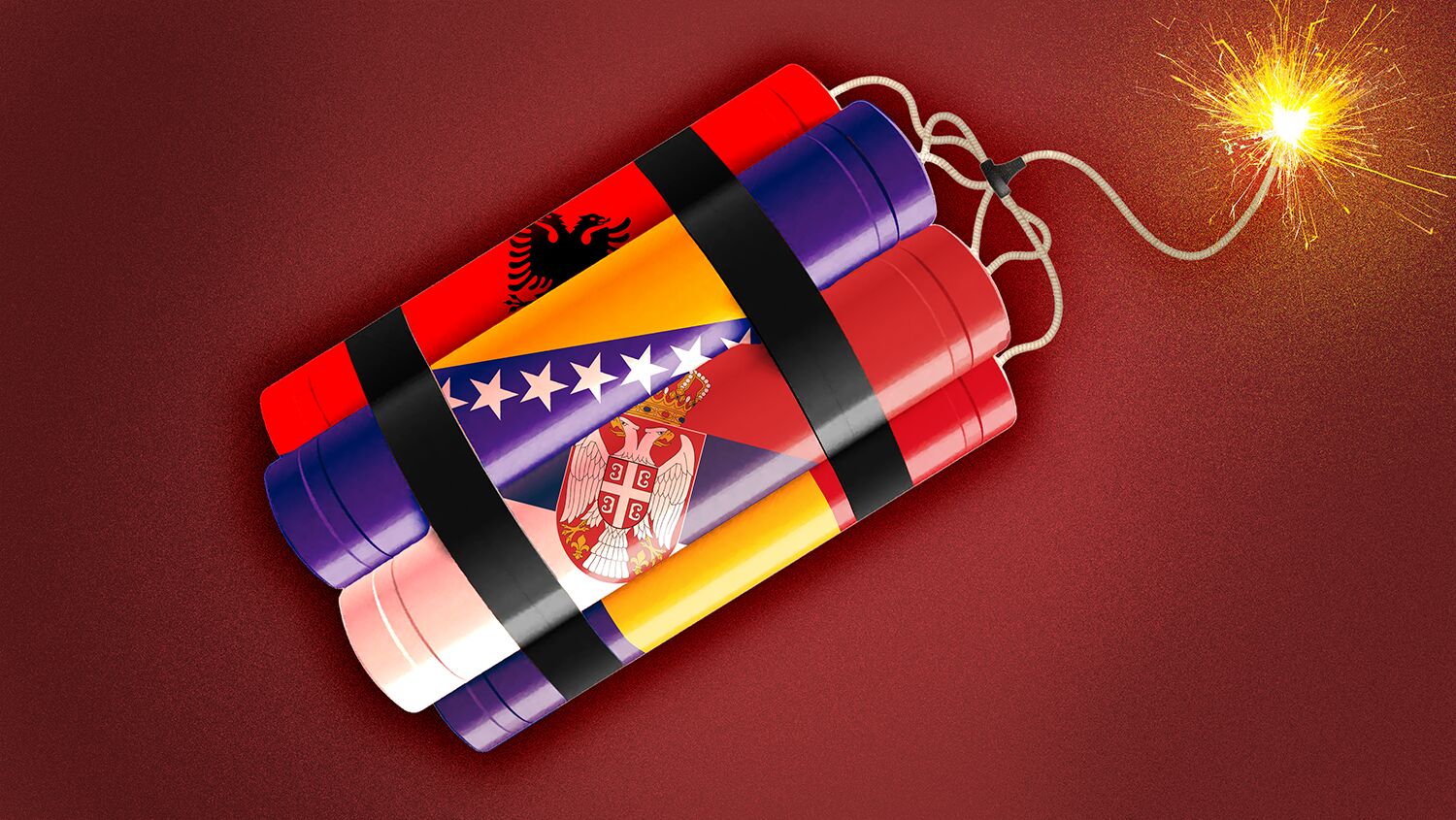
Serbia Braces for an Attack
Serbia has purchased Chinese supersonic CM-400 air-to-ground missiles and is preparing for war, President Aleksander Vučić said last week. The missiles were reportedly first used in combat by Pakistan last year, and Serbia is the first foreign country after Pakistan to buy them. Vučić said that Serbia plans to buy more Chinese missiles and that Serbia’s arsenal includes weapons that they “do not show.”
The purchase comes in response to a military cooperation agreement Croatia, Albania and Kosovo signed almost a year ago. “They are waiting for a favorable moment. We are preparing for their attack,” Vučić told state media last week.
- Serbia has been the largest arms importer in the western Balkans for years, spending roughly six times more than Albania (the runner-up) on imports between 2020 and 2024, according to recently released data from the Stockholm International Peace Research Institute.
- In January, Vucic announced plans to double Serbia’s military capacity within the next 18 months.
- Serbia also reintroduced conscription this year, after having suspended it for more than a decade.
Croatia, which has also reintroduced conscription, responded to Serbia’s missile purchase by calling it a threat to regional stability and a signal of an arms race. Croatian Prime Minister Andrej Plenkovic said Friday that he briefed nato about the purchase.
Growing tension between Croatia and Serbia plus increased military cooperation among Croatia, Albania and Kosovo are causes for concern.
However, as the Balkans again becomes volatile, the most important nation to watch is Germany.
Trumpet editor in chief Gerald Flurry writes in Germany’s Conquest of the Balkans, “First of all, the Germans want to control Europe. To do so, they must gain control of the Balkans, where their fiercest enemy is the Serbs. For the most part, the Serbs have been silenced.”
Watch for Germany to intervene to ensure that Serbia does not affect its imperialistic ambitions for the Balkans.


