

Why American Tech Can’t Win Wars
Iran’s supreme leader is dead. Thanks to a combination of American technology, Israeli pluck and brilliant intelligence gathering, one of the world’s most evil leaders is gone.
But is it enough to end the evil regime in Iran? Many hope so. But America’s previous track record gives us pause for thought.
Since World War ii, the United States has repeatedly tried to use its technological edge to win wars without substantial loss of life. Again and again it has failed.
During the Korean War, America dominated the skies. That dominance played a massive role in the war—but it wasn’t enough to win it. Over 36,000 Americans and 137,000 South Koreans died to achieve the stalemate that ended the war. A decade later, America sent 1,500 men to the Bay of Pigs in Cuba to overthrow a country that had 300,000 troops, hoping the populace would rise and help. It didn’t.
America committed many more troops to Vietnam and suffered many more casualties. Even then it failed to win. In Afghanistan, America defeated the Taliban on the battlefield, only to withdraw as holding the country became more trouble and expense than President Joe Biden thought it was worth.
President Donald Trump has launched a series of short, bold, dramatic military interventions of a kind that only the U.S. could pull off—bombing Iranian nuclear sites last summer, capturing Venezuelan dictator Nicolás Maduro, and now helping Israel decapitate Iran.
These have been much more successful than debacles like the Bay of Pigs disaster. But there is nothing yet to show that they will produce lasting change. Why?
Science is the promised solution for so many of our problems: poverty, disease, peace—even war. Herbert W. Armstrong said science was a “false messiah.” We once trusted in God for victories; now we trust in technology.
America suffered close to half a million deaths in World War ii. That huge number was minor compared to other combatants. Naturally, the nation did not want to go through anything like it again.
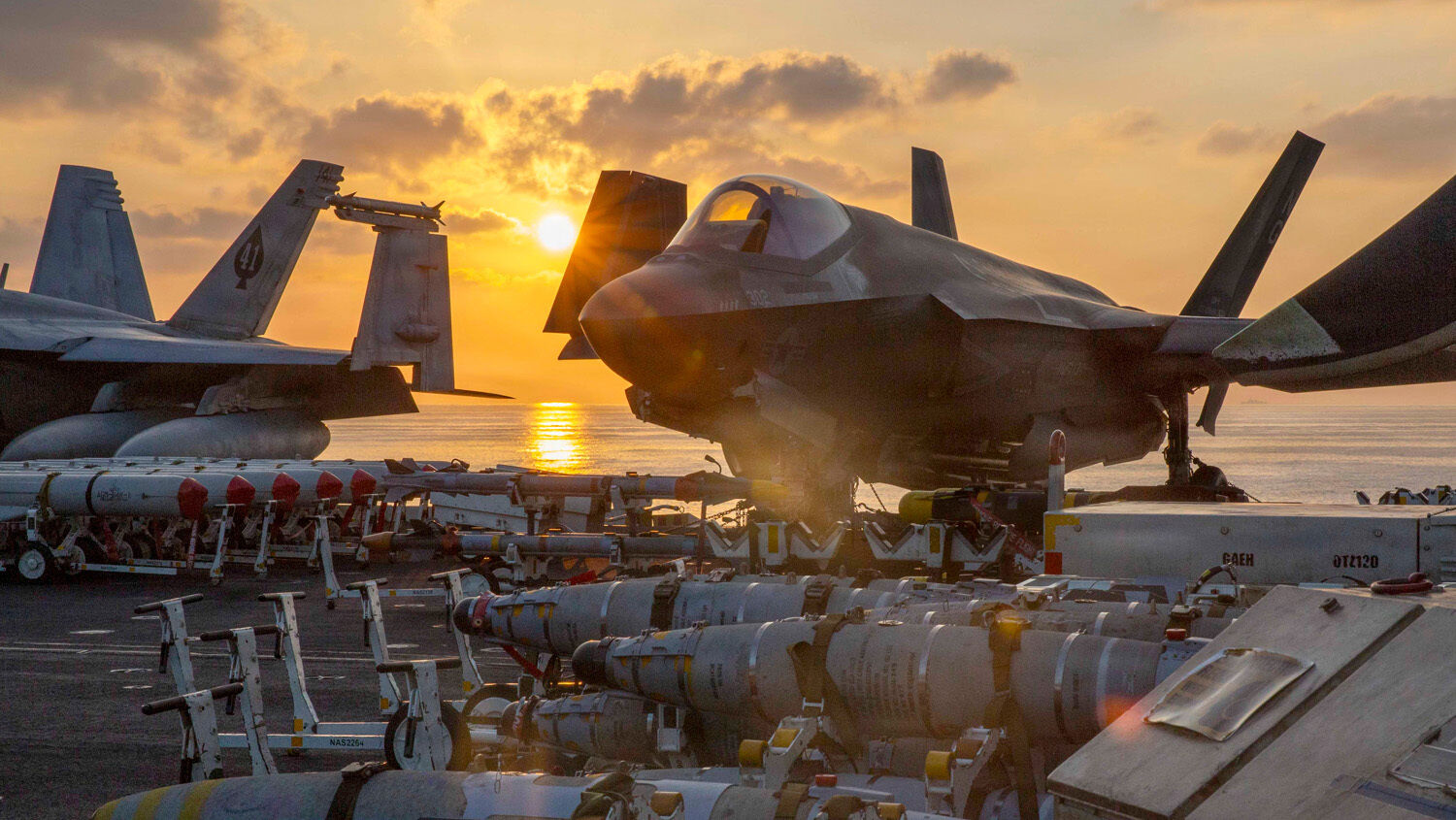
Science in the form of America’s aerospace technologies, intelligence gathering, precision-guided missiles, satellite imagery, signal jamming, drones and now artificial intelligence held out the promise that America could win without a massive commitment of manpower or hefty death toll.
Science did, in fact, give America a tool it could use to guarantee victory in most wars, with little cost to its own men: the nuclear bomb. Given its terrifying, destructive power, leaders have recoiled from using it.
Ironically, the presence of this option worsened the problem of America’s flagging will. During the Korean War, many U.S. generals believed they could have won a total victory—taking all of the north—but it would have required greater manpower and a death toll closer to that of World War ii. Could a U.S. president ask that of the nation when he had a bomb that could end the war without major American loss of life? Yet President Harry Truman naturally feared using a nuclear bomb, with all the resulting death and unknown global implications.
What the Soviet Union might do in Europe was another important concern. The result was that America neither used the bomb nor rushed in more conventional forces. It was the first limited war in American history, and the first time the U.S. finished without a victory.
But if science could provide one war-ending weapon, could it provide another? One with a less terrifying death toll?
That question has spurred mini nuclear bombs, bunker-busting bombs, stealth bombers, precision-guided missiles, intelligence services and special forces. Some of these have been used impressively at times but have failed to consistently produce low-cost victories.
That’s not to say that investing in these armaments is a bad idea. There are times when a small group of men has made the world turn around them, particularly if they have a technological edge. Yet America has too often been disappointed. Why?
America lacks the will, the determination, to win a major engagement. Science and technology try to deal with the effects.
The goal is to enable a divided and unconvinced nation to win a partial victory at low cost. But to truly make America great again, the nation must deal with the cause.
America’s lack of will is a disease of the spirit. It’s about the human psyche and not addressable by scientific experimentation.
The Bible clearly explains.
God says, “I will break the pride of your power …” (Leviticus 26:19). God and His blessings were the true source of America’s strength, prosperity and even its technological edge. But the nation has not obeyed Him, so its unity and fighting spirit have been broken. That technological edge has enabled a weak-willed America to remain a major power for decades. But it has not brought significant victories.
After the Bay of Pigs invasion, Herbert W. Armstrong boldly declared:
The real blame for the Cuban debacle is on you—all of you!
You have departed from your living God! You are worshiping at the shrine of pleasure, luxurious living, material interests! You are in a moral toboggan-slide, and although your lands are full of churches, wherein you conduct pagan worship, your lands are also full of fornication and adultery, full of crime, of vanity, greed and selfishness—full of lying, dishonesty and graft, full of cheating, stealing and murder—full even of injustice in your courts! …
You profess to be God’s people—you mention Him in your prayers but not in sincerity or in truth! You have a form of godliness in your churches and synagogues—but you deny the power of God and fail utterly to rely on it! Your preachers preach lies, and you love to have it so!
How much truer is this today?
God is removing America’s false messiahs. The tech. The allies.
The Bible warns that these allies, or “lovers,” will turn against it. It warns that its high-tech systems will fail. “They have blown the trumpet, even to make all ready; but none goeth to the battle …” (Ezekiel 7:14).
Deuteronomy 28, a parallel to Leviticus 26, warns that “thy high and fenced walls … wherein thou trustedst” shall be destroyed (verse 52).
America is looking to the wrong messiahs.
To fight and win, obey God, keep His Sabbaths, look to Him and Him alone for protection. God says that if the U.S. and the other modern nations of Israel (which means “overcomer with God”) will do that, “five of you shall chase an hundred, and an hundred of you shall put ten thousand to flight …” (Leviticus 26:8).
In an evil world, a nation will have deadly enemies. Turning to God in repentance is the only sure way to guarantee victory and national survival. This Iran bombardment is no exception—without repentance, this will be, at best, a temporary victory.


