

North Korea Is Infiltrating U.S. Tech Companies
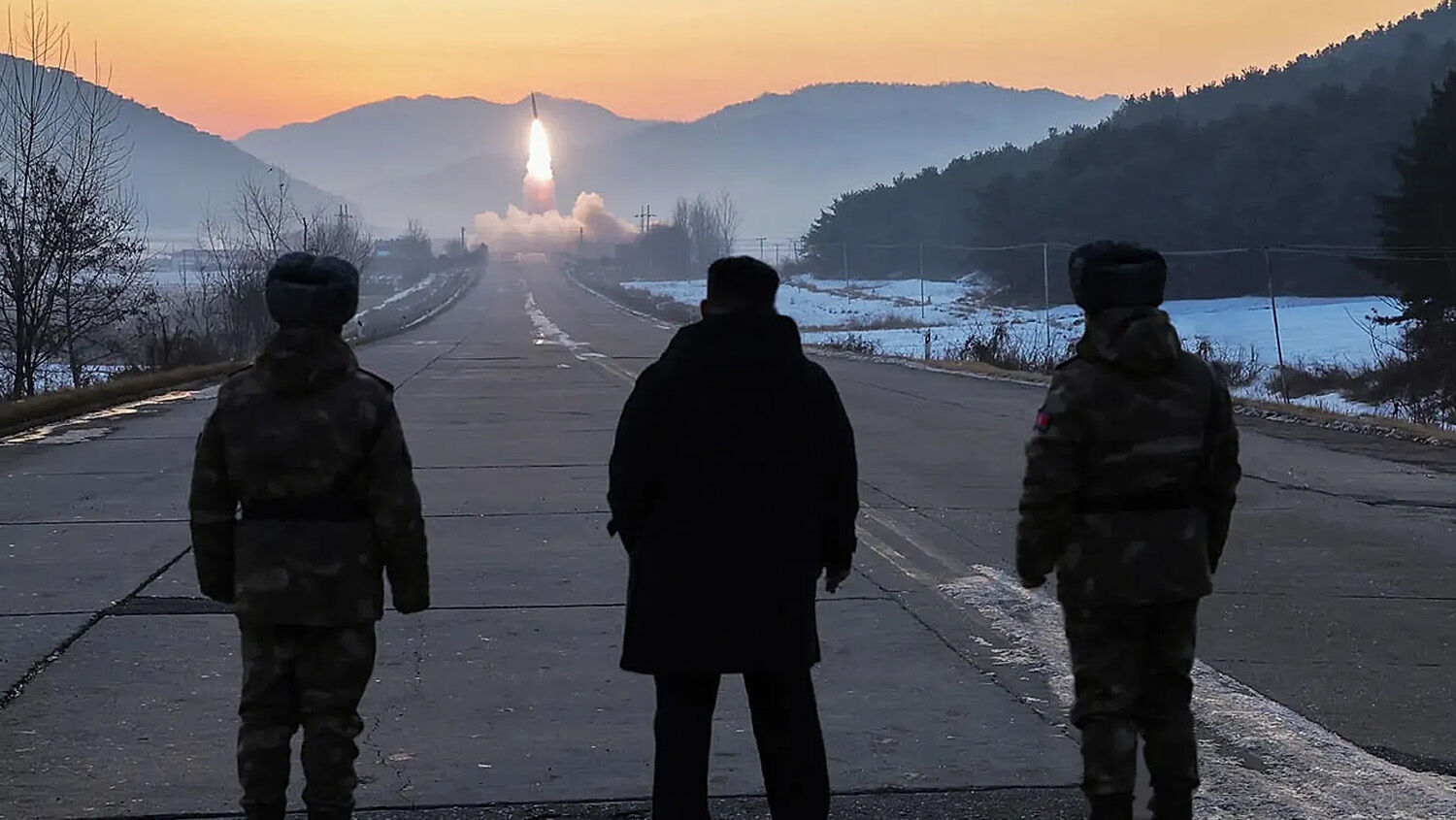
North Korea conducted its latest hypersonic missile test on January 4. Less than two weeks prior, the nation showed images of its first nuclear-powered submarine. Neither weapon is cheap. Where did a hermit state with a gross domestic product smaller than that of Madagascar get the money to build them? Partly by scamming American companies.
Thousands of North Korean agents are fraudulently filling IT spots at United States companies.
How it works:
- North Korean agents create a fake profile and résumé on job sites, often with the help of AI.
- If the fake profile is given an online job interview, the agent uses AI to alter his appearance and respond to questions in English.
- Once hired, the agent uses a stolen ID and an American accomplice for the employer to send a work computer and paychecks to.
- The American accomplice installs remote access software so the agent can control the work computer from abroad.
- The “IT worker” stays at the company for as long as possible, in many cases using AI to do the work so he remains employed. Sometimes, these operatives install malware in the company’s systems to extort money.
- The American accomplice transfers the money, often through cryptocurrency, to North Korea.
Last summer, Microsoft posted a security blog that stated:
Between 2020 and 2022, the U.S. government found that over 300 U.S. companies in multiple industries, including several Fortune 500 companies, had unknowingly employed these workers, indicating the magnitude of this threat …. Since then, the cybersecurity community has continued to detect thousands of North Korean workers.
In total, thousands of companies have been affected: “I’ve talked to a lot of [chief information security officers] at Fortune 500 companies, and nearly every one that I’ve spoken to about the North Korean IT worker problem has admitted they’ve hired at least one North Korean IT worker, if not a dozen or a few dozen,” said a Google executive. It’s a growing trend: “We’ve detected 27 percent more NK-affiliated applications quarter over quarter this year,” stated an Amazon executive.
- Amazon has rejected 1,800 North Korean job applications since April 2024.
- CrowdStrike investigated 320 possible North Korean workers and noted a 220 percent rise in activity from summer 2024 to summer 2025.
- Cloud security firm Okta’s threat intelligence detected 130 North Korean agents, a number it believes is just the tip of the iceberg.
- In 2024, cybersecurity company KnowBe4 announced it had unknowingly hired one.
- SentinelOne, another cybersecurity company, received 1,000 job applications from suspected North Korean agents.
- Nike paid over $75,000 to a North Korean worker before realizing the individual’s status.
Christina Chapman, an American, was sentenced to over eight years in prison this summer for helping North Korean infiltrators steal $17 million by defrauding 309 U.S. companies and stealing 60 identities. She collected and stored work computers for the impersonators, so they appeared to work from the U.S. This was not an isolated case: In November, four Americans pled guilty to helping North Korea steal $2 million. The fbi is investigating others and believes they operate all over the U.S.
The North Korean government collects between $250 and $600 million per year through this scheme, according to the United Nations. That sum comprises some 3 percent of North Korea’s entire economy. According to the Canadian Global Affairs Institute, Pyongyang’s nuclear program is largely funded by that money.
These agents are permitted to keep up to 10 percent of the money, incentivizing them to infiltrate as much as possible. In a country where the average income is $1,000, this goes a long way.
The danger in this lies far beyond North Korea getting money to build a modern navy or nuclear weapons.
“Your tech sectors are being infiltrated by North Korea. And when big companies are lax and they’re not doing their due diligence, they are putting America’s security at risk,” warned D.C. District Attorney Jeanine Pirro.
The real threat is what they are gaining access to and who they share that sensitive information with. What if Kim Jong-un decided to turn those remote workers into saboteurs? Or worse, to hand access over to Russia or China?
Ezekiel 7:14 prophesies: “They have blown the trumpet, even to make all ready; but none goeth to the battle ….” Based on that passage, Trumpet editor in chief Gerald Flurry has pointed to technology reliance as America’s Achilles’ heel. In 1995, he wrote: “The trumpet of war was blown in Israel—mainly America and Britain. It seems everybody was expecting our people to go into battle. But the greatest tragedy imaginable occurred! Nobody went to battle—even though the trumpet was blown! Will it be because of a computer terrorist?”
Some of the compromised companies work with the U.S. government and may have access to national defense information. It’s easy to see the danger this poses.
North Korea won’t destroy America, but it could weaken it. To dig deeper, read “China Hacks America—and ‘None Goes to Battle.’”


