

The Teutonic Cross Returns to the Baltics
For more than two centuries, knights wearing white surcoats embroidered with a black cross waged bloody crusades against the Estonians, Latvians and Lithuanians on behalf of the Holy Roman Empire. Historians estimate that 50,000 to 150,000 people were slaughtered in the Northern Crusades (a.d. 1193–1435), while untold numbers were forcibly baptized into Roman Catholicism.
The Teutonic Knights transformed the land they conquered in Estonia, Latvia, Poland and Prussia into a dictatorship called the Teutonic Ordenstaat, but King Mindaugas was able to secure Lithuania’s independence by converting to Catholicism and forging his own alliance with Pope Innocent iv.
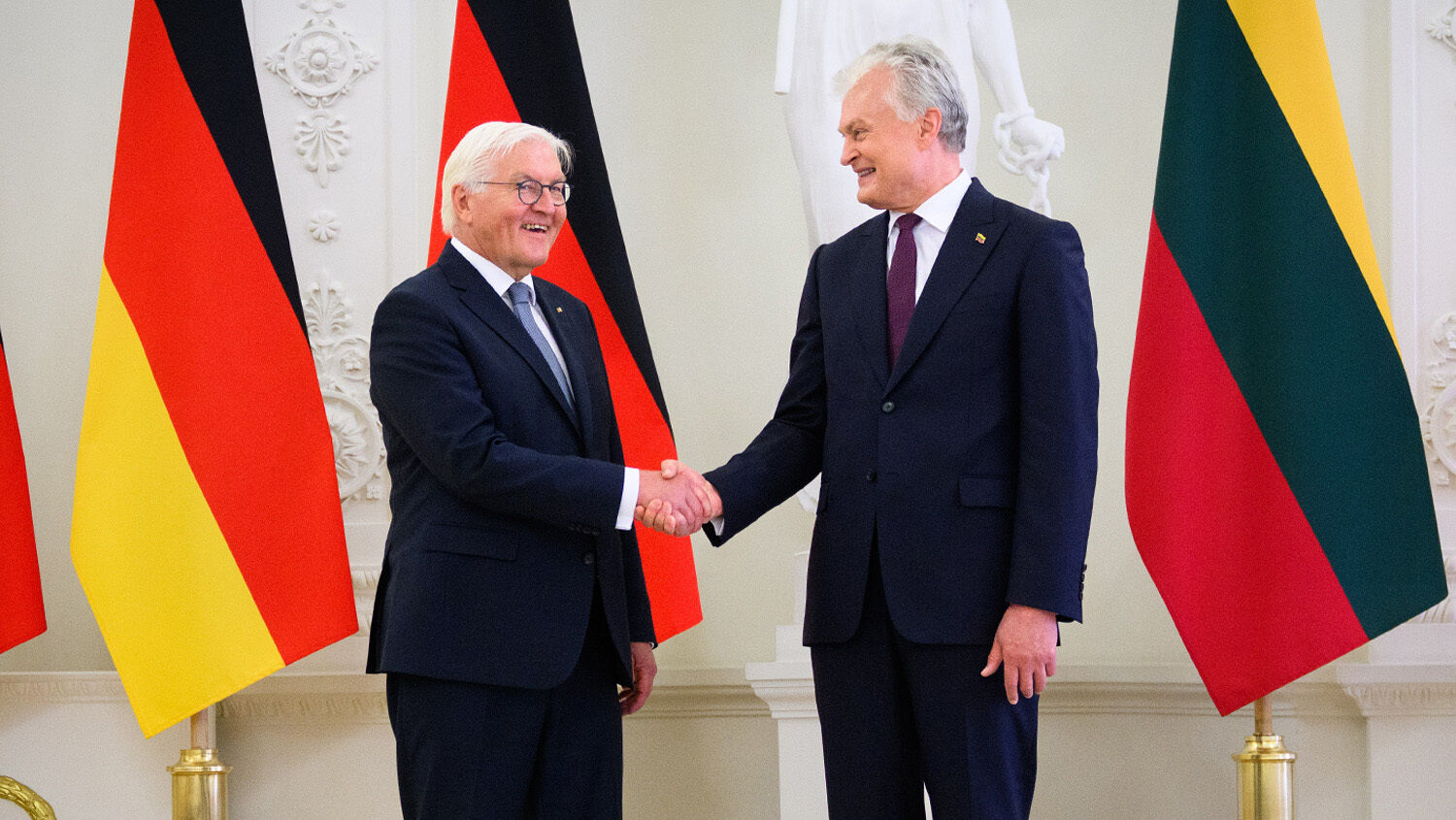
This history makes German President Frank Walter Steinmeier’s visit to the Baltics interesting.
In Lithuania, Steinmeier attended the celebrations for Statehood Day on July 6 as a guest of honor. Statehood Day marks the coronation of King Mindaugas in a.d. 1253. King Mindaugas fought to keep Lithuania independent of the Teutonic Ordenstaat, yet Lithuania’s current president has invited Germany’s Bundeswehr to set up its first foreign military base in his country. The symbol of the Bundeswehr is the same black cross embroidered on the surcoats of the Teutonic Knights. It could be said the descendants of King Mindaugas are finally submitting to the Teutonic Ordenstaat.
After Lithuania, Steinmeier went to Latvia, where the government is in talks with German weapons manufacturer Rheinmetall on producing armaments. Latvia was part of the Teutonic Ordenstaat for centuries until it was freed by the Polish-Lithuanian Commonwealth. But the Latvian president is not worried about Germany. During Steinmeier’s visit, he said, “Germany is a European great power and an economic center, therefore it is logical that Germany assumes a greater role in European security and defence policy. This is to be welcomed. … Germany has convincingly proven over decades that it is a democratic, constitutional state based on Western values. Therefore, I have no concern.”
Germany’s foreign intelligence chief is warning that Russia wants to test nato and extend its confrontation with the West beyond Ukraine. So the governments of Latvia and Lithuania want German protection from Russia. In Lithuania, this outreach involves a permanent German military base in its country; in Latvia, the outreach involves Rheinmetall setting up a German weapons manufacturing center. In both cases, the Teutonic Cross has returned to the Baltics. How long will it be before Germany reestablishes its Ordenstaat?
Holy Roman Emperor Frederick ii gave the Teutonic Knights permission to conquer lands in the Baltic because it was the last pagan region in Europe. No doubt taking inspiration from Charlemagne’s 18 campaigns against the pagan Saxons 400 years earlier, Frederick turned to conversion by the sword.
Yet religious concerns were far from the only factor influencing the Teutonic conquest of the Baltics. German merchant guilds traded in Baltic amber, furs, rye, timber and wax. The Holy Roman Empire had economic interests in the region that it needed the Teutonic Knights to protect.
The same is true today.
The Baltic Sea is Germany’s most efficient supply route to Russia; therefore, Germany wants to control as much of the Baltic coast as possible. During the Middle Ages, the Teutonic Ordenstaat controlled the entire southern coast of the Baltic Sea. Yet despite the fact that the German Bundeswehr still uses the Teutonic Cross as its symbol, it has lost control of most of the lands the Teutonic Knights conquered. So Germany’s recent efforts to deploy troops and build armaments factories in the Baltic region are an attempt to reorganize the Baltics into a de facto Teutonic Ordenstaat.
In his article “Lithuania in Prophecy,” which focuses heavily on Nazi Germany’s attempts to reconquer Lithuania, Trumpet editor in chief Gerald Flurry wrote: “Based on Bible prophecy, I can tell you this is no solitary act! The German military is going to expand to many other nations in Europe.”
The Bible prophesies that the Roman Catholic Church would rule over seven resurrections of the Holy Roman Empire (Revelation 17:10). The Baltic region was conquered in a series of bloody crusades launched by the third of these seven resurrections.
Expect the leaders of Germany to step up efforts to regain Estonia, Latvia and Lithuania. The Teutonic Knights are not just a relic of history; they are the precursor of today’s German Bundeswehr, and they want their homeland back.
To learn more, request a free copy of The Holy Roman Empire in Prophecy.


