

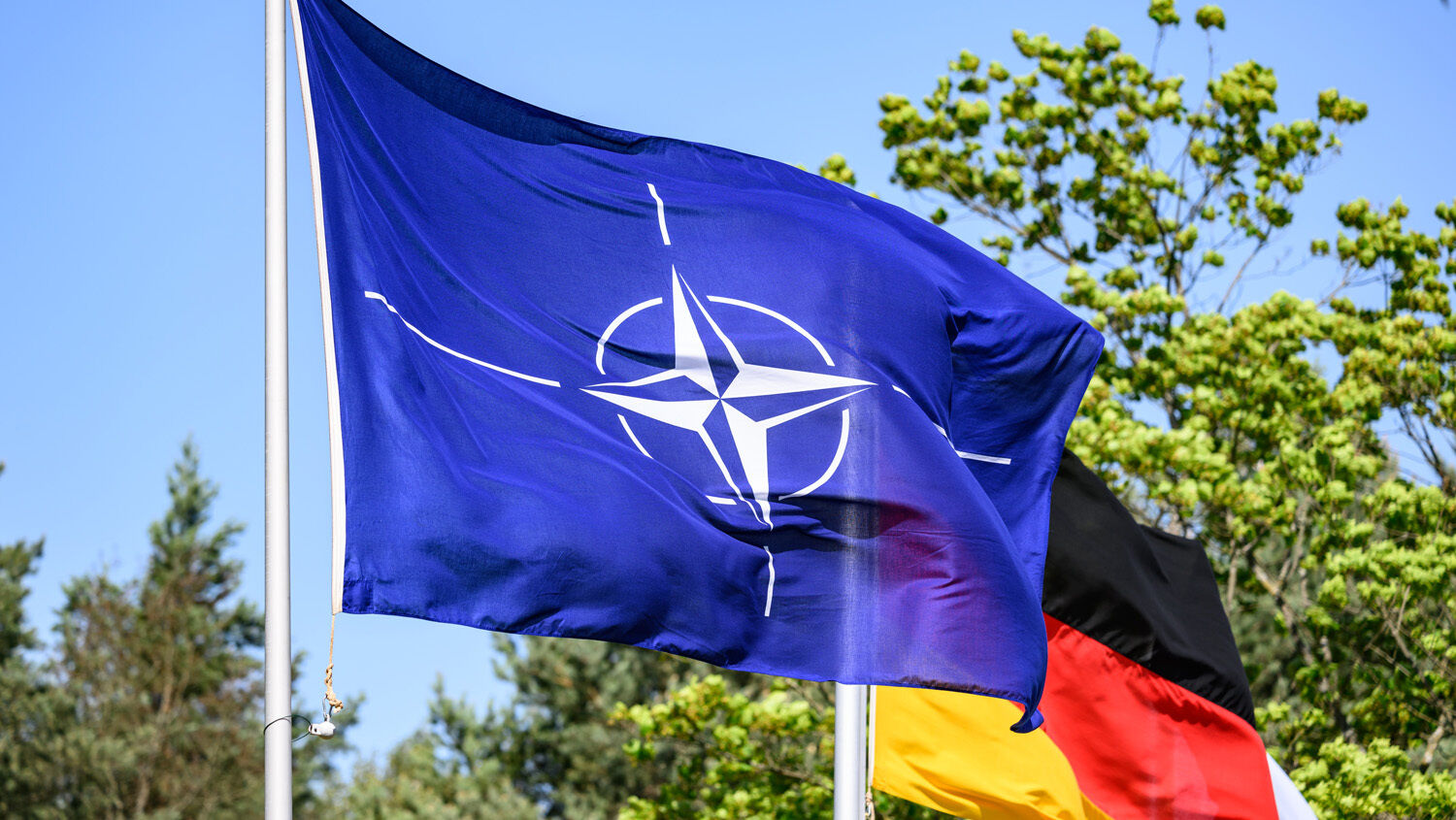
NATO Just Agreed to Create a German Military Superpower
Nato will be holding one of its most important meetings ever, June 24 to 25. United States President Donald Trump will travel to The Hague in the Netherlands for his first meeting with the military alliance since his return to the White House.
Since returning to office, Trump and his administration’s criticism of Europe’s free-riding has been more biting than ever. And nato aims to send a stronger message than ever: We’ve heard you, and we’re rearming.
That message must be choreographed ahead of time, so all the important details are being hammered out right now. The i’s won’t be dotted and t’s crossed for a couple more weeks—but we can already see that America has pushed Europe into becoming a German-led military superpower.
“Never let Germany rearm.” According to President Trump, that was the warning given by Gen. Douglas MacArthur. It’s not a quotation we’ve been able to track down, but it is certainly in the spirit of warnings given by World War ii generals.
As he sat down with German Chancellor Friedrich Merz last week, President Trump made clear he disagreed. “I always think about that,” he said. To the president, reaming Germany is “a good thing … at least to a certain point.” However, “there’ll be a point where we say, ‘Please don’t arm anymore, if you don’t mind,’” he said.
Donald Trump has done more than “let” Germany rearm, he is actively pushing it. Last week, nato Secretary General Mark Rutte unveiled a plan that would see nato’s minimum defense spending target lifted from 2 percent of gross domestic product to 3.5 percent by 2032. A further 1.5 percent would be spent on defense-related infrastructure, giving a nice round number of 5 percent.
Not everyone is on board yet—but the aim is to get them on board before the big meeting in a fortnight.
The 1.5 percent is a bit of a cop-out. A lot of infrastructure projects that would have been built anyway will get rebranded as military-related. But it will also steer the construction of new roads, bridges and railways in a more strategic direction—making it easier to move heavy tanks quickly across Europe.
The 3.5 percent target is a big deal. When Donald Trump was first elected in 2016, only four out of the then 28 nato members met nato’s 2 percent minimum. Now 21 do. But only Poland beats the 3.5 percent target.
In 2015, Germany spent 1.1 percent of its gdp on defense; now that spending has almost doubled. Its 2015 spending was $38.2 billion; last year, it spent $97.7 billion—the second-largest spender in the alliance after the U.S. To hit the new target, it would have to spend $188.7 billion. That’s more than Russia spent on its military last year while actively fighting a war.
If the EU as a whole met this 3.5 percent minimum, this would see their military spending jump from $338 billion last year to $679 billion.
Thanks to President Trump’s first term and Russian President Vladimir Putin’s invasion of Ukraine, the EU already spends more on its military than any other power except the U.S. (though comparing military spending with Communist China can get complicated). If they follow through on the 3.5 percent pledge, they’ll be even more dominant.
But they won’t follow through—at least not right away. Nations like France and Italy are up to their eyeballs in debt and struggling to get social spending under control. The only big spender ready to move quickly is Germany.
If Germany spends 3.5 percent of its economy on the military while Europe’s other major spenders struggle to hit the old 2 percent target, it will become even more militarily dominant every year.
Meeting this ambitious spending target means a host of practical changes. German Defense Minister Boris Pistorius said last week that Germany needed another 50,000 to 60,000 troops. It already struggles to get recruits, gaining that many more means more changes. For a volunteer military, Germany’s relationship with its military will have to change. Recruiters will have to become more active, and the nation will have to do more to promote a sense of pride in serving in the armed forces to stir more people to sign up. Expect more parades and more militarism.
The alternative is conscription—which is being seriously considered.
But Germany is busy setting up new combat brigades, and it needs the men from somewhere. It has eight combat brigades currently, with a ninth being set up and a 10th planned. The new spending plan will mean another five or six brigades, plus more frigates, fighter jets and missile systems.
European industry is shifting to a war footing. Defense firms are seeing their share prices skyrocket as investors realize the opportunity for profit in all money that must be spent to hit these targets. Car factories are being repurposed as weapons plants.
In addition to the 3.5 percent spending target, Secretary General Rutte pushed for a 400 percent increase in air and missile defense. “The fact is, we need a quantum leap in our collective defense,” he said. “The fact is, we must have more forces and capabilities to implement our defense plans in full.”
Shortly before the nato meeting, Merz traveled to Lithuania to celebrate the founding of its latest combat brigade. The 45th Armoured Brigade is Germany’s first permanent foreign deployment since World War ii. Not all the soldiers in the brigade will be members of the German Army. The German-led multinational battle group, with soldiers from the Netherlands, Norway and other nato nations, will form part of it.
Lithuanian President Gitanas Nausėda said he welcomed the German forces “with an open heart and sincere gratitude.”
“We will not disappoint Lithuania,” responded Merz. “Germany stands by its responsibility: today, tomorrow, for as long as it takes.”
It’s a picture that will become more common as President Trump gets his way. He’s pushing Germany to dominate Europe’s military spending while pulling the U.S. back. More countries will invite the German Army in and even sign up to have their soldiers join it.
nato is establishing German dominance over Europe. That’s quite the turnaround for an alliance set up, in the famous words of its first secretary general, to “keep the Russians out, the Americans in, and the Germans down.” Those who are left from MacArthur’s generation must be very uneasy with this change.
As Germany lay in rubble in 1945, Herbert W. Armstrong forecast that it would rise again—as part of a “European union.” In May 1953, he wrote that “10 powerful European nations will combine their forces.” In August 1978, he warned: “The Europeans are far more disturbed about their safety in relying on United States military power to protect them than Americans realize! …
“Europeans want their own united military power! They know that a political union of Europe would produce a third major world power, as strong as either the U.S. or the ussr—possibly stronger!”
The process took longer than Mr. Armstrong expected, but his Bible-based forecasts are now coming to pass before our eyes. The U.S. is handing dominance over Europe to Germany.
Mr. Armstrong based these forecasts of Bible prophecies in Daniel and Revelation that describe a beast, or empire, that repeatedly rises and falls—prophecies of the repeated resurrection of the Roman Empire. “A human body cannot live without its heart. And the economic and the military body that is to rise up and to restore the Roman Empire, the thing that we least suspect here in the United States, it cannot rise up without its heart,” he said in one radio broadcast. “And its heart is in Germany.”
America is encouraging Germany to resurrect that heart.
Now is the time to understand these prophecies. They provide the only reliable long-range forecast and the only hope for the future. Our Trends article “Why the Trumpet Watches Europe’s Push Toward a Unified Military” takes you through this revealed truth step by step to show you what is happening in Europe and where it is all leading.


