

Britain Surrenders While Germany Advances
May 22 powerfully symbolized Europe’s destiny. The United Kingdom signed away one of its last foreign military bases while Germany held an official ceremony to open its first foreign base since the end of World War ii.
One power is retreating, giving up, and making insane foreign-policy decisions; the other is confident, aggressive, strategic and expanding.
Insane Foreign Policy
The Diego Garcia military base, shared by the UK and the United States, is one of the most important in the world. “The strategic location of this base is of the utmost significance to Britain,” states the UK government. “It enables rapid deployment across the Middle East, East Africa and South Asia, and helps combat some of the most challenging threats we face, including from terrorism and hostile states.” It allows Britain and the U.S. to project airpower into the Middle East without relying on the caprice of local powers.
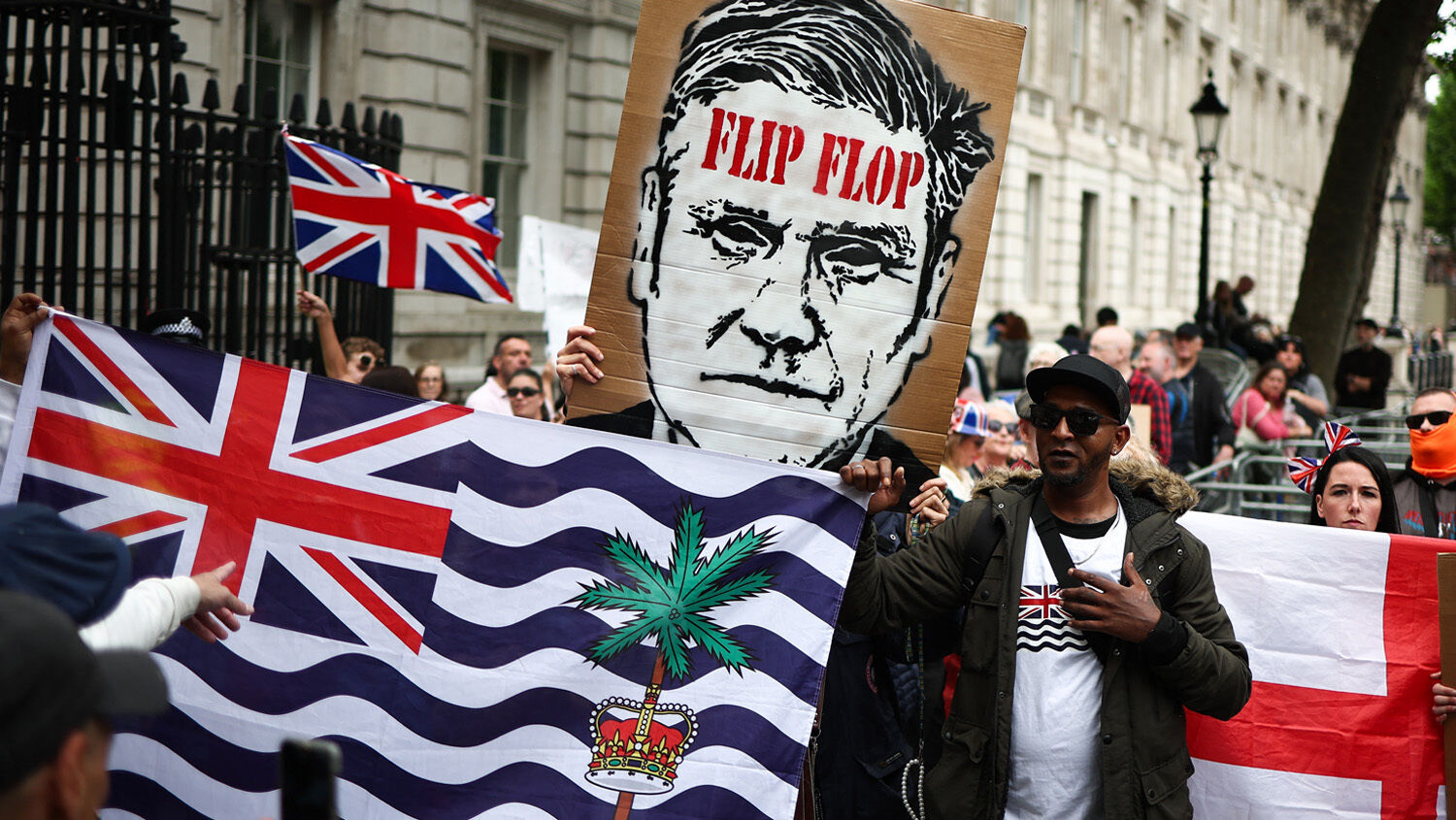
Yet last week British Prime Minister Sir Keir Starmer handed the Chagos Islands, which houses the base, to Mauritius, and then agreed to rent it back for 99 years—at a cost estimated to exceed £30 billion (us$40 billion).
Mauritius never owned the Chagos Islands. It has no historic claim to them. It would be like the U.S. giving Hawaii to the Philippines—on the basis that the two island groups exist in the same ocean.
Why hand them over and pay for the privilege? A judge appointed by the Chinese Communist Party to the International Court of Justice issued a nonbinding judgment saying Britain should give up the islands. And Starmer complied.
It just so happens that Mauritius is in China’s pocket. China has built up its infrastructure and is its biggest importer, sending it $1 billion worth of goods. It is the only nation China has signed a formal free-trade agreement with. Could Mauritius allow China to open a base next door? The deal requires Britain to notify Mauritius in advance of any attack. Will it pass that on to China—who could then pass it on to a potential target?
This daft dealing is perfectly described in a prophecy about modern Britain found in the book of Hosea. It says that Ephraim—a reference to Britain as our free book The United States and Britain in Prophecy shows—“is like a silly dove, without sense” (Hosea 7:11; New King James Version).
“Ephraim, or Britain, has a ‘silly dove’ foreign policy!” wrote Trumpet editor in chief Gerald Flurry in 2000. “No silly dove nation can endure in a world full of hawks and tigers! This is a strong warning to a once mighty nation.”
Matthew Henry’s commentary says the dove analogy is used because the bird is “easily enticed by the bait into the net and has no heart, no understanding, to discern her danger, as many other fowls do.” Is there a better example of “silly dove” foreign policy?
Forward Thinking
As Sir Keir Starmer was signing his shameful surrender, German Chancellor Friedrich Merz was in Vilnius, Lithuania, for an inaugural parade of the 45th Armored Brigade. Around 600 German soldiers lined the city’s central square, the German and Lithuanian army bands held a joint concert, and the armed forces paraded together.
It was an important day for Germany. The country has not operated a permanent foreign military base since World War ii. But the 45th is in Lithuania to stay.
It is probably the last taboo to fall for Germany’s conventional forces. The only remaining restraint left on the nation after World War ii is that it doesn’t officially possess nuclear weapons (though it does have nuclear bombs on loan from the U.S.).
Germany is now setting up the logistics and supply chains necessary to maintain troops abroad permanently. More importantly, all Europe is starting to look to Germany, not America, as the final guarantor of their security.
“Germany’s decision to deploy a permanent force of 5,000 soldiers to Lithuania is extremely significant because it signals the next phase of a new geopolitical era,” wrote Geopolitical Futures founder George Friedman.
Germany has long been “first among equals in the [European Union],” he wrote, though it has “been careful to avoid asserting military power.”
“Germany’s decision to deploy troops in Europe—which has been welcomed by the U.S. as well as other European countries—violates its commitment to modest ambitions for European leadership,” he wrote. “Put simply, the deployment to Lithuania could presage the reemergence of Germany as a geopolitical force.”
Peter Zeihan made similar comments when the base was announced in December. With America pulling away from global commitments, Germany is stepping into the role of Europe’s security guarantor—just as Herbert W. Armstrong warned for decades.
In May 1953, Mr. Armstrong wrote that “10 powerful European nations will combine their forces.” In August 1978, he warned:
The Europeans are far more disturbed about their safety in relying on United States military power to protect them than Americans realize! …
Europeans want their own united military power! They know that a political union of Europe would produce a third major world power, as strong as either the U.S. or the U.S.S.R.—possibly stronger!
And in that May 1953 article, he wrote:
Germany is the economic and military heart of Europe. Without Germany such a federation of nations is impossible. Yet the other nations of Europe will not trust Germany or a German leader. Still, in spite of this, it is probable that none but a German can provide the dynamic, inspired leadership required to organize such a political military federation.
Germany is stepping up to take on this role as Europe’s heart.
Changing of the Guard
The events of May 22 are a powerful symbol that we are in a new era. Britain and the U.S. have dominated the world—not because of their own greatness, industry or ingenuity but because of blessings from God. Mr. Armstrong proved in his book that Britain and America descended from the northern tribes of Israel, which disappeared after being conquered by Assyria in 721 to 718 b.c. He also showed how the Bible prophesied promises of national greatness would be delayed for 2,520 years; 2,520 years after 721 b.c. brings us to 1800, the time when Britain and America took off as dominant world powers.
“Prior to World War ii, the American and British peoples had acquired more than two thirds of the cultivated resources and wealth of the world,” he wrote. “Yet, astonishing wonder though it be, we acquired nearly all of it rather suddenly, since the year 1800. Never in all history did anything like this occur. Never did any people or nation spread out and grow so suddenly and rapidly into such magnitude of national power.”
France ceded the Chagos Islands to Britain in 1814 after the defeat of Napoleon. These islands were part of the prophesied blessings on Britain and America.
However Britain and America did not obey God. They did not use their material wealth to bring the world to God. Instead, they have spread immorality around the world. Now God is withdrawing those blessings and raising Germany as the head of a new united Europe to punish America and Britain.
That is what May 22 was all about. Britain’s blessings and sound judgment have been withdrawn, and Germany is rising. Mr. Armstrong forecast both these developments decades ago. His free book The United States and Britain in Prophecy does more than forecast—it explains why. It shows God’s plan for Britain, Germany and the world—and how these events will lead the whole world to God. You can read it online, or we’d be happy to send you a free print copy.


