Revelations From a Pope’s Diary
Revelations From a Pope’s Diary
Good morning,
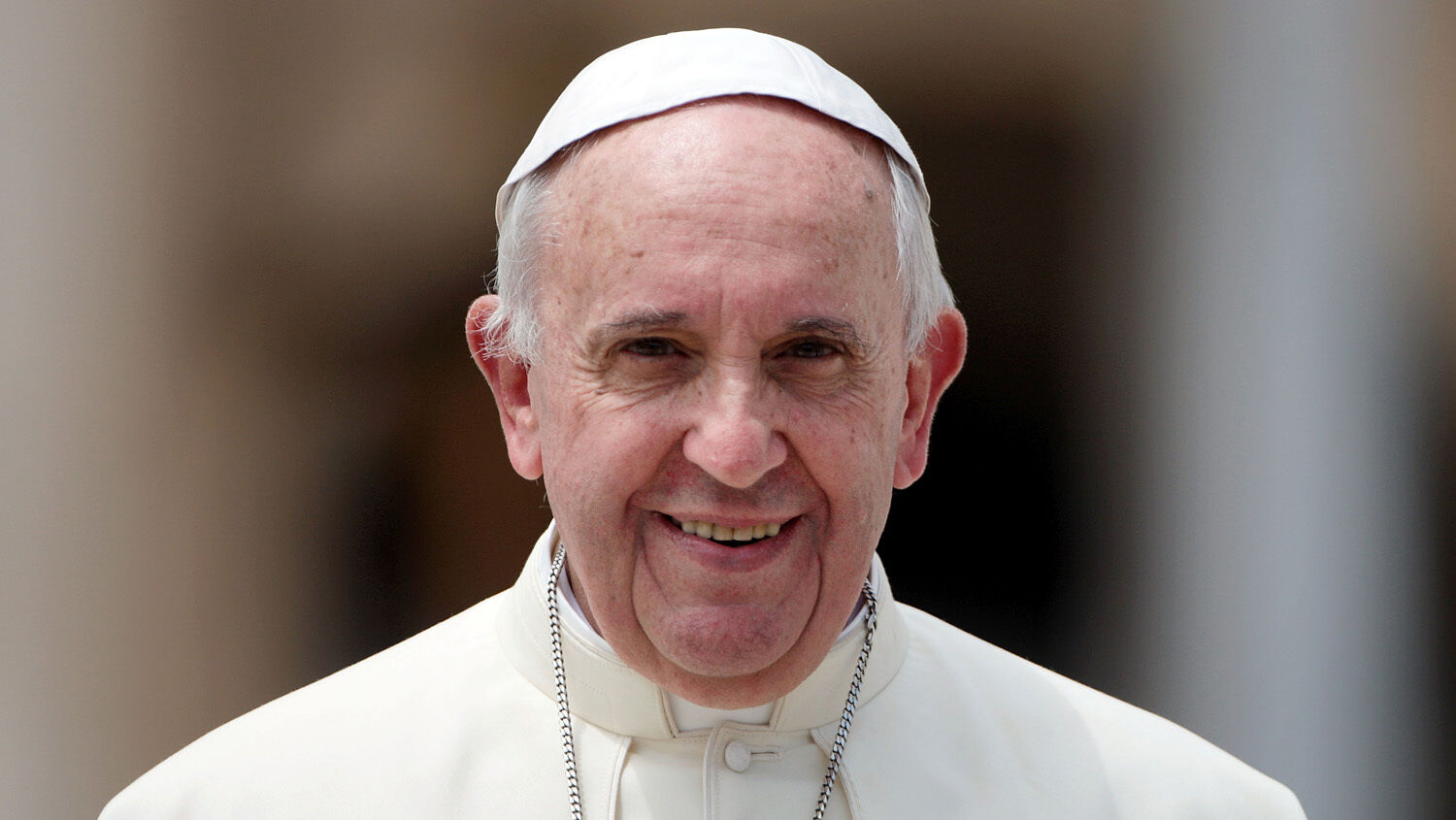
To the world, Pope Francis was the warm, humble pope of mercy. But yesterday the Vatican published The Private Diary of Pope Francis, giving a peek into his inner life—and it held startling, bizarre revelations about the world’s most powerful religious leader.

- The Catholic Church has over 1.4 billion baptized members, nearly 18 percent of humanity. Francis led it for 12 years and was widely admired.
- As late as February 2025, 78 percent of American Catholics viewed him favorably. More than 160 nations sent delegations to his funeral, and an estimated 250,000 people attended. Few people on Earth have had more spiritual authority.
Yet that man was tormented. Cardinal Víctor Manuel Fernández screened, chose and annotated entries from the notes Jorge Mario Bergoglio kept from 1992 to 2024. And among the excerpts released to the public was a 2021 entry in which Bergoglio described three times the devil appeared to him, when “I don’t doubt he was physically present.”
- Twice it happened in Buenos Aires. Once was through a car window, where he saw “menacing and, at the same time, seductive eyes.” Once was in a chapel, where he saw “eyes of fire.”
- The third time was in Rome, at a meeting a few days after his 2018 trip to Chile. “I saw him and heard his voice, triumphant, possessing everything,” Francis wrote. The devil’s words were: “Now I’ve gotten everything I wanted.”
On that Chile trip, Francis publicly defended a bishop accused of covering for a notorious abuser. He dismissed the accusations as “calumny.” Within months, the Vatican’s own investigators found that Chilean church officials had destroyed evidence of sex crimes, and every bishop in the country offered to resign. On June 7, 2018, Francis wrote: “Last night I saw the entrance to hell. Pagan seduction in full force. I peeked in to look a little, and it terrified me.” He added, “One can slide into hell like it’s the most natural thing to do.”
- In his last entry, in 2024, he was still describing the devil’s presence, and he wrote, “I beg the Virgin to protect and help me.”
Satan is real, and he tempts everyone. But here is the leader of 1.4 billion people describing his “seductive” eyes, recording his visits across decades, and reporting that he showed up in a church meeting in Rome—“triumphant, possessing everything.”
- When the head of a church is having personal encounters with this evil being, and the devil is gloating inside its walls, that should raise serious questions.
The Bible says Satan “deceiveth the whole world” (Revelation 12:9). The Apostle Paul went so far as to call him “the god of this world” (2 Corinthians 4:4). A great many people worship the devil without even realizing it.
- That is as the devil wants it. “Satan himself is transformed into an angel of light” and inspires human ministers who are also “transformed as the ministers of righteousness” (2 Corinthians 11:14-15).
It is crucial to prove that you are worshiping the true God. The Bible gives clear means of discerning truth from error, true ministers from false, true religion from false. These vital scriptures are spelled out in our free booklet Can You Prove Which Church Is God’s?
Bible prophecy also describes a great religious power, centered on a city of “seven mountains,” that will gain enormous influence over the nations in the end time (Revelation 17:9). No church fulfills this prophecy and several major related ones like the Roman Catholic Church. If you have never studied its origin and history, you need to. Start with Chapter 1 of our free book The Holy Roman Empire in Prophecy.
The pope’s diary describes fighting back against the devil with a rosary and a prayer to Mary, both of which blend aspects of Jesus Christ’s message with rank paganism—something Jesus Himself repeatedly warned about. The Bible gives the real defense against that evil spirit being: “Submit yourselves therefore to God. Resist the devil, and he will flee from you” (James 4:7).
Russia Buzzing Japan, South Korea, Taiwan
Russian military planes entered South Korea’s air defense identification zone yesterday, causing South Korea to activate air raid alerts. This is the latest example of Russian aircraft intimidating American allies in the Pacific:
- On November 17, unspecified Russian aircraft made provocative moves against South Korea, Taiwan and Japan on the same day. South Korea and Taiwan scrambled fighter jets to counter them, and Japan claimed its airspace was violated and issued a “strong protest” to Russia.
- On November 19, Japan claimed that two Russian bombers had flown through the strait between Taiwan and Japan’s westernmost island.
- From April to October, Japan scrambled aircraft 152 times in response to Russian incursions, compared to 59 in the same period last year.
Japan and South Korea are major supporters of Ukraine in its defensive war against Russia. They are also major American allies countering Chinese dominance in the Pacific. China regards Taiwan not as a sovereign state but as a rogue province to be brought under Communist Party rule.
Analysts interpret Russia’s pushy moves in Asia as a show of solidarity with China.
- James Brown, a Russian foreign-policy expert at Temple University in Tokyo, told the Wall Street Journal that the aircraft incursions are Russia’s way to “demonstrate to China that they can be useful, that they are a valuable partner and undiminished as a military power, despite their vast loss in Ukraine.”
Russia’s interests in Asia have traditionally been subordinated to its interests in Europe and the Middle East. Its increasing involvement in Asian geopolitics shows how much of a global disruptor President Vladimir Putin has become, as well as how seriously he takes his alliance with China.
As our Trends article “Why the Trumpet Watches Russia Allying With China” elaborates, the Trumpet expects Russia and China to continue enhancing their relationship into a full military alliance that will fundamentally change geopolitics and lead to far deeper and deadlier incursions.
Former Mossad Chief Invited, Protested in Germany
Former Israeli Mossad chief David Barnea spoke at a briefing event titled “Exclusive: Behind the Scenes of Mossad” in the German Bundestag today. While his invitation highlights the close relations the German government is building with Israel, protests from legislators show that these relations are precarious.
- Days before his visit, the European Center for Constitutional and Human Rights filed a criminal complaint with the Federal Public Prosecutor’s Office and demanded an arrest warrant against Barnea. He is accused of war crimes relating to Mossad’s explosive-pager attack against Hezbollah terrorists in 2024.
- Barnea still visited Berlin, only to face more hatred. Legislators blocked the chamber in the Bundestag, and a man shouting “genocidal murderer” had to be dragged out of the gallery.
Strong relations: German-Israeli intelligence and military cooperation dates back to 1957. For decades, Germany has presented itself as a strong ally of the State of Israel.
- Germany is Israel’s second-largest arms supplier and purchases some of Israel’s most advanced defense systems, such as its Arrow 3 missile defense system.
Growing hatred: However, German media predominantly portray Israel as the villain in the Middle East conflict. The fact that Germany almost exterminated the Jewish people in World War ii is no longer holding back open hatred toward Israel. Germans routinely accuse Israel of committing genocide against the Palestinians despite there being no evidence for this.
Coming betrayal: The Bible calls the Assyrians (Germany) a “lover” of Judah (the State of Israel). Jeremiah 4:30 warns, “Thy lovers will despise thee, they will seek your life.” Jerusalem in Prophecy, by Gerald Flurry, details how the Jews’ trust in their former enemy will lead to another—very real—genocide.
IN OTHER NEWS
Fight for Somalia intensifies: The Somali government expelled the United Arab Emirates ambassador on Thursday. The move heightened tensions in the Red Sea nation, already a major hotspot in the regional struggle for power. The U.A.E. leads a regional bloc of nations looking to combat the spread of radical Islam, especially in northern and eastern Africa. This expulsion comes as federal elections approach and the fight for Somalia’s leadership intensifies. The clash between moderate and radical Islamist factions in and around Africa was prophesied in the Bible, and Somalia reflects the overall strategy of both sides.