

German Spy Agencies Return to Nazi Past
After Europe was liberated by the Allies in 1945 from what Winston Churchill termed “the grip of the Gestapo and all the odious apparatus of Nazi rule,” Western framers of postwar Germany took steps to ensure intelligence agencies would be defanged to prevent the revival of organizations such as the Gestapo, Nazi Germany’s infamous secret political police force.
That meant Germany’s institutions were shaped with ideas such as Trennungsgebot, the principle of separation, in mind. Intelligence agencies were not given powers to arrest nor had much power beyond surveillance.
The example set by East Germany’s Stasi throughout the Cold War reinforced the importance of defanging German intelligence agencies.
Today, however, with the renewed Russian threat, the rise of radical Islam, and a barrage of cyberattacks, Germany is throwing such precautions to the wind.
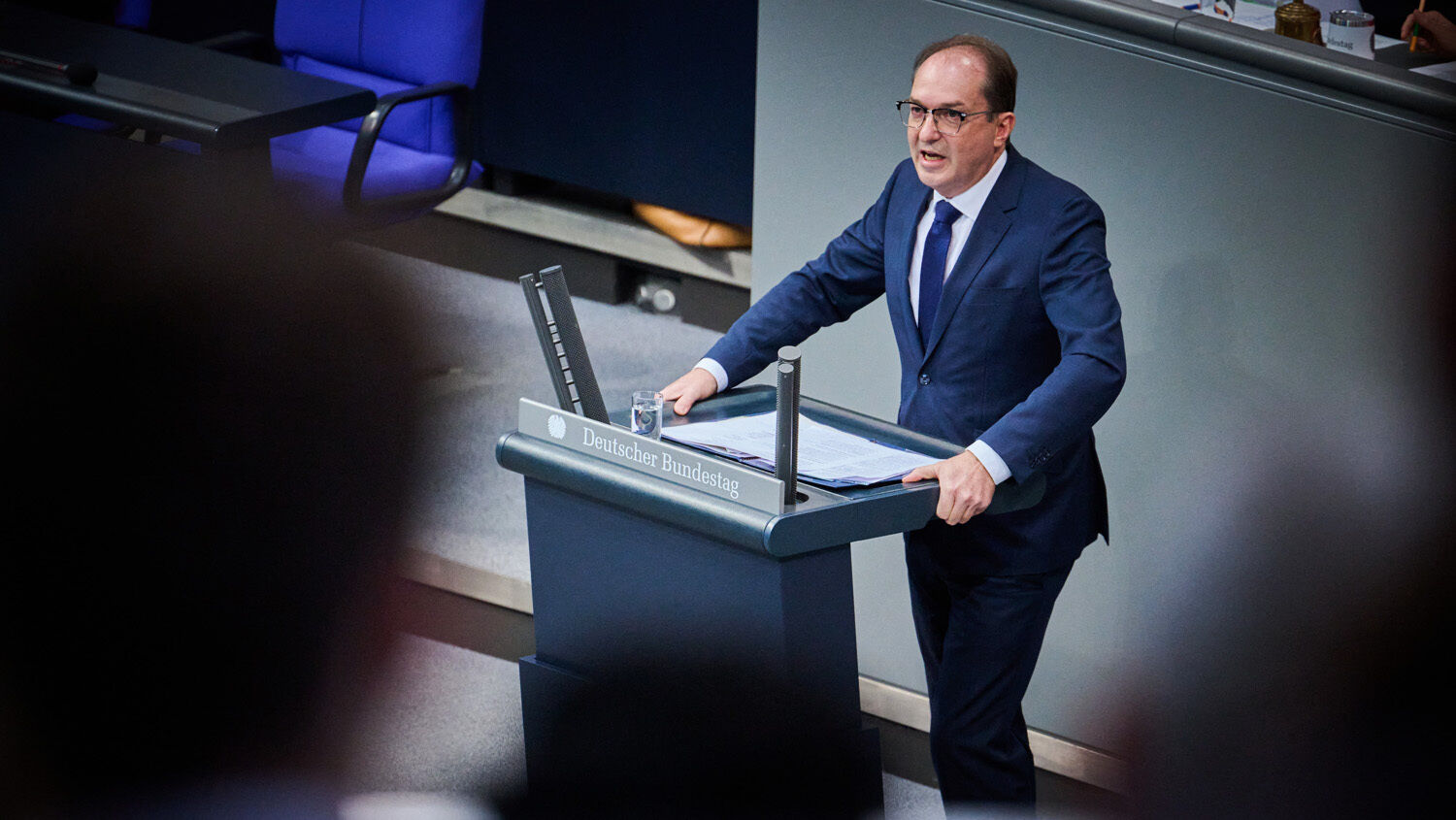
On Friday, Germany’s lower parliament, the Bundestag, approved a reform bill for the nation’s intelligence agencies. Interior Minister Alexander Dobrindt called it the “reform of the century.”
The cabinet had agreed on a draft form of the bill on August 12, at least partly driven by the discovery of an explosives-carrying drone at Leipzig-Halle Airport earlier that month, which was linked to Russia. The vote came less than a day after German drone developer Quantum Systems announced it had been hit by a cyberattack.
This new bill will become law by 2027, granting Germany’s domestic and foreign intelligence agencies vast new powers. Its spy agencies will become “genuine intelligence services,” according to Dobrindt.
The reform aims to put German spy agencies on par with other European intelligence agencies. What does that mean?
New Freedoms to Limit Freedom
Previously, both Germany’s foreign intelligence agency (bnd) and its domestic intelligence agency (BfV) were focused on information collection. Now they can act offensively.
The bnd will receive offensive capabilities, such as launching cyberattacks against foreign hacking groups. It will be allowed to conduct sabotage operations against enemy weapons production, such as intercepting shipments to factories and replacing incoming parts with faulty ones. It will also be allowed to monitor encrypted conversations and to keep metadata from mass surveillance exercises for 13 months instead of 12.
The BfV will be permitted to enter private residences secretly to install spyware, to order the storage of private telecommunications data, and most dystopian, to use artificial intelligence to process information and biometrics to track people.
It will also be allowed to investigate extremist-supporting, organized crime groups, which had been reserved for the police.
Providing the domestic intelligence agency with investigative rights normally reserved for the police shows the thinning separation between intelligence agencies and police power. That is fundamentally against the Trennungsgebot, which the Allies worked to incorporate throughout postwar Germany’s foundations to prevent another Gestapo or Sicherheitsdienst.
There will also be less separation between the bnd and the BfV. While that may be helpful in thwarting terror attacks, it will also be conducive to thwarting individual freedoms. There will be more intelligence sharing with Germany’s military intelligence agencies.
Proponents claim these intelligence agencies will be under close and increased supervision. Dobrindt stated, “The Stasi and Gestapo had no controls, while we have the strongest controls our services have ever had.”
In March, however, the federal commissioner for data protection and freedom of information, Louis Specht-Riemenschneider, whose job is to monitor the bnd, called the agency “secretive” about its data processing. She warned, “Citizens have virtually no means of defending themselves against intelligence measures that can deeply intrude on their privacy.”
That was before the Bundestag approved this bill.
Top bnd officials have little oversight. August Hanning, head of the bnd from 1998 to 2005, was arrested on October 6 for stealing around 2,000 documents over several years, many of which contained classified information, through his former chief of staff, who remained at the agency after Hanning’s departure. His theft was uncovered while he was under investigation for an unrelated crime. If the agency were strictly overseen, surely such a document theft would have been caught earlier.
This bill was heavily debated in the Bundestag. The AfD and Die Linke were against it because it would erode the separation of powers carefully crafted after World War ii. Die Linke, according to Al Jazeera, specifically warned it would lead to a “German secret police force.”
Dobrindt, on the other hand, claims the AfD and Die Linke want to hurt Germany’s intelligence agencies. “They want to tie our hands,” he said. “That is not the lesson of history when you surrender to the enemies of democracy. We have to protect them from these people.”
It’s also a lesson of history that empowering German intelligence agencies is dangerous.
A Dark Past and Darker Future
A bnd with powers equaling its counterparts might not seem like a bad idea. After all, other nations, such as the United States and the United Kingdom, are still largely viewed as bastions of freedom—though even in these countries there are major concerns.
But neither the cia nor MI6 were founded by Nazis. The creator of Germany’s postwar spy network and founding president of the bnd was Gen. Reinhard Gehlen, a former Nazi. Many early agents were former members of the Gestapo.
As the Trumpet wrote in 2017, “From its inception, the bnd was literally infested with Nazis.”
The Gestapo kept tabs on political dissidents and sent countless people to concentration camps. Germany’s intelligence agencies today are on the path to committing similar atrocities.
How did the Gestapo amass such powers? The nation’s intelligence agencies and police forces were separate and decentralized before 1933. Once Adolf Hitler came to power, those separations were eliminated under the guise of protecting Germany. Reading private messages, spying on telephone conversations, and entering residences were among the first powers given to the Gestapo and secret intelligence agencies similar to it.
Now an organization founded by members of the Gestapo can wage cyberwarfare, sabotage foreign arms production, and use new technologies, such as AI, to monitor private communications and surveil citizens.
What will this mean for German society? History tells us that it will promote authoritarianism. What will this mean for Germany’s allies and adversaries?
Revelation 17:8 states: “The beast that thou sawest was, and is not; and shall ascend out of the bottomless pit, and go into perdition: and they that dwell on the earth shall wonder, whose names were not written in the book of life from the foundation of the world, when they behold the beast that was, and is not, and yet is.” Regarding this scripture, Trumpet editor in chief Gerald Flurry wrote, “This prophecy describes the German-led power as a beast that ‘was, and is not, and yet is.’ It appeared to be gone—but it was just underground! And now it is rising!”
The Nazis went underground to emerge in our time, controlling Germany and Europe and targeting America and Britain. The unshackling of German intelligence agencies is a sign that these prophecies are being fulfilled.


