

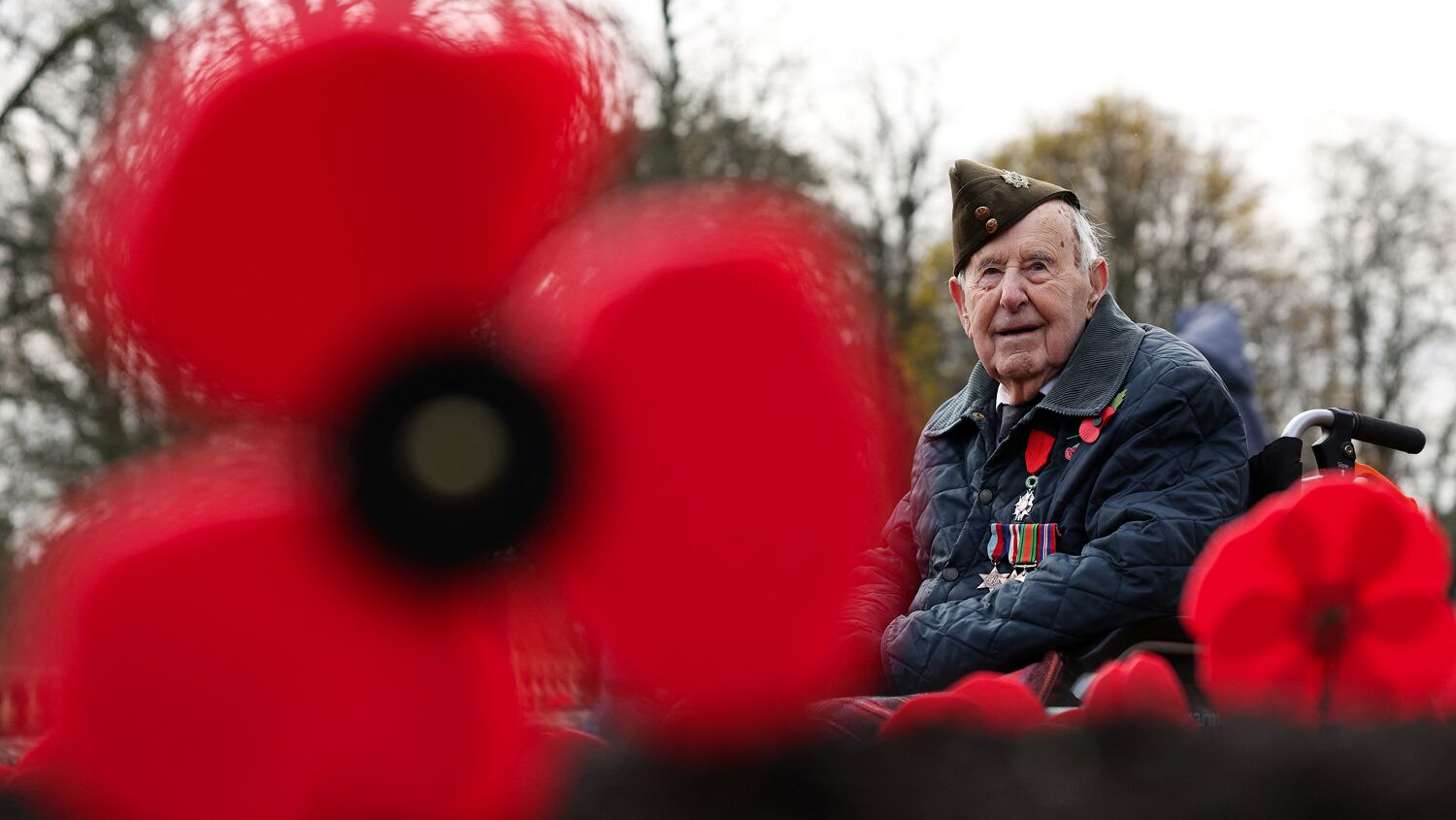
Remembrance Day and the End of Living History
We are facing the end of living history. The last veteran of World War i trench warfare died in 2009. All the witnesses of the horrors and honors of the Great War are gone. That generation has passed. The World War ii veterans, the greatest generation, are rapidly disappearing; fewer than 1 percent are still alive. In a few years, our grandparents and great-grandparents who landed on Normandy, liberated concentration camps, or fought in the Battle of Britain won’t be around to pass on their stories, their wisdom and their courage.
When our connection with living history is severed, our nations become detached from the values that made them great. This is a natural process of time—no man lives forever—but it means the living have a responsibility to preserve that history.
Remembrance Day, or Veterans Day, is a way those generations pass the torch to us. We hold it high by learning from their mistakes and their sacrifice.
Human nature is short-sighted, selfish and likes living in the present. The past is an anchor that slows us down. Unless we deliberately work to remember the past in our own families, our institutions and nations, we become historically blind. This leads us to stumble into existential crises.
This is what happened to America on the eve of the Civil War. The Revolutionary War generation was gone, and America faced a growing existential crisis over states’ rights, slavery and the permanent split of the Union. There seemed to be no leaders to address these crucial issues.
It was in these perilous times that Abraham Lincoln, at age 29, gave a speech at the Young Men’s Lyceum Club in Springfield, Illinois, on Jan. 27, 1838. Lincoln reflected on the connection between living history and facing national problems:
I do not mean to say that the scenes of the revolution are now or ever will be entirely forgotten; but that like every thing else, they must fade upon the memory of the world and grow more and more dim by the lapse of time. In history, we hope, they will be read of and recounted, so long as the Bible shall be read; but even granting that they will, their influence cannot be what it heretofore has been. Even then, they cannot be so universally known, nor so vividly felt, as they were by the generation just gone to rest. At the close of that struggle, nearly every adult male had been a participator in some of its scenes. The consequence was, that of those scenes, in the form of a husband, a father, a son or brother, a living history was to be found in every family—a history bearing the indubitable testimonies of its own authenticity, in the limbs mangled, in the scars of wounds received, in the midst of the very scenes related—a history, too, that could be read and understood alike by all, the wise and the ignorant, the learned and the unlearned.
But those histories are gone. They can be read no more forever. They were a fortress of strength; but what invading foeman could never do, the silent artillery of time has done; the leveling of its walls. They are gone. They were a forest of giant oaks; but the all-resistless hurricane has swept over them and left only, here and there, a lonely trunk, despoiled of its verdure, shorn of its foliage; unshading and unshaded, to murmur in a few gentle breezes and to combat with its mutilated limbs, a few more ruder storms, then to sink, and be no more.
Our history, remembering where we came from and the lessons learned, is a fortress of strength. But “the silent artillery of time” comes for all of us. The only way to keep the past alive is to teach it to the next generation. Deuteronomy 4:9 says: “Only take heed to thyself, and keep thy soul diligently, lest thou forget the things which thine eyes have seen, and lest they depart from thy heart all the days of thy life: but teach them thy sons, and thy sons’ sons.”
Remembrance Day helps us remember the pillars of liberty and the character it takes to hold up our civilization. Lincoln continued:
They were the pillars of the temple of liberty; and now that they have crumbled away, that temple must fall, unless we, their descendants, supply their places with other pillars, hewn from the solid quarry of sober reason. Passion has helped us, but can do so no more. It will in future be our enemy. Reason—cold, calculating, unimpassioned reason—must furnish all the materials for our future support and defence. Let those materials be molded into general intelligence, sound morality and, in particular, a reverence for the Constitution and laws. … Upon these let the proud fabric of freedom rest, as the rock of its basis; and as truly as has been said of the only greater institution, “the gates of hell shall not prevail against it.”
Remembering our history and those who shaped us builds intelligence, morality and a reverence for law. Those characteristics are missing from our nations today! Lincoln read the Bible and read history, both helped to shape him into the leader who saved America from itself during the Civil War. It also helped Lincoln see God’s hand in America’s history. We lack this sort of vision and leadership today.
How well do you connect with living history? We all have the opportunity to connect our lives and our children to the important lessons of the past. Remembrance Day reminds us of the scourge of war that ends men’s lives, but also of the silent artillery of time. Some generations end in war; some end in old age. It is up to us to learn the lessons from both. Human nature will naturally pull us toward historical blindness unless we deliberately choose to remember.
The Bible is a book about remembering the past and remembering God most of all. History should be a pathway to understanding God. “That ye may remember, and do all my commandments, and be holy unto your God” (Numbers 15:40).
Remembering our past, our trials and afflictions, humbles us so we can have hope in the future. “Remembering mine affliction and my misery, the wormwood and the gall. My soul hath them still in remembrance, and is humbled in me. This I recall to my mind, therefore have I hope” (Lamentations 3:19-21).
We should remember the former days. “But call to remembrance the former days, in which, after ye were illuminated, ye endured a great fight of afflictions” (Hebrews 10:32).
When a nation forgets its history, it forgets God! The late Herbert W. Armstrong wrote in The United States and Britain in Prophecy:
[B]ecause Lincoln saw a nation who had forgotten God—a nation drunk with a success not due to its own efforts—a nation taking all the credit and glory to itself, this great president called upon the nation for a day of fasting and prayer to confess this national sin before God. The fate of the nation hung in the balance when he issued that proclamation. But God heard and answered that great national prayer offensive—and the nation was then preserved!
But today the threat to our fate is a thousand times more seriously hanging in the balance. And today we do not have a president or a prime minister with the vision, understanding and courage to bring our nations to their knees!
The end of living history is here. Don’t miss the opportunities in your life to connect to living history and remember God. Remembrance Day is an opportunity to stop and think on how well we use the past to prepare for the future.
To understand how you connect to the living history of the Bible, please read The United States and Britain in Prophecy.


