

The Ukraine War—Key to German Military Dominance
More than 100,000 Ukrainians have lost their lives on the battlefield over the last five years. Their blood is the price Germany accepts to advance its military prowess. That might seem like a harsh judgment, but we must realize the reality on the ground.
If you understand how Germany is using this war, you will realize that much worse is to come.
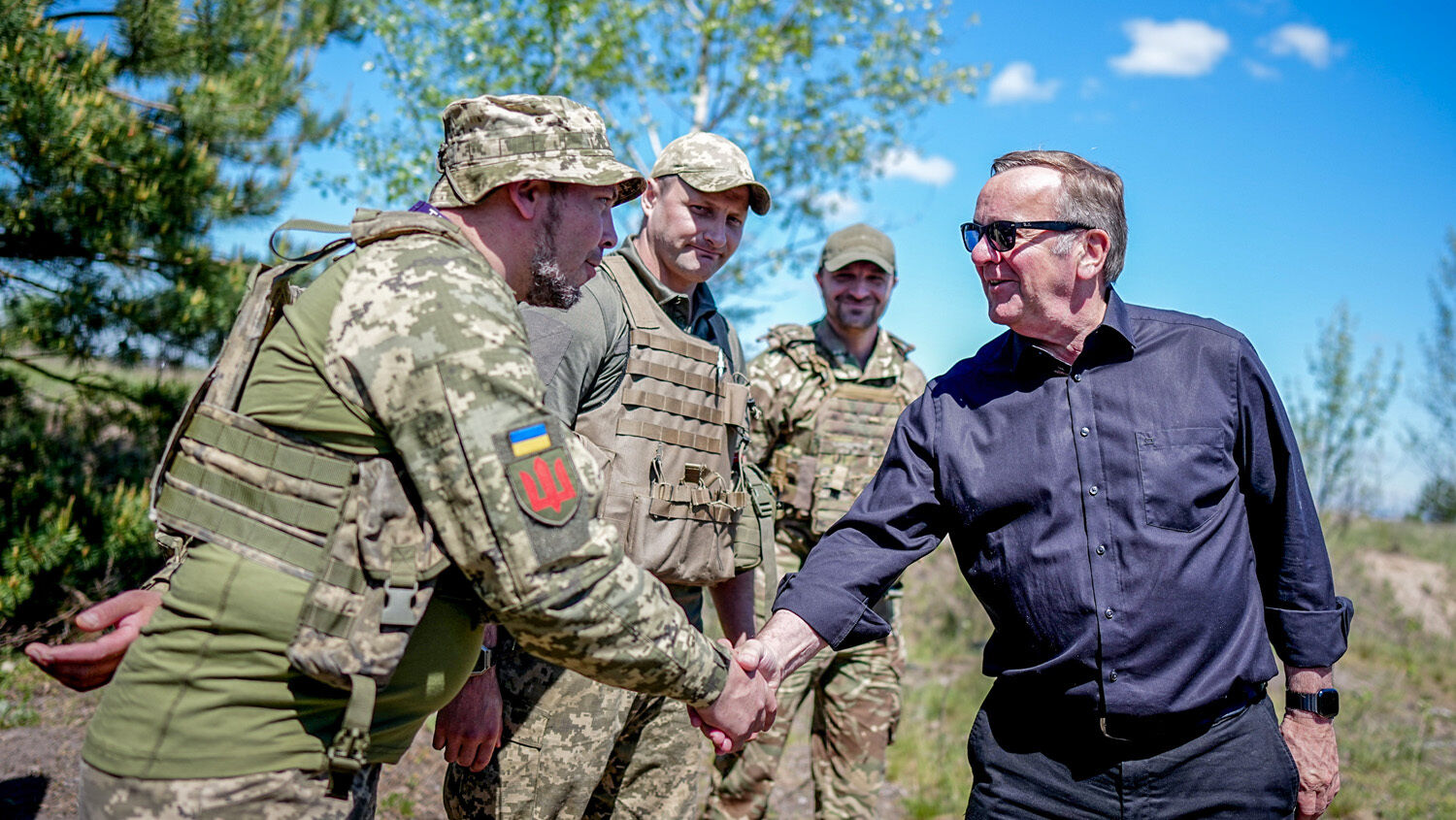
During a visit to Kyiv in May, German Defense Minister Boris Pistorius said about the development of new weapons systems in cooperation with Ukraine:
Germany and Ukraine are strategic partners that both benefit from this cooperation. This is giving rise to numerous new projects.
The focus is on the joint development of state-of-the-art unmanned systems across all ranges, particularly in the area of “deep strike.” This is how we strengthen the security of our countries.
Germany benefits most from this cooperation while Ukrainians bleed on the battlefield. The last five years prove that.
The Betrayal
In a social media post on November 5, Ukrainian President Volodymyr Zelenskyy wrote:
When [Russian President Vladimir] Putin seized Crimea, both Europe and America were quite openly making calls, holding meetings, and sending signals to the Ukrainians who were in power at the time that there should be no escalation—let’s just keep things friendly and leave things as they are for now. And we lost Crimea. After that, we lost part of Donbas. But the shooting in the east continued. There was no peace.
Trumpet editor in chief Gerald Flurry recounted this history right before Russia invaded Ukraine in 2022 and proved that Germany was the main country to betray Ukraine.
And the betrayal didn’t end there.
When Russian troops assembled at Ukraine’s border in 2022, Germany proposed sending helmets and sleeping bags. Kyiv Mayor Vitali Klitschko responded: “The behavior of the German government leaves me speechless. The Defense Ministry apparently hasn’t realized that we are confronted with perfectly equipped Russian forces that can start another invasion of Ukraine at any time.”
Once that invasion came, Germany prevented Britain from using its airspace to send weapons to Ukraine. It also blocked tanks and refused to send Ukraine its Taurus missiles.
Zelenskyy reiterated a long-standing request for the missiles in an interview with German broadcaster zdf on November 5:
Why do we want to order Taurus missiles? Because when the Americans were unable to supply us with antiballistic interceptors for our air defense, we were left with only one option: to destroy Russian launchers. They have built entire launch sites and are killing us, while we have no way to defend ourselves. These are not civilian targets, infrastructure or energy facilities. That is why we really wanted to order Taurus missiles. And not simply to order them, but once again, to test them as well. It benefits both sides.
Yet Germany continues to deny this request.
Early in the war, Germany blocked the European Union from sanctioning Russian energy and Russian banks. On April 4, 2022, then Polish Prime Minister Mateusz Morawiecki said that “Germany … is the main roadblock on sanctions.”
All of this has allowed Russia to continue its war on Ukraine. What’s more, it has allowed Germany to drive its military innovation forward.
Testing Weapons
As the war dragged on, Germany did send major weapons systems to Ukraine—at a major gain for its own arms industry. In his November 5 interview, Zelenskyy explained:
Here is an example: the iris-T air defense system. An excellent German system, and we are grateful to its manufacturers. Every type of defense is important for Ukraine, but it is also important for German industry.
We have made iris-T the world’s number one system after the Patriot, which is an antiballistic system. Today, it costs somewhere between $600,000 and around $1 million to $1.5 million. That’s the result of this war. We have also helped address all the problem areas, because only in a real war can you truly eliminate the weaknesses of a particular defense system. Germany now has orders backed up for 10 to 20 years. The cost of a missile has gone up several-fold, even by tens of times. And all of this means jobs.
This has been the case for many of Germany’s weapons systems. Ukrainian ambassador to Germany, Oleksii Makeiev, told RedaktionsNetzwerk Deutschland in 2025: “The German weapons systems have never been tested in real war conditions. So there was no way of knowing how a self-propelled howitzer would react when firing hundreds of shells a day. Repair chains are now also being tested in practice.”
Under wartime conditions, Makeiev explained, there are always indications of what is wrong and what should be changed in a weapon. The arms industry can use these insights to improve the systems, and the armed forces can adjust their tactics.
Exploiting conflict to test weapons is an old practice. Germany and Italy did it in the Spanish Civil War (1936–1939). But testing the old, isn’t Germany’s primary concern in the Ukraine war.
Germany Military Start-ups
While Ukrainians bleed, Germany’s military start-ups are booming.
In March, Germany’s Wirtschafts Woche reported: “Europe’s defense start-ups are experiencing a historic boom: Since 2021, venture capital in Europe has increased more than eightfold, an analysis shows. Germany in particular is benefiting.”
Dealroom’s October report notes that since 2023, German start-ups have set every fundraising record. Germany is now Europe’s top country for defense venture capital funding with $3.5 billion, followed by Finland ($1.2 billion), the United Kingdom ($932 million) and France ($376 million).
This year, European defense start-ups are forecast to raise $10.5 billion, roughly four times last year’s amount.
From the beginning of the war, Germany pursued a sinister strategy. While it dragged its feet in sending much-needed military support in 2022, German military start-ups were quick to set up camp.
- In August 2022, Quantum Systems announced an order from Ukraine for reconnaissance drones, which had already been tested and used in Ukraine.
- Helsing, which also began operating in Ukraine in 2022, signed a deal with the Ministry of Strategic Industries of Ukraine in February 2024.
- arx Robotics, founded in 2022 by former German military personnel, donated its first robots to the Ukrainian Armed Forces in 2023.
All three start-ups have since become key drivers in military innovation.
“Munich is the powerhouse of the European defense tech ecosystem,” Dealroom writes. “Helsing and Quantum Systems drive most of it, together worth $25.7 billion. Behind them, a younger cohort is forming across ground robotics, counterdrone and hypersonics.”
The very companies that set foot in Ukraine in 2022 are now driving the innovation.
Helsing is Germany’s most valuable start-up and the company is rising to national importance. Germany is preparing a $580 million contract for Helsing to develop the Combat Fighter System Nucleus (cfsn). Politico wrote in June, “[T]he ministry is treating cfsn as more than a narrow research project. One paper describes it as a backbone for future networked air warfare.”
The future of German warfare is written by military start-ups with the blood of Ukrainians.
The German government sees the benefit. In May, Pistorius signed a program in Kyiv to enhance the development of defense technologies.
Then Ukrainian Defense Minister Mykhailo Fedorov posted on social media that the program would supply joint grants for developing AI, drones, communications “and other critically important defense tech areas.” He said the two would conduct “joint hackathons” to find ways to attack other nations’ computer networks.
This partnership is setting the foundation for a German military transformation not seen since the end of World War ii.
A New Drone Regiment
After Helsing announced the delivery of thousands of strike drones for Ukraine at the end of 2024, Pistorius told Bild: “We are in close dialogue with our Ukrainian partners and will be able to draw conclusions for the Bundeswehr on how this type of drone can be used effectively. This will also help us to develop our own drone capabilities.”
The Ukraine war is reshaping Germany’s military operations.
This October, Pistorius announced the Bundeswehr would establish its first drone regiment in 2027, with up to 600 unmanned systems, loitering munitions and electromagnetic warfare capabilities.
“The decision represents a structural shift for the German Armed Forces,” Aero-Space.eu wrote. “Rather than treating drones solely as equipment distributed among existing units, the Bundeswehr will create a formation specifically designed to develop, operate and integrate unmanned combat capabilities.”
While the unmanned systems will also be integrated in traditional formations, this new unit provides Germany with greater opportunities to adapt to the changing battlefield. As Aero-Space.eu put it:
Germany’s decision to combine unmanned systems and electromagnetic warfare inside a dedicated regiment suggests that the Bundeswehr is beginning to treat this as a coherent combat function rather than a collection of individual technologies. …
The new regiment should therefore be viewed in the context of a much wider transformation.
Germany is simultaneously building industrial capacity for thousands of autonomous systems, experimenting with new technologies alongside industry, integrating drones into conventional formations and creating a dedicated military organization for unmanned warfare. …
The first drone regiment will start relatively small.
But its creation signals something much larger: drones, autonomy and electronic warfare are moving from experimental capabilities toward the core structure of the German Army.
“Anyone who wants to prevail on land must master combat with unmanned systems,” Pistorius said. The whole world is learning from the Ukraine war, but Germany isn’t just an observer; it is actively working with Ukraine to innovate warfare.
The Data
“Ukraine shares unique battlefield data, granting partners access to it to train and enhance AI models and develop analytical solutions. This is the first project of this scale in the world focused on developing defense-related artificial intelligence solutions,” Fedorov said in April, after the two countries signed a defense data-sharing agreement.
Defense News reported: “German defense firms are, in effect, developing next-generation systems on the back of Ukraine’s wartime experience—paid for, in part, by German taxpayers.”
German money and Ukrainian blood are driving military innovation.
In May, Reuters spoke to Lt. Gen. Christian Freuding about the German military’s plans to accelerate wartime decision-making through AI tools that analyze battlefield data. General Freuding noted:
The Ukrainians exploit data which they have collected over four years of war. Based on this data, the AI can deduce how the enemy has acted in similar situations in the past—and recommend countermeasures.
With enough data, you can predict the outcome of battles and shape them to your liking.
Former German Defense Minister Karl-Theodor zu Guttenberg explained in his podcast Land in Sicht on September 1 that this new reality can shift the global power balance, because data is “the absolutely most important resource in this form of warfare,” he said. “Whoever gains access to this data—whether they are reasonable or unreasonable actors—will hold a corresponding position of power in the future.”
Data is the new gold—and Germany is mining it in Ukraine.
“One of the greatest data treasures in modern warfare right now is in Ukraine,” Guttenberg explained. “It’s not in the [United States], it’s not in Europe; some of it is in China, but there, in real time—second by second, hour by hour, day by day—this data will be generated as the war unfolds. Ukraine currently holds this data.”
Few Are Paying Attention
On Nov. 28, 1934, Winston Churchill warned about the detailed reports coming from Germany: “So far, I have dealt with what I believe is the known, but beyond the known there is also the unknown. … As to that, all I would say is, ‘Beware!’ Germany is a country fertile in military surprises” (emphasis added).
Even as Germany is using a brutal war to advance its military capacities, the world at large is ignoring the danger. But as Churchill warned, when Germany strikes, it will be sudden.
The Bible reveals that Germany’s military preparations will surprise the world, even more than World War ii. Mr. Flurry warned in “Germany Is Arming for World War III”: “Germany is indeed ‘reinventing the nature of warfare.’ And Bible prophecy reveals it will suddenly start World War iii!”
As our booklet He Was Right explains, the late Herbert W. Armstrong warned for decades, based on Bible prophecies, that Germany would reunite and rearm. Now we can see this happening. It is high time we look at the prophecies he proclaimed.
“The beast that thou sawest was, and is not; and shall ascend out of the bottomless pit, and go into perdition: and they that dwell on the earth shall wonder” (Revelation 17:8 ). This is about the power that terrorized the world in World War ii rising again right before the Second Coming of Jesus Christ (verse 14). (For a detailed explanation of the identity of the prophesied beast of Revelation, request a free copy of Who or What Is the Prophetic Beast?)
Despite the historical precedent of two world wars, hardly anyone finds Germany’s military activities concerning. Most in the Western world, deceived by Satan (Revelation 12:9), are actually cheering Germany on.
Germans have remarkable qualities, which we have seen in this time between world wars, but many fear Russian aggression and want a military that protects them. The Bible reveals that, because of the sins of our world, God will allow another militaristic leader to rise and lead Germany and Europe into world war.
God is allowing this leader to rise so we can recognize His hand in world events and repent (Isaiah 10:5; Ezekiel 33:11). (Request our free booklet Germany and the Holy Roman Empire for a detailed explanation.)
Revelation 13 notes that the world will “wonder” at the military strength of a coming European empire and ask, “[W]ho is able to make war with him?” (verse 4). But once this German-led empire peaks, it will be too late to avert the crisis. Only those who turn to God will be protected. The sobering world conditions and military innovations show that worse is to come. But God will use this calamity to humble mankind and bring world peace at last.


