Latin America’s Return to ‘Law and Order’
Latin America’s Return to ‘Law and Order’
One strong leader can change a country. Latin America has witnessed a wave of them in recent years. Together they will change the continent and even the world.
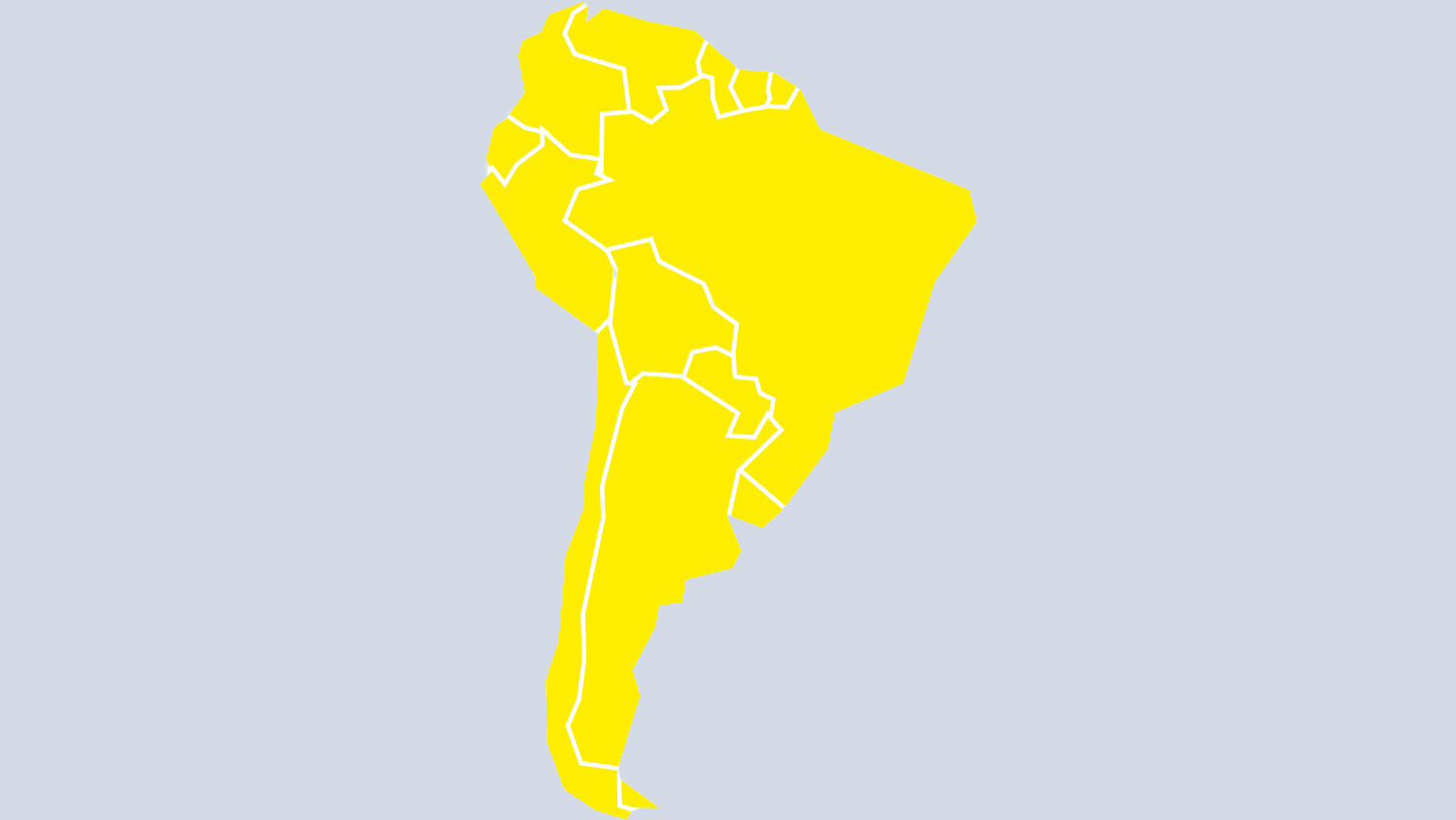
Leaders in Argentina, Paraguay, Ecuador, Bolivia, Honduras, Chile, Costa Rica, Colombia and Peru have pushed back against left-leaning trends. Brazil is on the same track, but the swing to the right faces a major obstacle.
During the Cold War, most Latin American countries were ruled by right-wing military dictatorships. From the late 1990s to the 2010s, a “pink tide” of left-leaning governments took office. Governing parties and coalitions briefly shifted right, but a second “pink tide” rolled in after the coronavirus lockdowns.
That tide looks like it’s already rolling back out. Voters across the continent are demanding something to wash away or at least cool down inflation, illegal immigration, corruption and rising crime.
Latin America’s leftists have sustained a series of major defeats:
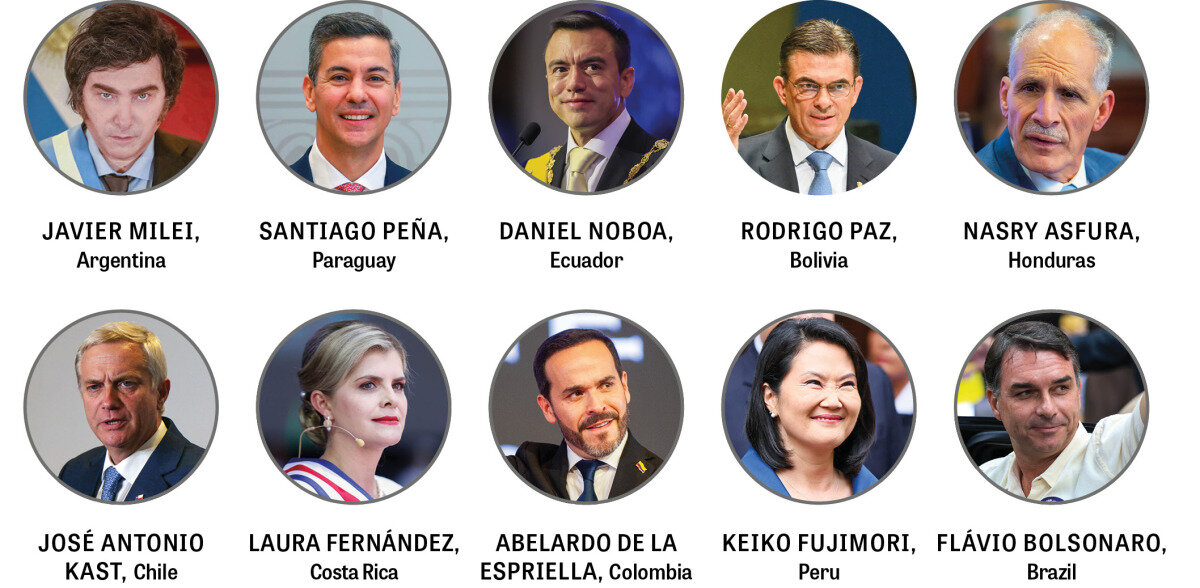
Javier Milei, Argentina
“Milei Crushes Argentine Left”
(Fox News, Nov. 19, 2023)Santiago Peña, Paraguay
“Paraguay’s Conservatives Score Big Election Win …”
(Reuters, May 1, 2023)Daniel Noboa, Ecuador
“The conservative president won reelection in a runoff against the leftist Luisa González ….”
(El País, April 15, 2025)Rodrigo Paz, Bolivia
“Paz Wins Bolivian Presidency, Ending Nearly 20 Years of Leftist Rule”
(Reuters, Oct. 20, 2025)Nasry Asfura, Honduras
“The election is continuing Latin America’s swing to the right ….”
(Associated Press, Dec. 12, 2025)José Antonio Kast, Chile
“Landslide Win for Kast Gives Chile Its Most Right-Wing President in Decades”
(AP, Dec. 15, 2025)Laura Fernández, Costa Rica
“Fernández Wins Costa Rican Presidency, Steering Latin America Further Right”
(Guardian, February 2)Abelardo de la Espriella,
Colombia “Far-Right Millionaire Wins Colombia’s Razor-Tight Presidential Election”
(Guardian, June 21)Keiko Fujimori, Peru
“Peru’s Presidential Vote Gives the Right in Latin America Another Win”
(New York Times, June 29)Flávio Bolsonaro, Brazil
“Bolsonaro has won the first round of Brazil’s presidential election, beating left-wing President Lula da Silva ….”
(bbc, October 10)
In the first round of Brazil’s election, Flávio won 56.1 million votes (47 percent) against Lula’s 53.9 million votes (45 percent). The remaining candidates, who received nearly 8 percent, were mostly center-right, so it seemed unlikely their voters would shift to Lula in the second round.
However, to nearly everyone’s surprise, the official result of the October 25 election shows Lula winning a stunning 64.3 million votes (51.8 percent). Where did the additional votes come from? Bolsonaro claims the election was stolen, and there are indications he is right. For example, a Supreme Court justice, Lula’s former personal lawyer, extended the closing time in areas that favored Lula. Soon after the election, Bolsonaro had his passports confiscated and was forced to flee to the U.S.
In the meantime, Lula will not have an easy time governing at home. Bolsonaro’s Liberal Party, despite failing to secure the presidency, roughly doubled its Senate caucus and is now the chamber’s largest single party. Together, right-wing parties won a majority, 303 of the 513 seats in the Chamber of Deputies and 49 of 81 Senate seats.
If Lula is unable to hold on to power, the country will likely shift even further to the right.
Disillusionment with left-wing promises often takes years to build, but once it sets in, countries shift right, and sometimes far to the right.
In the last three years, Latin America has vividly demonstrated this fact. Bible prophecy reveals where this trend will lead.
Law and Order
A common factor these leaders share is a promise to reestablish law and order.
The Associated Press wrote on June 16: “Right-wing populists have been making headway in some of Latin America’s biggest economies, promising a strong-arm approach to combating crime and illegal immigration as an answer to the left-wing populism that took hold in the region just a few years ago.”
You can find that promise emphasized in almost every campaign of the recently elected leaders.
“[T]hose who will have a bad time and be afraid will be the criminals,” Milei said in 2023.
“In my government, we are going to say goodbye to crime,” Peña said in 2023.
“The fight against organized crime must be frontal and coordinated,” Paz stated in 2025.
“There will be no truce against crime,” Noboa vowed in 2025.
“[W]e will provide the police and members of the armed forces and gendarmerie with the material and human means for the recovery of public order and security, and we will give them all the political and legal support of the government of Chile for the legitimate use of the force of the state,” Kast said in 2025.
Asfura’s 2025 campaign slogan was “Security: Working and Living Without Fear.”
“I will fight for a firm hand against organized crime,” promised Fernández.
“The citizens’ demand right now is to recover order,” Fujimori said, “and that is our main proposal and the central axis of our campaign.”
“[S]ecurity will return to the miracle homeland, because crime is the main enemy of freedom and stability,” Espriella said this year.
“In my government, the priority will be to protect the victim and the law-abiding citizen, and not to go easy on criminals, as the current government does,” Bolsonaro promised.
Several Latin American leaders have made major changes to fulfill their law-and-order promises. In January 2024, Ecuador’s Noboa declared an “internal armed conflict” and deployed the military against criminal groups. Subsequently, Amnesty International documented allegations of security operations resulting in arbitrary detentions, torture and disappearances.
On October 14, Costa Rica’s Fernández inaugurated a $35 million, 5,100-inmate, maximum-security prison modeled on El Salvador’s mega-prison to confine the country’s most dangerous criminals.
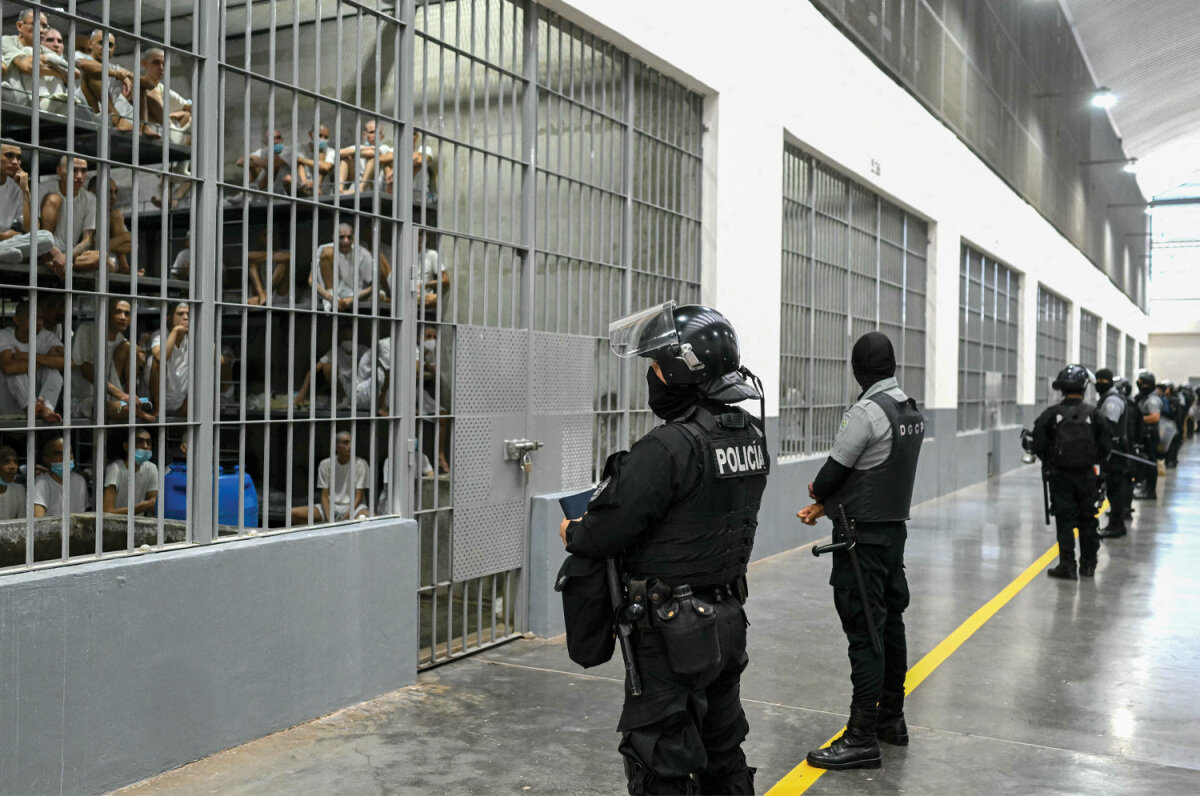
Chile’s Kast has enacted a constitutional reform that places the prison system under the country’s public order and security forces. He has also proposed further constitutional amendments to strengthen the police.
Honduras’s Nasry Asfura delivered 342 vehicles and motorcycles to military police on June 30, pledging to strengthen the fight against organized crime, drug trafficking, human trafficking and extortion.
Law and order is exactly what citizens across these nations need. But the trajectory is eerily reminiscent of Latin America’s Cold War leaders. In fact, some of these leaders outright praise Latin American dictators of the recent past.
Reviving Old Demons
“Chile wants change,” José Antonio Kast said after winning the presidential election in December 2025. This is true for all of Latin America, and the results of prior and subsequent elections across the continent prove it. But the change revives Latin America’s demons of the past.
Kast’s victory is a case in point.
His predecessor, Gabriel Boric, allowed Chile to absorb a large influx of criminal Venezuelan migrants, resulting in a surge in violent crimes. Kast campaigned to end it—and the numbers show that he has delivered on that promise. Chile’s Interior Ministry says that, compared to the same period last year, reports of irregular border crossings from January to August fell by 93.3 percent.
Kast thus joins a growing cohort of Latin American leaders who have turned their countries away from the leftward political trend of previous years.
But Kast himself is the son of an immigrant with quite a different background. His father, Michael Kast, came to South America after World War ii—from Germany, where he was a Nazi Party member and an officer in Adolf Hitler’s Wehrmacht. In Chile, he founded a factory for meat and sausage products and began a new life, as did many other Nazis.
The elder Kast is believed to have worked with Chile’s intelligence agency under tyrant Augusto Pinochet.
Kast’s siblings have served as legislators; his brother Miguel served as president of Pinochet’s central bank.
During the 2021 election campaign, Kast said, “If Pinochet were still alive, he would vote for me.”
Kast was heavily influenced by Jaime Guzmán, an adviser to Pinochet, while studying law at the Pontifical Catholic University of Chile.
He is not the only one with connections to past authoritarian rulers.
In Peru, Fujimori was the first lady from 1994 to 2000 during her father’s term in office. Alberto Fujimori ruled the nation as an authoritarian for an entire decade, from 1990 to 2000, before allegations of corruption led him to flee to Japan. In 2005, he tried to mount a political comeback from Chile but was arrested and convicted, then imprisoned for 16 years for human rights abuses committed as president.
Crime rates and political instability have gotten so bad that Keiko Fujimori’s law-and-order campaign overshadowed all these past associations.
Field Marshal Humberto de Alencar Castelo Branco became president of Brazil following a 1964 military coup. He began 21 years of dictatorship in Brazil, in which civil rights were limited, due process was often ignored, and political dissidents were murdered and tortured. There were 191 confirmed political murders, at least 243 disappearances and over 20,000 cases of torture.
Jair Bolsonaro, the father of Flávio, repeatedly defended Brazil’s 1964–1985 military dictatorship. In 1993, as a legislator, he declared his support for the dictatorship. In 2019, as president, he called Col. Carlos Alberto Brilhante Ustra, who was convicted of torture, a “national hero.” Ustra had led a military intelligence unit responsible for repressing Brazilian citizens who were deemed opponents of the regime.
In 2019, Jair Bolsonaro reinstated military celebrations of Brazil’s 1964 military coup that ousted the elected president.
Those who defend Latin America’s past dictatorships often point to the many left-leaning governments that have set up authoritarian rule in the region as well. The best examples are in Cuba, Venezuela and Nicaragua. As time passes, the evils of the recent and current left-leaning authoritarians are remembered while those further in the past are forgotten.
But we need to remember the facts regarding the region’s past dictatorships.
Gen. Jorge Rafael Videla led a military junta to take control of Argentina on March 24, 1976. That started a seven-year period called “the Dirty War,” in which 15,000 to 30,000 people—including student protesters, journalists, artists and those suspected of holding liberal ideas—“disappeared.” Many of them were thrown into the country’s approximately 340 concentration camps and killed. The junta crumbled in 1983, the year after its failed invasion of the Falkland Islands.
Augusto Pinochet’s military junta in Chile forcibly replaced the democratically elected government of Salvador Allende on Sept. 11, 1973. Amnesty International estimates that his regime, which lasted until 1990, killed 3,000 people and imprisoned or tortured 40,000 others for resisting communism and other political reasons. That is a conservative estimate, and more than 1,000 people remain missing to this day.
Will Latin America’s past also be its future?
The Catholic Connection
Notably, many of the new conservative, crime-fighting Latin American leaders are Catholic. The most prominent of them are Espriella, Fernández, Fujimori, Paz and Peña. Bolsonaro and Milei were raised Roman Catholic and maintain close ties to the church.
Baylor University wrote on September 2, “The recent close elections of conservative populist candidates in Peru and Colombia suggest a new injection of Catholicism into polarized Latin American societies.”
After the election of Paz in Bolivia, Crux wrote that the Catholic Church is hopeful that he will restore “the traditional role” the church has historically held in the country.
Catholics constitute 46 to 67 percent of adults in Argentina, Brazil, Chile, Colombia, Mexico and Peru—roughly two to three times the share in the United States, where only 20 percent describe themselves as Catholic (of whom 29 percent are immigrants and 14 percent are the children of immigrants).
What “traditional role” has Catholicism played in governments in Latin America and beyond?
Historically, the Catholic Church united with European states and their military institutions to facilitate the Crusades, the conquest of Latin America, the Inquisition, the Thirty Years’ War and other wars of religious suppression. Study the history of Spain, Latin America, Austria and Italy and you will see that the more successful the Inquisition was in eliminating other religious beliefs, the more Catholic that nation is today.
Government-enforced religious conversions are the main reasons Latin American populations have been predominantly Catholic over the centuries. Recently, however, this Catholic stronghold has been crumbling. Over the last decade, the share of Catholics has declined more than 10 percentage points.
During a 2022 visit to Spain, Kast lamented “an increasingly low participation of Catholics in Sunday mass” and said “some essential pillars of our religious approach, such as the family, the unborn child and education, have not been defended, perhaps with the necessary force.” He warned that secularists in Latin America want to “eliminate God from our lives, from our laws, from all our daily activities.”
“I am not a Catholic politician,” he said. “I am a political Catholic.”
Catholics are often just as sincere as other Christian denominations. But as these Catholic leaders rise up, we need to closely watch their agenda and associations—and to remember history and pay attention to Bible prophecy.
Bolsonaro, Kast and Milei all maintain close connections to Spain’s Vox political party. Milei visited Madrid in October and endorsed the party for the November 29 election. These leaders remain religiously and ideologically tied to Spain and Europe, a relationship that goes back five centuries to the rule of the Holy Roman Empire under the Habsburg dynasty.
Today, the religious tie between both continents is becoming increasingly relevant once again. The leaders of Europe’s largest economies are Catholic or have a Catholic background: Germany’s Friedrich Merz (openly Catholic), France’s Emmanuel Macron (baptized Catholic at age 12; agnostic today) and Italy’s Giorgia Meloni (though she often calls herself just Christian).
Bible prophecy reveals that this connection will bind these two continents into a close-knit alliance that will lead to a siege of the U.S. (Deuteronomy 28:52).
Trumpet editor in chief Gerald Flurry writes in his free booklet Isaiah’s End-Time Vision: “Herbert Armstrong long prophesied, and we expect, the alliance between Europe and South America to grow extremely strong. The most significant factors that will cement this connection are religion and language: Roman Catholicism is the dominant religion of Latin America ….”
These recent elections may be just what the continent needed to enter into closer cooperation with Catholic Europe. The October 1957 Plain Truth, predecessor to the Trumpet, stated, “Latin American nations will join in with the European revival of the old Roman Empire ….”
The final verdict of each leader is not in yet, but the direction is clear and in line with Bible prophecy. Individually, these leaders will change the trajectory of their respective country. Together, they will change the direction of the continent and even the world.