

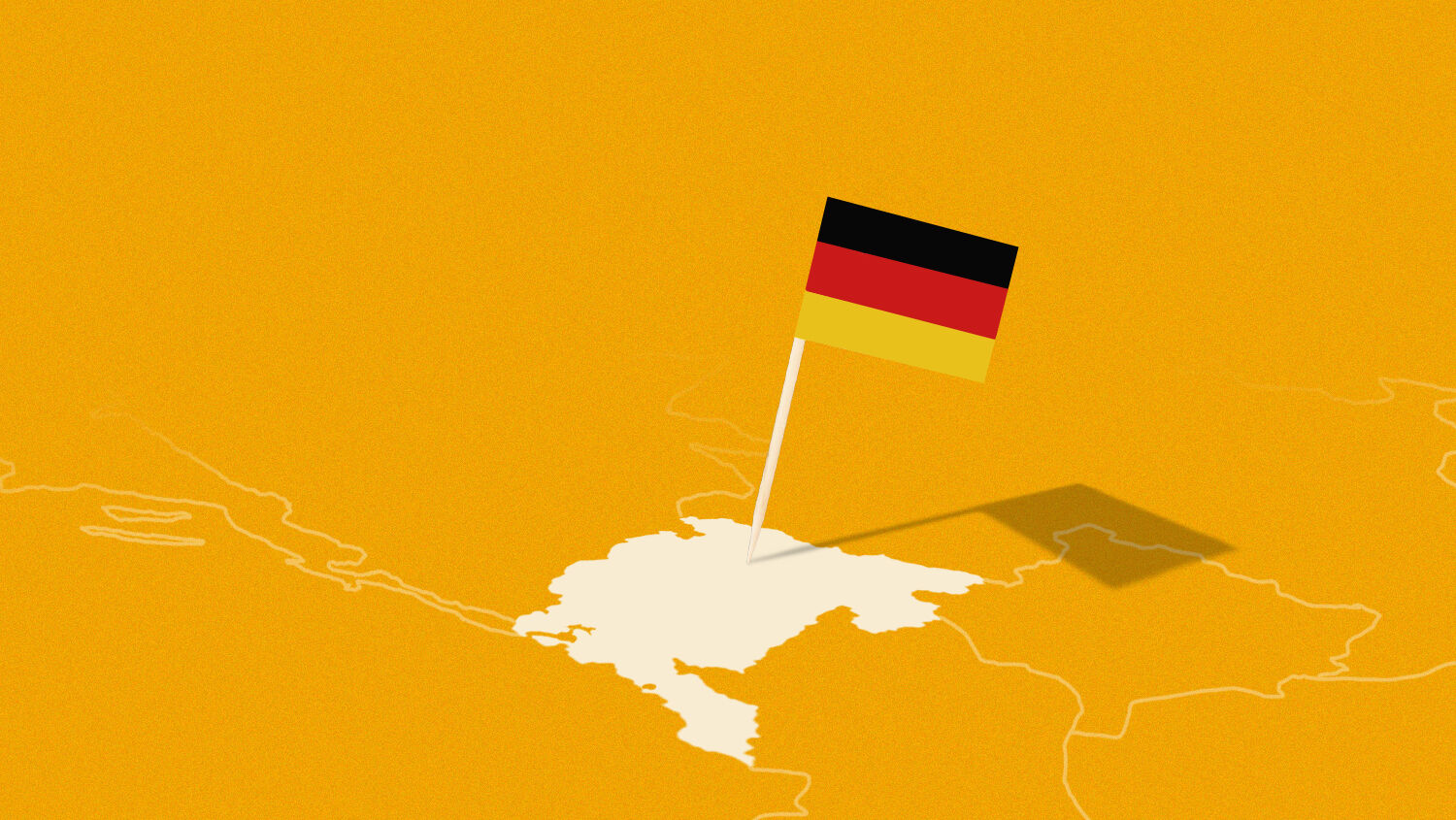
Germany Still Wants Montenegro
At a summit yesterday in Montenegro, German Chancellor Friedrich Merz said it “is realistic” for the Balkan nation to join the European Union as early as 2028 and encouraged the Montenegrin government to continue forward momentum toward that goal.
- Montenegrin President Milojko Spajić held the Berlin Process Leaders’ Summit in the town of Miločer in part to discuss his nation joining the EU.
This timetable is extremely optimistic. Attaining EU membership is notoriously slow. Many in the EU have pushed for Ukraine to become a member to protect it from Russia, yet the earliest it would join would be half a decade. Turkey has officially been a candidate since 1999 and is still nowhere near joining. Analysts have anticipated Montenegro joining in the 2030s.
- Croatia, which, as a current EU member, has veto power over new membership, has threatened to derail Montenegro’s process due to unsettled issues from the 1990s Yugoslav War.
Montenegro gained independence from Yugoslavia in 2006 and applied for EU membership in 2008. It currently has settled 21 of 33 “chapters,” which are government policies the EU requires a nation to institute to align with the rest of the bloc.
Yugoslavia fell into war and broke apart in large part because of meddling by Germany and the Vatican. As Trumpet editor in chief Gerald Flurry writes in his free booklet Germany’s Conquest of the Balkans, Germany feared a united Yugoslavia would prevent it from dominating Europe, and it wanted strategic control over the Adriatic Sea.
- Montenegro controls an important coastline near the Adriatic’s entry point to the Mediterranean Sea.
- Germany’s preferential treatment of Montenegro’s EU membership shows it is seeking to consolidate control in this region and project economic and military power into the Adriatic.
The struggle for the Balkans and the Adriatic isn’t over. Read Germany’s Conquest of the Balkans to understand the real power behind that struggle and Germany’s greater strategic ambition.


