

Russia’s Unprecedented Satellite Maneuver Raises Fears of Space Warfare
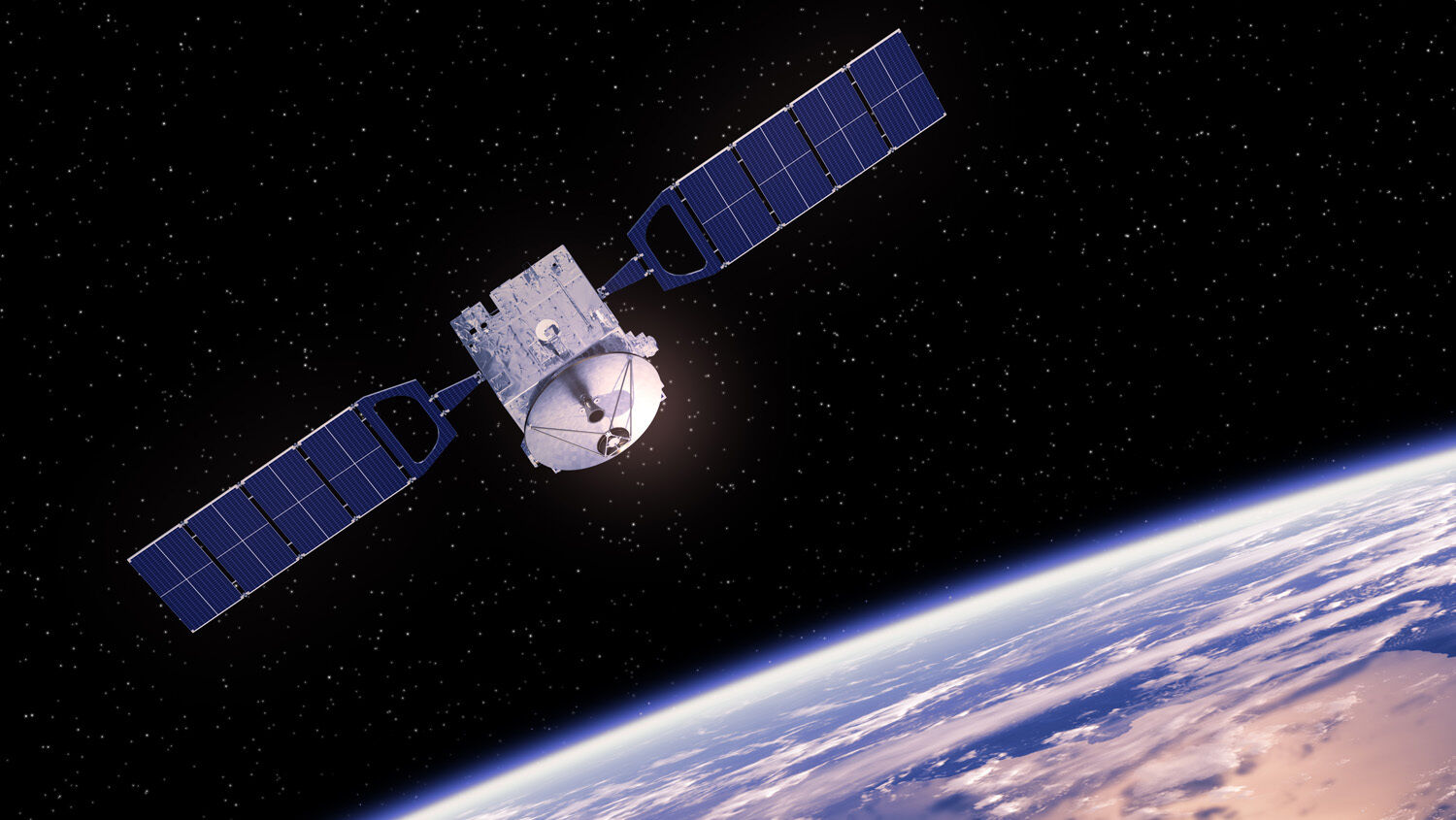
A Russian military satellite made an alarmingly close approach to a United States-registered observation satellite believed to support Ukraine from October 15 to 19, raising fresh concerns about the vulnerability of satellites in orbit.
Cosmos 2612 was launched into low Earth orbit in April, along with five other satellites on a single rocket, according to space-tracking firm LeoLabs. In May, Cosmos 2612 and four of its companions performed unusual energy-intensive maneuvers to match their orbital inclinations with that of the observation satellite Iceye-X36.
Iceye, a Finnish-founded multinational satellite manufacturer with U.S. offices, specializes in synthetic aperture radar satellite imaging. The company announced in 2022 that it was providing satellite imagery to Ukraine to aid its defense against Russia.
The May maneuvers put Cosmos 2612 and its companions into orbital planes aligned with Iceye-X36, a step that could facilitate closer approaches. But it would be several months before Russia made its most alarming moves.
Those began on October 15, when Cosmos 2612 made a sudden, rapid approach toward Iceye-X36, closing in from 217 miles away to just 3 miles by the early hours of October 16.
Over the next several days, Cosmos 2612 carried out “a deliberate series of maneuvers toward Iceye-X36,” LeoLabs said, which involved “continued maneuvering around Iceye-X36, shifting between positions ahead of and behind the commercial satellite.”
At one point, the Russian satellite came only a third of a mile from Iceye-X36. With both satellites hurtling around Earth at roughly 17,000 miles per hour, the encounter was alarmingly close.
“This is the most advanced and potentially dangerous uncooperative rpo we’ve observed,” Leolabs vice president for technical solutions Adam March told Breaking Defense, referring to a rendezvous and proximity operation.
‘Level the Battlefield’
The unprecedented approach comes amid broader Russian and Chinese efforts to develop weapons for attacking satellites from space, the ground and cyberspace. Both nations are launching satellites with robotic arms and other potential offensive capabilities while developing ground-based antisatellite weapons, including missiles, jammers and directed-energy weapons. They are also pursuing cyberattacks against satellites, potentially using logic bombs and computer viruses.
Whether from space or the ground, Russian and Chinese abilities to incapacitate U.S. satellites are “significant,” according to Nikkei Asia chief desk editor Ken Moriyasu, because “the next major war could be decided in the opening minutes of the first day, as each side attempts to disable the enemy’s communication tools.”
Some believe the notion of “mutually assured destruction” would dissuade Russia, China and other nations from attacking U.S. satellites, since those countries also have valuable space assets that America could target. But the reality is that America has far more satellites than any other country and depends on them to an unmatched degree. As of October 21, the U.S. operated nearly 13,000 active satellites of the global total of 17,200—about three times as many as all other nations combined.
The U.S. relies on its tens of thousands of satellites for everything from weather monitoring and television broadcasting to telephone and Internet connections. Most importantly, the U.S. military depends on satellites for reconnaissance, command, control, communications, intelligence, surveillance, navigation, targeting and missile-guidance systems.
America is vastly more vulnerable to satellite attacks than any other nation, a reality that Russia and other adversaries are well aware of. They would likely be prepared to accept losses to their own space assets if it let them disable those of the United States. As Gen. Stephen Whiting, head of U.S. Space Command, said in April, such a gambit would “level the battlefield” ahead of a conflict.
Frank Rose of the Brookings Institution agrees with this assessment. “Adversarial nations are developing antisatellite weapons,” he said, “because they believe space represents an asymmetric vulnerability of the United States.”
‘Our Own Achilles’ Heel’
Trumpet editor in chief Gerald Flurry has warned on several occasions of the dangers of America’s reliance—especially its military dependence—on computer systems that are vulnerable to attack. In a January 1995 Trumpet article, he cited analyst Joe de Courcy, who described this dependence as “the Western world’s Achilles’ heel”—a reference to the figure from Greek mythology who was susceptible to harm exclusively on his heels.
“America is the greatest superpower this world has ever known,” Mr. Flurry wrote in 1999. “But we have a very vulnerable point in our military—our own Achilles’ heel. It is so dangerous that I am amazed it hasn’t received more publicity.”
Mr. Flurry said de Courcy’s warning about cybervulnerability reminded him of a Bible prophecy in Ezekiel 7. The first three verses of the chapter show God is addressing “the land of Israel” in the time of “the end,” which means the modern-day U.S. and Britain.
Ezekiel describes a future time when God will bring punishment on these powers due to their refusal to turn to Him, and verse 14 provides a stark image of one aspect of the punishment:
They have blown the trumpet, even to make all ready; but none goeth to the battle: for my wrath is upon all the multitude thereof.
Mr. Flurry called this an “alarming” passage about a time in the near future when U.S. military technology will have been compromised by adversaries. “It seems everybody is expecting our people to go into battle, but the greatest tragedy imaginable occurs!” Mr. Flurry wrote in 1995. “Nobody goes to battle—even though the trumpet is blown! Will it be because of a computer terrorist?”
Isaiah 59 offers additional insight into this future period of calamity affecting the U.S. and some of its allies. In verses 9 and 10, the people of America are depicted as having lost their vision:
[W]e wait for light, but behold obscurity; for brightness, but we walk in darkness. We grope for the wall like the blind, and we grope as if we had no eyes: we stumble at noonday as in the night ….
This is already happening spiritually in the U.S. and Britain today, with the people of the nations groping around in spiritual blindness. This prophecy may also include the loss of physical vision, including those provided by America’s tens of thousands of satellites.
In his booklet Isaiah’s End-Time Vision, Mr. Flurry discusses prophecies in Ezekiel 5 and 27, Isaiah 22 and 23 and Revelation 18 that show which nations will initiate the attack on America and its allies. He lists them as a German-led European empire and certain Asian powers, including Russia and China.
Taken together, these prophecies cast Russia’s unprecedented maneuver in orbit this week in a sobering light. Dark times lie ahead. The Bible, however, reveals a type of vision that no weapon can destroy—and explains how to make it your own.
To understand the prophetic forces shaping today’s geopolitical landscape and discover the vision that transcends the conflicts ahead, order your free copy of Isaiah’s End-Time Vision.


