

AfD Victories Leave the German Government in Crisis
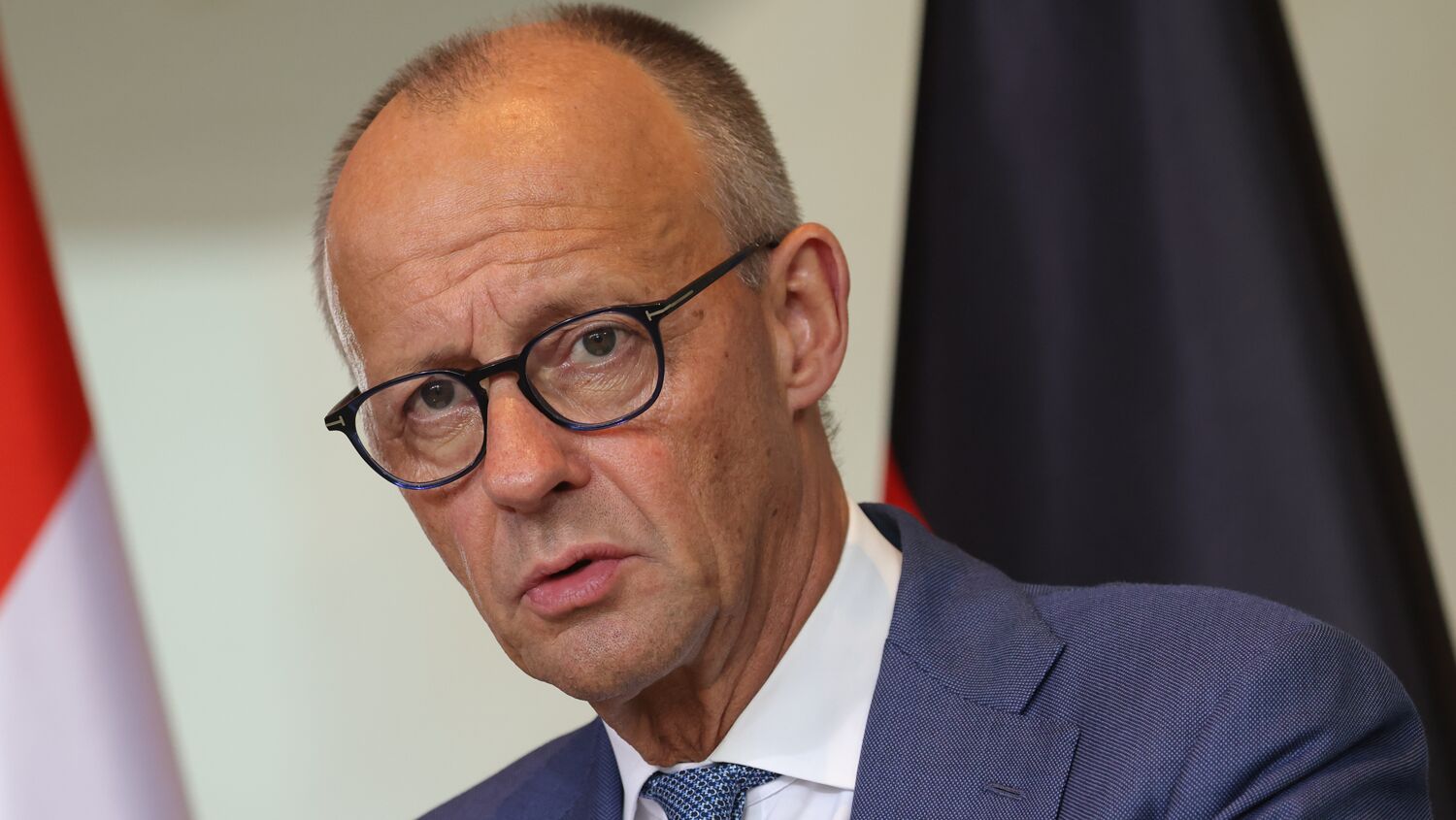
German Chancellor Friedrich Merz is the most unpopular chancellor since polling began. His party, the Christian Democratic Union (cdu), was gutted in the recent state elections. His coalition partner is more accurately described as an adversary. Rebels in his own ranks wait like vultures for his demise. Under normal circumstances, such an unpopular chancellor would either resign or be ousted. But conditions are not normal, and all alternatives appear worse.
In the September 6 state election in Saxony-Anhalt, the cdu’s share of the vote fell from 37.1 percent to 17.2 percent. The far-right Alternative für Deutschland more than doubled its share, reaching 42.8 percent. This Sunday two more state-level elections will take place—and polls indicate another devastating result for the cdu.
Political commentator and former Defense Minister Karl-Theodor zu Guttenberg said in the podcast Land in Sicht on September 15:
I believe the situation has become so intractable that there is currently no silver bullet, and the risk of Berlin becoming ungovernable has once again increased dramatically in recent days. … I believe we’re already in the midst of a national crisis; it’s just that everyone is reluctant to call it that.
Will Germany Become Ungovernable?
Many blame Merz for the devastating election results. His government is pushing through unpopular reforms to taxation, the labor market, pensions and business. Yet he appears undeterred. On September 7, he said at a press conference:
Ladies and gentlemen, I know that I, too, have been a recurring topic in this election campaign. We know that reforms have been a recurring topic in this election campaign, and they will continue to be so. But speaking for myself, I want to make it clear that our country needs fundamental reforms. …
This is about nothing more and nothing less than the future of our country and the opportunities for our children and grandchildren—and we must not squander them. That is why my determination to continue on the path of reform remains unwavering.
Merz clearly doesn’t want to resign. If he did, his party would lose badly in fresh elections as would his coalition partner, the Social Democrats.
The other option is to elect a new chancellor with the current parliament. But rival candidates are few and unimpressive. Guttenberg explained:
I don’t see a majority within the cdu for an ambitious Markus Söder, and I’m also not entirely sure whether Hendrik Wüst would want to—or even be able to—throw himself into this situation right now.
He added that the “spd won’t lift a finger for a change in the chancellorship,” as that would only benefit the cdu and not them.
But even if a chancellor swap were successful, the new chancellor would have to fight the same problems and would quickly lose popularity.
Some hope the formation of a new party with new personalities would be a viable alternative to the political deadlock. Guttenberg pointed out that such a party could perhaps gain 20 percent with a good election campaign; however, he explained:
A party like that, on which enormous hopes have been pinned, couldn’t govern on its own, but would immediately have to form a coalition. Forming a coalition brings compromise. … And this compromise, I believe, would trigger a sharp decline in trust—the likes of which we’ve probably never seen before.
When asked if he would be willing to add his own personality to such a party, he said he would not for the reason above.
How Crises Overshadow Quarrels
While the German political debate rages, the international community debates bigger issues—nothing less than human survival is at stake. Some predict that the advancements in artificial intelligence could get out of control and eradicate all human life. Guttenberg put these developments in the context of the current political debate:
I don’t think there has been a single moment in recent decades that has caused me as much concern as what we are experiencing right now. And how petty and, in some cases, utterly ridiculous the domestic political debates we are having here in Germany seem … in light of the scale of what is being discussed here. …
[I]f experts are saying there’s a 10 percent—or even just a 2 percent—chance that humanity could be wiped out, then—even if you call it pure science fiction—a government has to address it. … We’ve now reached a tipping point. We can no longer sit idly by. It’s simply no longer an option.
Since the invention of nuclear bombs, the world has lived with the possibility of human annihilation. Some now warn that AI could pose another path to annihilation. Guttenberg believes this should worry people more than their pension funds. After all, if humanity could be wiped out in 5 years, why worry about whether you will have to work or not in 20 years?
Other potential crises include an economic collapse, a looming world war and deadly pandemics. All of these make the quarrels seem petty.
“In times of crisis, people are less concerned about democratic norms,” Trumpet editor in chief Gerald Flurry wrote in “Europe Is About to Be Hijacked.” “They need strong leadership.”
The Bible prophesies of a time of such crises in which Europe’s national governments will feel overwhelmed and willing to surrender their power to an overarching leader. Referring to Revelation 17:12-13, Mr. Flurry wrote:
In the end, 10 kings will give their military might to one man, and will form a superpower that will shock the world! We believe there will be one supreme king over 10 kings. (There is a slight possibility that there could be just 10 kings total and that the leadership would come out of Germany.) But whether this prophesied ruler will hold a position in Germany or not, he will rule Germany and the rest of this European conglomerate.
Europe’s present leadership void creates an opening. Even though European states vote their leaders in, they could agree to have one man rule over all of them and give all of their military might (even France’s nuclear bombs) to that overarching power. Suddenly they would not only be a superpower but also a nuclear power with nuclear submarines!
To understand these prophecies in detail, read “Europe Is About to Be Hijacked.”
At the Trumpet, we believe Karl-Theodor zu Guttenberg is the most likely man to become the overarching strongman of Europe. His strong connections to the current government (his girlfriend, Katharina Reiche, is Germany’s economics minister) could provide him with an opening to this position and rulership over Germany.


