

Will Syria Get a Nuclear Weapon?
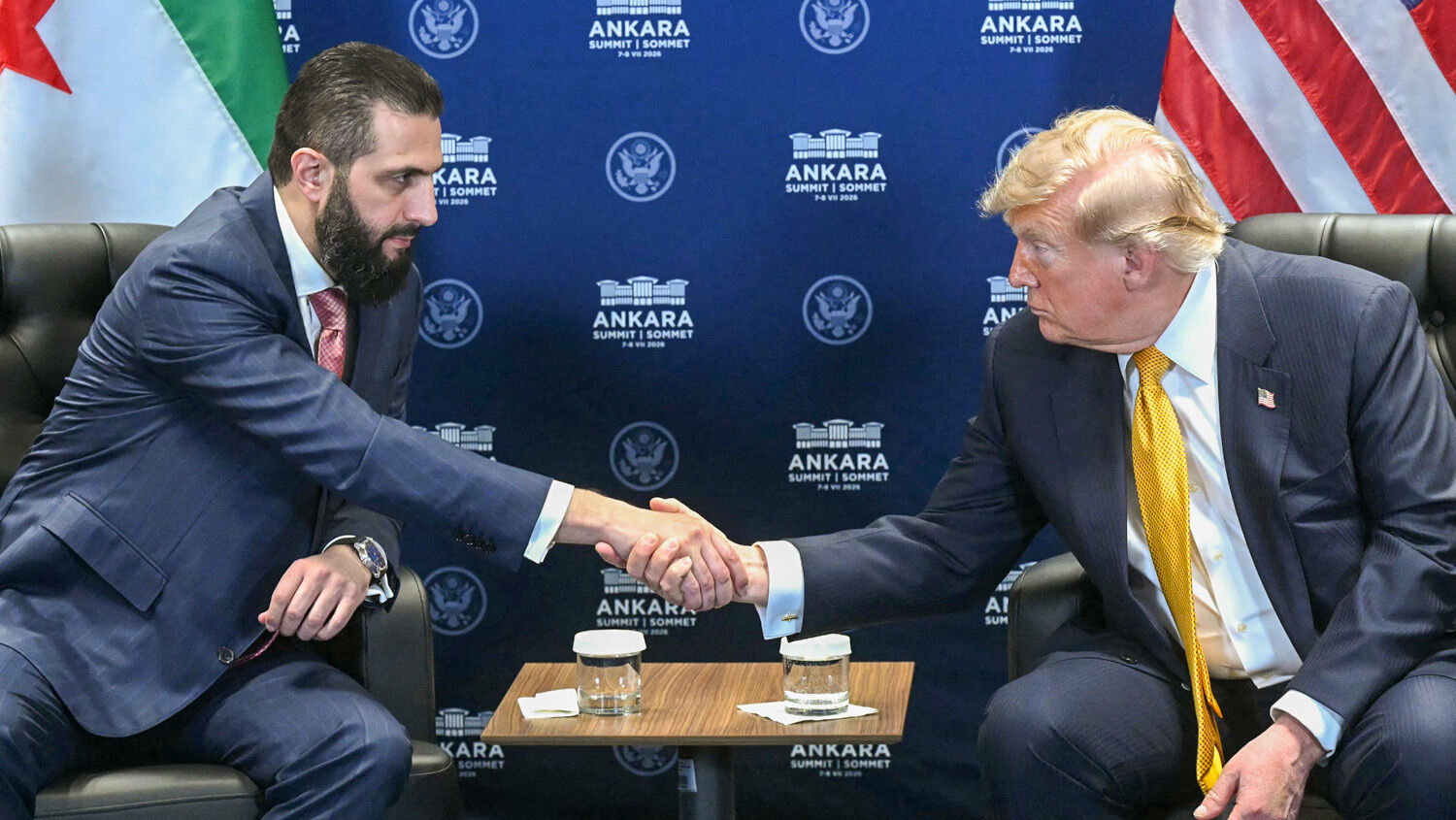
The United States made a “diplomatic agreement” to deal with nuclear material in Syria, Axios reported August 10. The U.S. claims this has made the Middle East safer. Instead, President Donald Trump may have just given Syria a path to a nuclear bomb.
The deal allows the International Atomic Energy Agency (iaea) to remove the material from “Site 99,” a secretive location where former Syrian President Bashar Assad was holding nuclear material. He previously had a nuclear weapons program at the al-Kibar site in Syria’s east, but Israel bombed al-Kibar in 2007; Site 99 was Assad’s storage facility for the salvaged uranium. After Assad’s regime fell in 2024, Israel bombed the entrance to Site 99 to stop Syria’s new leader, Ahmed al-Sharaa, from getting control. Israel has threatened to bomb the site again if Sharaa makes a visible attempt to access the uranium. President Trump’s deal is meant to diffuse these tensions.
“We think everybody is happy with the result,” a U.S. official reportedly told Axios. “Hopefully we will be able to kick off the removal process soon and end it before the end of the year.” iaea Director General Rafael Grossi stated August 18 the agency found at the site “a few tons of nuclear material that could be put to bad use.” Grossi said this material will now be subject to “international safeguards.”
President Trump has been looking hard—and failing to find—a diplomatic win since he returned to the White House last year. He has failed to bring peace to Ukraine, Gaza and Iran. Could he finally get his win in Syria?
With Grossi was Syrian Foreign Minister Asaad al-Shaibani. He said “technical assessments” indicate “these materials do not pose a risk” to international security. He said the nuclear material “will remain in Syrian national custody and subject to the agency’s safeguards system” and that Syria has a “sovereign and legal right” to enrich uranium “for civilian and peaceful purposes.”
For an impoverished nation recovering from civil war, a domestic nuclear energy program would be a cheap and easy way to help the country recover. But having a “sovereign and legal right” to nuclear enrichment is exactly what Iran has been saying for years about its own nuclear program—as it uses it to pursue a nuclear bomb. Iran is run by an Islamist government. So is Syria. Sharaa used to lead al Qaeda’s Syrian branch; his government still has tangible and concerning links to Islamic terrorism. Despite this baggage, the U.S. sees Syria’s government as trustworthy enough to keep hold of uranium previously used in a nuclear weapons program.
Israel’s main concern was that the Syrian government would hold on to Assad’s secret leftovers. The agreement is supposed to calm Israel’s concern. Yet rather than stop Sharaa from holding on to the nuclear material, this agreement formalizes it. More than that, it gives Syria’s nuclear program a veneer of international legitimacy that would make it harder for Israel to target in the future.
In other words, if Syria ever decides to use Assad’s leftovers to produce a nuclear bomb, President Trump just gave it a path to do so.
A prophecy in Psalm 83 describes a coalition of Middle Eastern nations formed “that the name of Israel may be no more in remembrance” (verse 4). This includes the State of Israel but also the United States. (Herbert W. Armstrong’s free book The United States and Britain in Prophecy explains.) The alliance, listed in verses 6-8, includes the “tabernacles of Edom, and the Ishmaelites; of Moab, and the Hagarenes; Gebal, and Ammon, and Amalek; the Philistines with the inhabitants of Tyre; Assur also is joined with them ….”
This prophecy makes little sense unless one knows the modern descendants of these peoples. As Trumpet editor in chief Gerald Flurry explains in The King of the South, the Bible combined with historical research points to Edom and Amalek equating with Turkey, the Ishmaelites being the Gulf Arabs, Moab and Ammon being Jordan, Gebal and Tyre as Lebanon, the Philistines with the Palestinians, and crucially for our purposes, the Hagarenes with Syria.
Mr. Flurry wrote about the Psalm 83 alliance in his article “Deadly Flaws in Mideast Peace Deals”:
While it seems that these nations are moving away from radicalism and violence, we must look beneath the surface. After all, this prophecy reveals that they will take “crafty counsel”—subtle and shrewd dealing. This sure prophecy shows that these nations will ally to try to blot out the name of Israel forever! That is intense hatred!
“Syria was, for years, one of Iran’s most important proxies,” we wrote in our May-June print issue. “That ended with the fall of the Assad regime. But the new Syria, while less beholden to Iran, is also overtly anti-American. Through naivety or supposed pragmatism, President Trump is helping build this new al Qaeda-led Syria. He is giving ‘a chance of greatness’ to jihadists connected to al Qaeda.”
We wrote that regarding sanctions removal and military withdrawals. The current news shows President Trump’s dealings with Syria go far beyond that. He may be giving an al Qaeda regime a path to nuclear weapons.
Bible prophecy is silent on whether Syria will obtain nuclear weapons. But President Trump opening this possibility is chilling. To learn what the Trumpet expects of this trend, read our article “Handing Syria to Al Qaeda.”


