America Gambles on Everything

America Gambles on Everything
In 2003, the National Football League refused to let Las Vegas buy a tourism ad during the Super Bowl. It felt that just stating the name of the city could be considered endorsing gambling. Congress had banned sports betting in 1992, and most American state and local governments and sports leagues had as well.
By 2024, things had changed: The nfl staged the Super Bowl in Las Vegas. Betmgm, FanDuel and DraftKings were official partners of the league.
The nfl and the local governments that once held the line against gambling had surrendered. Why?
Probably the biggest single reason was that new technology had unlocked new temptations and new profits. The rise of the Internet and especially the smartphone makes gambling possible on a scale never before seen in human history. The unstoppable force of profits collided with what was supposed to be the immovable object of American morality—and the resistance to gambling crumbled overnight.
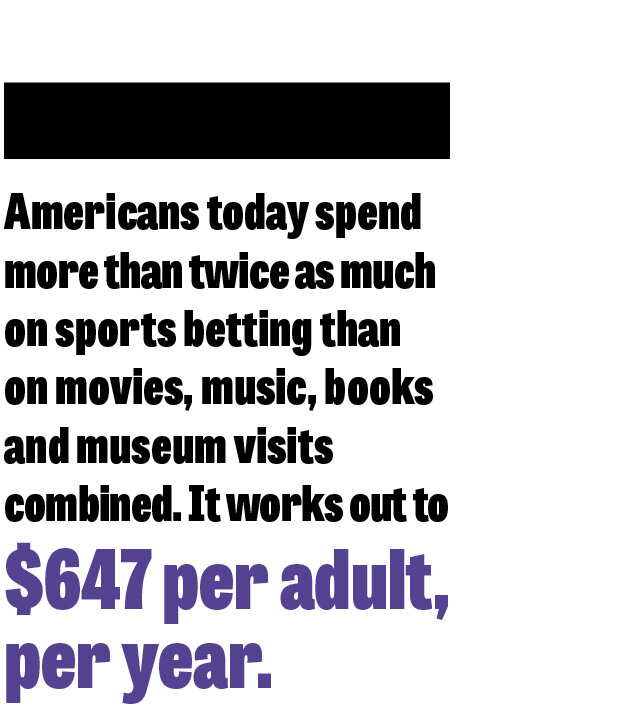
Americans today spend more than twice as much on sports betting as on movies, music, books and museum visits combined. It works out to $647 per adult, per year.
The change has come fast. In 2017, Americans bet $5 billion legally on sports with companies based in Nevada (the only state where it was permitted), plus untracked illegal and offshore betting. Last calendar year, legal sports betting had exploded to $166 billion.
Young men in particular are embracing it. Most of them have an online sports betting account. Two thirds of college students bet last year.
Smartphone-enhanced gambling has opened the floodgates of profits for certain companies. It has also unlocked dramatic new dangers.
Anything, Anywhere, Anytime
In 2018, the Supreme Court struck down the federal ban on sports betting.
Before 2018, gambling was already common: Around 1 in 5 Americans polled admitted they had bet on professional sports in 2017; nearly half of adults under 35 had. But it wasn’t necessarily convenient. People made bets with friends, used offshore gambling sites or companies based in Nevada; for other types of betting, they could visit casinos in Indian reservations or buy lottery tickets. They would bet perhaps a few times a year, or for a very enthusiastic gambler, a few times a month.
Now, many people are betting a few times per game.
The Supreme Court’s ruling would have had little effect, except that companies were already making a lot from online gambling using loopholes in the existing regulations. FanDuel and DraftKings are platforms for fantasy sports betting. The 2006 Unlawful Internet Gambling Enforcement Act declared them a skilled activity and therefore not gambling. When the federal gambling ban fell, they knew they could make billions if full-on sports betting was legal, so they spent millions lobbying state legislators.
The betting companies also dangled the promise of massive tax revenues for state governments. Soon after the Supreme Court ruling, covid-19 hit, leaving states desperate for cash. Most caved in. Since 2018, 39 states have legalized sports betting, with 30 allowing you to do it via smartphone apps. As it turns out, tax revenues are lower and the problems are greater than the betting companies promised.
The companies saw that smartphones enabled a new level of gambling. Nearly the entire adult population in America can bet on anything—sports-related or otherwise—at a moment’s notice. Only a decade earlier, gambling on a game watched with friends would be cumbersome and inconvenient: Only a dork brings his laptop to a Super Bowl party. Now, everyone in the group can whip out his phone. You can gamble on every game, multiple times a game, without leaving your seat. Every kick or pass, every substitution, every call from the referees, is an opportunity to place a bet. If those bets fail, the apps instantly encourage you to bet again to try to recoup your losses.
As Derek Webb, head of the Campaign for Fairer Gambling, summarized it, “You put the most addictive behavior on the most addictive device. What could go wrong?”
Smartphone apps enable bets that are more complicated and, potentially, more profitable. Parlays, called “sucker bets” by experienced gamblers, hold out the promise of huge payouts, by betting that several things will happen at once. Get the outcome of the game, the total scored by a particular player and the color of Gatorade poured on the coach (yes, that is something you can bet on) correct, and you win big. Get just one of those wrong, and you lose everything.
Parlays are popular: One study of three states found they made up 27 percent of all money wagered. They’re even more popular for the gambling companies, accounting for 56 percent of their revenue.
Apps also give the sports books (as sports gambling companies are known) a deep view into the lives of their customers. They have masses more data than they would on anyone who simply walked into a Las Vegas casino. They know how often you generally bet, what time of day or month, and where you are when you bet. They know when you might be trying to quit gambling and how to lure you back in. They have the data and are heavily invested in the data science.
Gambling hasn’t just taken over sports—it is everywhere. The “gamification” of financial investing is quickly blurring the line between gambling and investing. Financial markets are treated as a path to get rich quick, not to store wealth over time. Borrowing money to invest—one of the riskiest investment strategies—reached an all-time high this July.
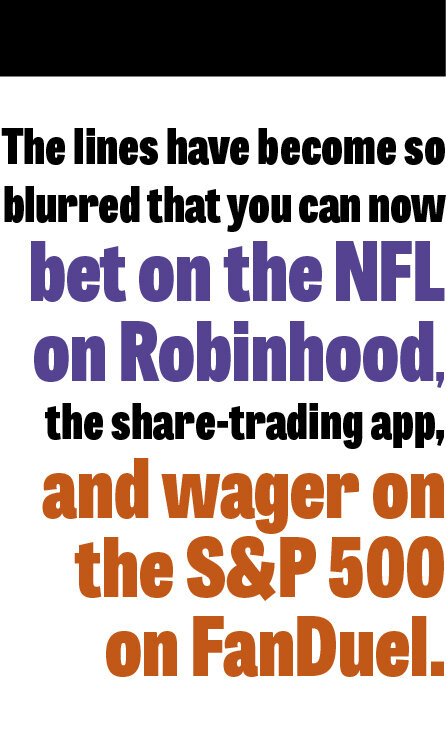
The lines have become so blurred that you can now bet on the nfl on Robinhood, the share-trading app, and wager on the s&p 500 on FanDuel.
And if gambling on sports, stocks, precious metals or cryptocurrencies isn’t enough for you, you can also bet on whether Donald Trump will praise Allah by the end of the month, whether a meteor will strike this planet by 2031, or whether the Earth is, in fact, flat. These are bets available through Kalshi, Polymarket and other prediction markets, which logged around $50 billion in betting last year worldwide (almost all of that by Americans).
Kalshi was valued at $2 billion in June 2025. In May of this year, it was $22 billion. Some say that by the end of the decade, Kalshi and Polymarket will be worth over a trillion dollars.
A New Addiction
The industry is changing so quickly that the effects aren’t yet clear—but we can see enough to know that it’s not good.
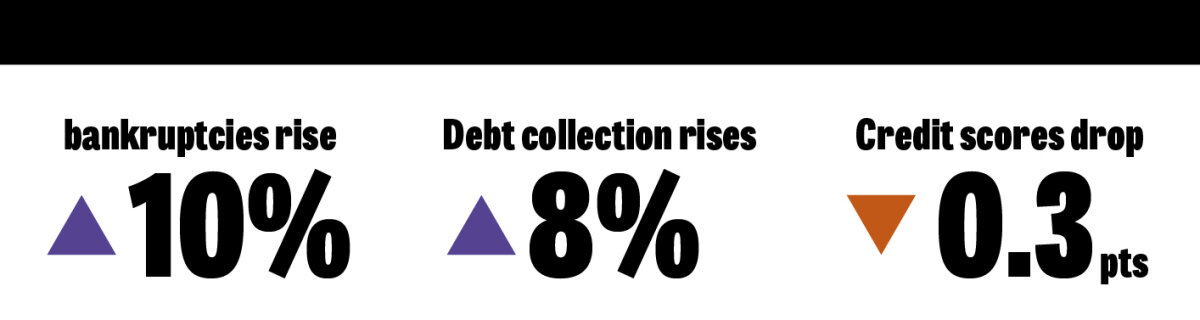
One study by ucla found that after a state legalizes online sports gambling, bankruptcies rise 10 percent. Debt collection rises 8 percent, and credit scores fall by 0.3 points. Calls to gambling addiction hotlines have spiked by 55 percent in some areas. The biggest victims are low-income men.
A study by Epic Research found that diagnoses of gambling disorder rose over 60 percent in states that had legalized sports betting. Rates of gambling disorder went up from 3 per 100,000 to 4.8—a 60 percent increase.
The vast majority of people lose money through these platforms. Two thirds of all money won on Polymarket was held by just 740 accounts—out of 2 million.
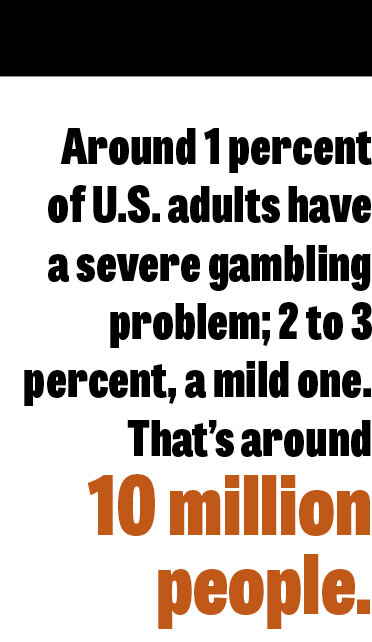
Millions of people are losing money they can ill afford to lose. Around 1 percent of U.S. adults have a severe gambling problem; 2 to 3 percent, a mild one. That’s around 10 million people. For some of those millions, “gambling problem” means eviction from houses, cars repossessed, and families destroyed. Roughly half of gambling addicts will commit a crime.
“Practically overnight, we took an ancient vice—long regarded as soul-rotting and civilizationally ruinous—put it on everyone’s phone, and made it as normal and frictionless as checking the weather,” McKay Coppins wrote in the Atlantic. “What could possibly go wrong?” (March 12).
To learn the answer, Coppins gave sports betting a go—a one-year gambling experiment. He went into it with significant guardrails: betting with only a limited amount of his employer’s money and possessing a personality generally immune to these kinds of addictions. Yet he ended up addicted.
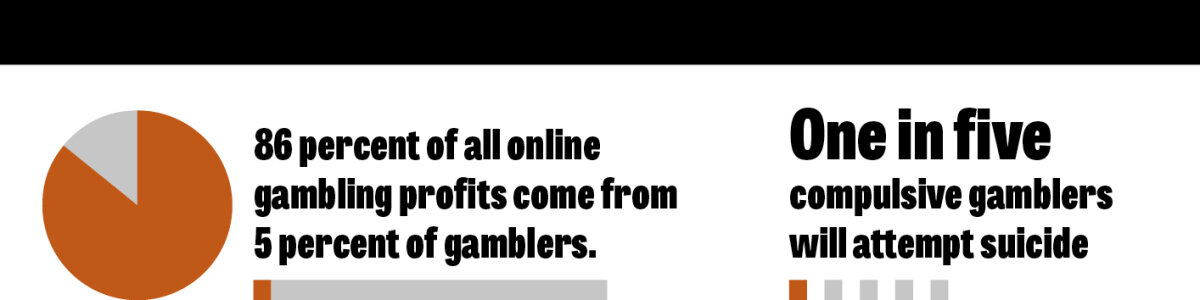
A gambling addiction is “easier to hide, at least at first—the addict doesn’t have glazed eyes or slurred speech, and no one can smell it on him,” wrote Coppins. “Plus, the compounding financial pressure of the habit can quickly turn a private vice into a full-blown crisis. One in five compulsive gamblers will attempt suicide in their life, a higher rate than for any other category of addict.”
Spot the Fix
These gambling apps have helped usher in a new kind of cheating in sports and in wider society. With old-style gambling, a player could theoretically throw the game to cash in on a bet, but it was hard: A player had to be capable enough to throw the game, and corrupt and disloyal enough to accept money for it. But if you can bet on every single aspect of the game, it’s much easier to cheat.
The practice has become so common that it has a name: “spot fixing.”
The basketball player Jontay Porter pleaded guilty to federal charges in July 2024 because he had faked injuries so those who had bet on him underperforming could gain huge payouts. In January, the U.S. announced charges against 26 people as part of a crackdown on fixing statistics in Chinese Basketball Association and U.S. college basketball games. Two Major League Baseball pitchers face federal charges for manipulating their performance to win money. Two tennis players were banned for 32 years for spot fixing. The practice is present in every sport.
It’s even more present on the prediction markets. A member of America’s special forces was arrested for making over $400,000 betting on Venezuelan strongman Nicolás Maduro’s arrest; the final bet was placed just hours before it happened. A flurry of bets were placed that America would bomb Iran just before the bombs dropped. The same thing happened shortly before Iran and the U.S. signed a ceasefire.
An incident involving former Republican Congressman George Santos showed how easy it can be to make money on these markets. “I’m going to be there for the State of the Union in the gallery, guys,” he posted on X the day before President Trump’s February 24 speech. The next day, he wasn’t there, claiming to be unexpectedly delayed. Santos later settled a claim that he had placed bets against his own attendance and had used his post on X to get himself better odds.
This new era of gambling comes with another major downside for athletes. For many viewers, it’s no longer “just a game.” More people’s life savings are on the line than ever before. And the gambling is more personalized: In addition to the result of the game, people are betting on the performance of individual players. Thus, if an athlete makes a mistake that costs someone money, he will often receive hate messages, even death threats, from unhinged “fans.”
This sickening trend transcends sports. With people betting on political events, journalists have become targets. One Times of Israel reporter received death threats because millions of dollars in bets hinged on whether he reported that either “missiles” or “missile fragments” had landed in a certain location in Israel. If people are betting on everything, then everyone is a referee—and anyone can be offered a bribe.
Coppins wrote, “Everything in American life—politics and culture, art and war—becomes a Las Vegas table game, tantalizing in its promise of profit, rigged against regular people, destined to demoralize and crush those who play.”
“[A]s a society, we are making an enormously risky bet,” he wrote, “that we can reap the rewards of a runaway gambling industry without paying any price; that the litany of social ills long associated with this vice—addiction and impoverishment, isolation and abuse, cheating and chasing and corrosive idleness—can, this time, be kept in check; that, unlike every civilization that came before us, we can beat the house.”
Attacking the Addicts
One reason gambling is so dangerous is that the sports books make nearly all their money from addicts: 86 percent of all online gambling profits come from 5 percent of gamblers.
These companies are on your smartphone, they have your contact details, and they are trying to get you addicted.
The betting platforms generally refer to their addicts as “vips.” These people are assigned “vip managers” who give them personal attention to keep them spending. The managers will receive a cut, in at least one case 25 percent, of the money the vip loses. That vip is showered with free gifts, such as free box tickets at sporting events, incentivizing him to continue betting.
Are these vips super wealthy individuals who can afford to lose a few thousand in a game? The United Kingdom forced gambling companies to check customers who were gambling beyond their means. Once enforced, the numbers enrolled in these vip programs dropped 90 percent. It’s likely that 9 in 10 American vips are similarly betting more than they can afford.
The tailored experience these apps provide makes it easier to keep the vips hooked. If you’re one of the rare people who actually makes money at gambling, then they will limit or even cut off your ability to use the app. But lose a lot and quit, and you will receive personalized offers designed to lure you back. Imagine if your local liquor store could mail you a package with a friendly message: Haven’t seen you in a while; here’s a free bottle of whiskey to get you going again. In fact, bartenders are expected to do the opposite—to cut off patrons when they’ve spent and consumed too much.
“When you don’t go to your drug dealer, he doesn’t usually show up and knock on the door and say, ‘Hey, psst. Do you need something?’” one problem gambler explained in a cbs interview.
Drug dealers also have a much harder time advertising openly. Sports books sponsor teams and stadiums. They spent nearly half a billion dollars on tv ads last year. But their presence goes beyond the ads themselves: Watch the games, and the commentators will reference gambling platforms and odds, spreading the message that betting on the games is normal. They even bring “betting experts” to comment on the games.
Prediction markets have the same relationship with news networks. Watch cnn and you may see a ticker from Kalshi advertising the odds if you want to bet on the topics under discussion.
For young people who watch e-sports and Twitch streamers rather than network tv, the problem is even worse. They are not simply seeing celebrities sponsored by DraftKings—oftentimes, their favorite streamer is bombarding them with sales pitches from offshore or unlicensed crypto casinos.
One streamer, Nadeshot, talked publicly about how bad these gambling ads were, getting young people addicted to gambling. But then he was asked what he would do if a gambling company approached him with $100 million. He replied, “I would sell my soul for $100 m’s.” A few years later, he signed a partnership with Roobet.
How many others have sold their souls?
Selling Their Souls
State governments have given in to intense lobbying efforts. Floods of money have eroded sports leagues’ once-principled stand against gambling. In 2023, the nfl was paid $132 million directly in gambling-related deals, according to the Washington Post—a sum equivalent to the sponsorship revenue of two or three nfl teams. In addition, the nfl also received around $120 million from sports-betting companies in exchange for their data. Those two deals alone were worth a quarter of a billion dollars—for one year, for one league.
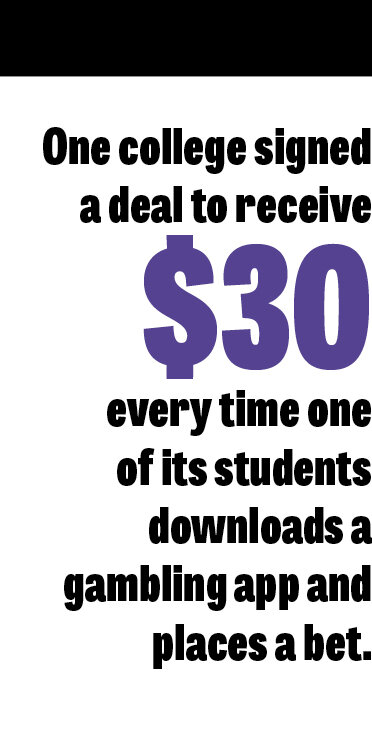
Betting companies are spending millions in partnerships with universities for college football. One college signed a deal to receive $30 every time one of its students downloads a gambling app and places a bet.
Laws and regulations exist to prevent certain abuses, but inventive companies keep finding loopholes and technicalities to circumvent them and part fools from their money.
One common ruse is to launch an app that is not a gambling platform. Instead, it runs a “sweepstakes.” People don’t gamble with real money: They use tokens or some other “in game” currency—which they buy using real money, and then swap for real money. That’s enough to sidestep bans on under-21-year-olds gambling and state gambling bans, and for gamblers to avoid paying taxes on their winnings.
Platforms like Kalshi and Polymarket use a different ruse. They insist that they are not gambling platforms but rather futures markets, a type of financial instrument that enables investors to hedge against future risks. What financial risk you’re hedging against by putting money on who will win Season 28 of Big Brother is unclear—but regulators are OK with it.
While Kalshi tells regulators that it’s not a betting site, it tells the public something else, advertising that “sports betting is now legal in all 50 states.” Still, it too avoids gambling bans, and is regulated with a light touch by the Commodity Futures Trading Commission.
The cftc is supposed to be overseen by a five-person commission, but it’s missing a few members; currently it’s just one man: Michael Selig. Rather than constraining Kalshi and Polymarket, he has functioned as an enthusiastic supporter of prediction markets and has actually used the cftc’s authority to try to shield them from state gambling regulators.
The rise of these prediction markets and their negative effects is a major story. Why hasn’t the Trump administration done more to deal with it? Well, Donald Trump Jr. is an investor, an unpaid adviser to Polymarket and a paid adviser to Kalshi. Is there a connection between the financial interest President Trump’s son has in these companies and the light touch of their regulator?
The Punters
We can’t put all the blame on betting companies and politicians. Individuals also have their role in the explosion of gambling. And here, too many find their morals compromised by large sums of money.
Some of the ubiquitous gambling ads promise hundreds of dollars for new users who bet just five dollars. That’s hard to resist, even for someone uneasy about gambling. What’s the harm in betting $5 and getting $300 in free bets? How could you lose money on that?
Gambling companies gave out $1 billion this way in just a year. The free bets count as marketing costs, so they are tax deductible. And it draws a lot of new customers.
In what other addiction are businesses allowed to offer free products to reel in customers? Spend $5 on cigarettes or painkillers, and we’ll give you $300 worth free!
This is a huge part of the problem. Many of us believe gambling isn’t great, but for the right price, we might look the other way—or try it out.
America once had a much greater belief in law, in unchangeable principles of right and wrong. Today our principles have been abandoned. We see trade-offs, cost-benefit analyses, mitigating circumstances. Gambling is bad, but think of the schools we can fund with the tax revenues. Gambling is wrong, but I can get rich quick from this introductory offer.
The Apostle Paul got to the heart of the problem when he warned: “For the love of money is a root of all kinds of evil …” (1 Timothy 6:10; New King James Version). That love has led individuals, sports leagues and government officials down the path of compromise. And from this one root, a host of evils has grown.
Better regulations could help restrain this root of evil. Advertising bans, bans on abusing “vips,” better “don’t let me gamble” laws—all have helped other countries like the UK apply brakes to a runaway gambling problem. Some fear that it’s already too late for these brakes in America: The gambling companies are now too wealthy, and too few have the principles or integrity to refuse the kind of cash they can throw around.
A return to banning sports gambling and prediction markets would help. But the gambling sites aren’t entirely wrong when they point out that with modern technology, Americans would use offshore and illegal sites to gamble anyway—albeit in smaller numbers than they do now, when bombarded with ads and endorsements.
But none of these fully address the root. Nor do they explain why we shifted away from the statewide bans we had in the first place. Once smartphones arrived and new profits were unlocked, our laws and our principles quickly crumbled.
A wider solution gets back to that uncompromising approach to law: maintaining unchanging principles that we will not compromise no matter how much money is on the table.
That is the biggest need this gambling crisis exposes. America needs law. Not just laws, regulations and governing bodies—but unchanging principles that we prize more highly than any amount of cash.
That’s a bigger, broader and harder change than going toe-to-toe with Big Gambling and passing stricter laws. Nevertheless, it is a change that can begin with individuals and families—people who will hold the line even when society does not.
The nfl gave in to the allure of Las Vegas cash. Will you?