When Will Germany Explode?
When Will Germany Explode?
Germany monitored, arrested, convicted and sentenced Abdul Ballout for the crime of “preparing a serious act of violence endangering the state.” And then decided to let him go—deferring his prison sentence for six months.
On July 25, he drove his van into a crowd at a pride parade in Berlin, killing one and injuring 29.
The decision to set free a convicted terrorist was routine, common and completely moronic. But complain about it, and you could find your house raided by police.
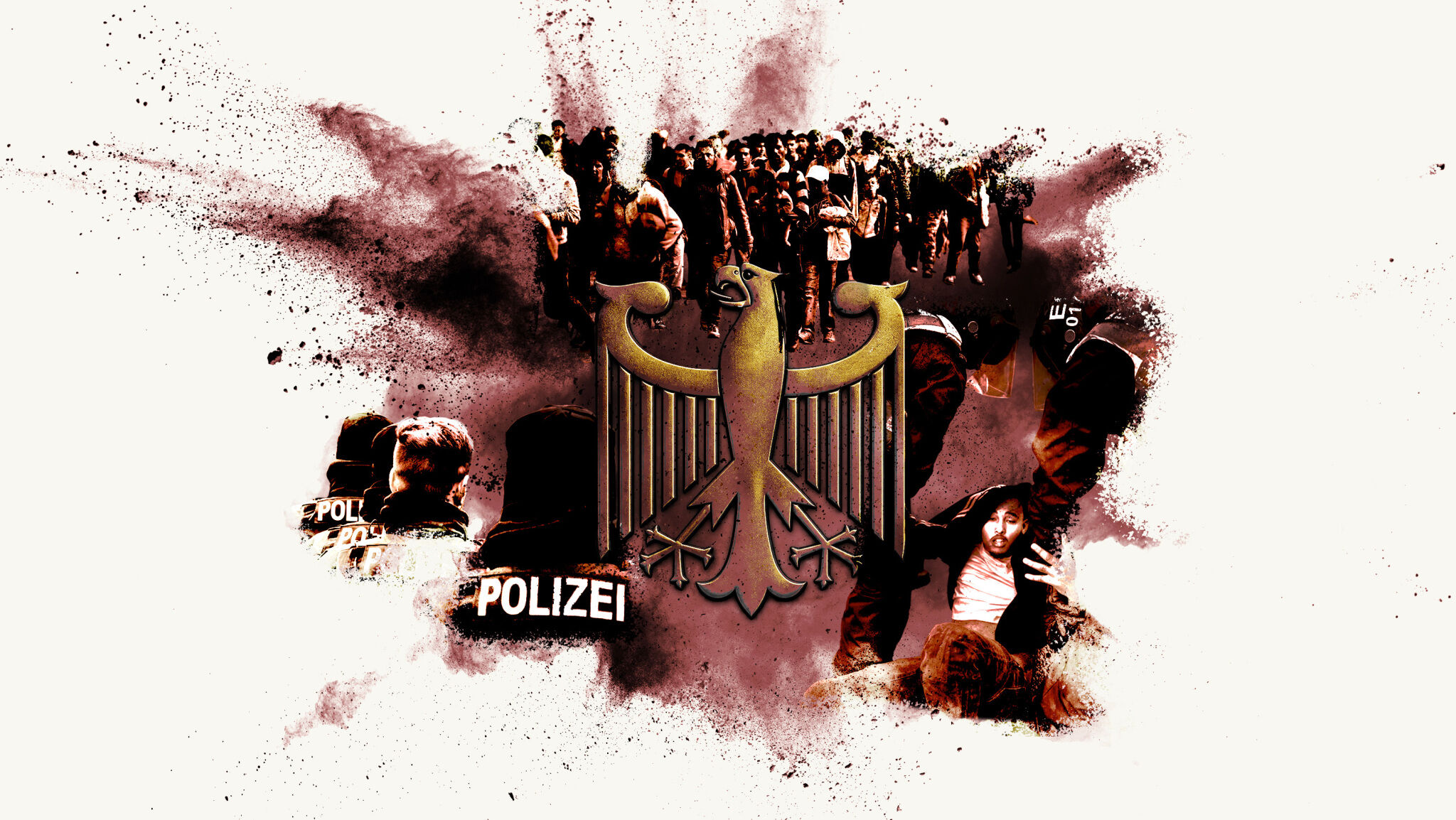
Welcome to modern Germany, where terrorism is rising and the worst political censorship in the Western world attacks dissent, all while the wheels fall off the economy.
“Everyday life in Germany has become a pressure cooker. The question is when that pressure cooker is going to blow up, and what forms that explosion will take.” This verdict by Dr. Sven R. Larson in the European Conservative in June is worth taking seriously.
Open Season
Car ramming has become Germany’s signature atrocity—an easy way to kill a crowd without using a firearm.
This attack made a bigger splash than others because of its target: a homosexual pride parade. Germany’s media generally want to keep quiet about these terrorist attacks. But pride parades are essentially modern religious festivals, and such attacks cannot be tolerated.
The Social Democrats, part of the governing coalition, responded to a jihadist massacre by proposing an amendment to the German constitution—one that bans discrimination against homosexuals. It won’t do anything to prevent the attack, and everyone knows it.
Ballout’s is not a one-off case. Germany’s first high-profile vehicle attack occurred in 2016, when an Islamist terrorist killed 11 people by driving a truck into a Christmas market. In 2024, a Saudi national drove into a Christmas market in Magdeburg, killing six and injuring more than 200. The last two similar attacks, in March 2025 and May this year, appear to have been carried out by mentally ill Germans with no links to Islamist terror. About 10 other Islamic ramming attacks have occurred in France and the United Kingdom since 2007.
Yet it’s not just vehicular crime that is escalating. Around 16 percent of people in Germany don’t have German citizenship—yet they account for 34 percent of crime suspects and 53 percent of suspects for group rape. Around 900,000 Syrians live in Germany, and 115,000 of them were identified as suspects by police in 2024.
Syrians and Afghans in Germany commit crimes at a rate 16 times and 14 times higher than the average German. In some states, half of all violent crime suspects are non-German.
The impact on a high-trust society is huge. Germany’s rail system, for example, was literally built on the assumption that most would be honest and buy a ticket. There were no checkpoints or turnstiles, just occasional inspections. The influx of people who play by different rules at the station, in business, in welfare and in dealings with German women and girls means that the trusting society many Germans grew up in is gone.
Yet more migrants are poised to pour in. At the end of July, tens of thousands stormed the border fences in Ceuta, Spain’s tiny North African enclave. By the time the surge crested, nearly as many people had crossed in 72 hours as live in the city itself. Italy responded by reintroducing border checks between the two countries, effectively suspending the Schengen Agreement between them. Germany extended its border checks.
Germans are right to be worried about migrant crime. Yet no one in government is taking these concerns seriously.
Manufacturing Crisis
At the same time that Germans see more and more of their tax euros going to benefit a growing migrant population, they are facing major economic headaches.
Volkswagen’s executives want to close four German factories and eliminate 100,000 jobs, 15 percent of the company’s global workforce. Reuters said it would be “the largest restructuring in automotive industry history.” It is a significant move for a company that has never closed a factory in Germany.
Worse, leaks from within the company revealed an internal poll of nine members of VW’s management and supervisory boards. Six said they do not believe the company has a future. Its shares are down 25 percent so far this year.
Other firms may follow suit. The president of Germany’s automotive industry association warned that Europe had around 35 factories too many. The proliferation of cheap Chinese electric vehicles has drastically reduced demand for German cars.
bmw announced on July 29 that it too would cut jobs, eliminating 8,000 positions. Porsche has announced 9,000 job cuts.
Germany’s steel federation warned in May that the sector is at a “turning point” due to high energy costs and declining demand. In April, the government was forced to halve its economic growth forecast for the year to just 0.5 percent—compared to 2 percent for the United States.
Germany lost 127,300 industrial jobs (2.3 percent) in the past year, according to a May study by consultancy EY. The EY report also highlighted a 10 percent drop in foreign businesses launching projects in Germany.
“In Germany, the high tax burden, high labor costs, expensive energy and at the same time a paralyzing bureaucracy are slowing down investment events,” warned Henrik Ahlers, head of EY Germany. He added that Germany’s “inability to reform” gave it a global reputation. “Unfortunately, not much remains of the image as a strong quality location and economical rock in the storm,” he said.
This is not just making Germans poorer; it is stripping them of the one thing they are permitted to be proud of. Pre-1945 history is off limits. So national pride rests on the postwar economic miracle and the factories that built it. Those factories are closing.
Silenced Complaints
Germany’s migration and economic problems have festered for years. Germans are furious—and the state has responded by criminalizing the fury.
Section 188 of the German Criminal Code, passed in 2021, makes it a crime to insult a politician on social media. Prosecutors launched almost 4,800 cases under this law last year. Acquittal is no relief: The process itself is the punishment.
Police raided a man’s house after he called former Vice Chancellor Robert Habeck a “moron.” One man was fined over $2,300 for calling Chancellor Friedrich Merz a liar. Another had to pay $115 for calling a politician a “pompous fool.” Another was prosecuted for posting a meme showing Merz as Pinocchio; his case was dropped after a public outcry.
The pressure and the censorship have spread into the cultural arena. German filmmaker Uwe Boll’s new film, Citizen Vigilante, re-stages real migrant attacks in graphic detail. Then it hands the vengeance to a blond-haired, blue-eyed former American soldier who hunts down the killers and the liberal authorities who let them in.
“If you look at what happened in Hamburg, where the rapists walked free without any penalty, the coverage in the media was like, Oh, the poor perpetrators,” Boll said. “It’s as if we’re living in a completely insane and absurd political environment, especially in Europe, where people have completely lost track. There is a huge difference between so-called ‘hate speech’ and stabbing people in the neck. But facts don’t matter anymore.”
Boll says he is not encouraging people to take matters into their own hands. Instead, in the words of his protagonist to Interpol: “If the politicians who pay you do not fight against Islamism and the woke left, the population will soon do as I do and carry out a great cleanup themselves.”
German authorities continue to try to cover up the discussion about migrant crime. In this case, Germany’s film-rating board initially refused to give Citizen Vigilante any age classification, which effectively stopped its distribution within Germany. After a backlash, they issued an 18+ (roughly equivalent to an “NC-17”) rating.
There’s a lot of content in Citizen Vigilante that shouldn’t be in any movie. But by blocking this one movie while allowing others that are just as violent, the classification board made clear that they were trying to block its political message.
A more savory film project was a documentary and book produced by investigative journalist Liv von Boetticher, based on her interviews with German police officers. Once the cameras weren’t rolling and they were off the record, the “pretty much unanimous opinion was: It’s getting worse and worse,” she said.
One police officer told her, “The Germany we know is disappearing.” Another said, “In Germany, it is open season for robbery and rape.”
“Even the most serious crimes often have surprisingly few consequences,” she was told. “Far too often, perpetrators more or less get away with it.” “Some police officers have even told me, quite literally, ‘We’ve already lost this country,’ or ‘This country is finished.’”
Germany has major problems, and even the police feel they can’t talk about it in front of the cameras.
‘A Perfect Storm’
It’s this lack of any kind of outlet that prompted Dr. Larson’s warning: “[I]f anything, increasingly hard-line political persecution will continue to lead Germany into the dark realm of tyranny.”
Berlin, he predicts, will ignore the storm and fight its symptoms instead: rising support for the Alternative für Deutschland (AfD), collapsing police morale, permanent budget deficits.
“The German elite’s methods of suppression will become harsher and more unforgiving,” Larson warns. “A government that transitions from democracy and freedom to totalitarianism and suppression of dissent will sooner or later, with eerie predictability, try to dictate the nation’s economy in the same way it dictates politics and public opinion.
“At that point, Germany’s political decline will escalate to an economic implosion.”
Only one party will discuss any of this. The AfD wants to cut migration, deregulate the economy, and repeal Section 188—the three grievances the coalition refuses to touch. It is now close to an absolute majority in at least one German state. As every other party flounders, the AfD keeps growing.
It is also a party whose top leaders deliberately use Nazi slogans, demand the right to be proud of the “accomplishments” of Wehrmacht soldiers, and want to end commemoration of the Holocaust. German voters know all this. Enough of them no longer care. That is the true measure of the pressure: A country that spent 80 years building safeguards against exactly this is ready to hand over power to a Nazi-sympathetic party in exchange for a secure border.
Those who know Germany well have warned of a potential explosion for decades. Niklas Frank, son of the Nazi war criminal Hans Frank, told the bbc in 2017: “As long as our economy is great, and as long as we make money, everything is very democratic. But let’s wait, and hopefully not see, if we have 5 to 10 years of heavy economic problems.”
A Boiling Pot
Trumpet editor in chief Gerald Flurry and his predecessor Herbert W. Armstrong have warned about this change in Germany for even longer. “If a real crisis develops, will the Germans call for a new führer?” Mr. Flurry asked in the December 1991 Trumpet issue. “Your Bible says that is going to happen! That crisis will probably be triggered by an economic collapse in the U.S.”
We are close to that crisis now. The strongman is almost here. “The rise of this extreme party [the AfD] is just one sign of a German society in trouble,” Mr. Flurry wrote in the August 2024 Trumpet (theTrumpet.com/29732).
“It’s this strong, charismatic leader that Germans, and many other people across Europe, are desperate for,” he continued. “They see their country spinning out of control.” Nor is this just a German phenomenon. “People don’t trust European bureaucrats,” he wrote. “They want a strong leader to rescue them. They are calling for a new ‘Charlemagne’ to lead the European Union.”
All the way back in 1950, Herbert Armstrong described European nations becoming “distrustful of America and thinking more and more about uniting themselves into a United States of Europe” (Plain Truth, May 1950). To do that, they needed a “new supreme leader—the successor of Adolf Hitler—to rise up and assert himself and take command.”
Larson has been warning of this explosion for three months. Mr. Armstrong warned of it 80 years ago—the strongman, the united Europe, the descent from democracy to dictatorship—before the federal republic held its first election.
They were not reading polls. They were studying Bible prophecy—and prophecy, not political analysis, is why these forecasts keep coming true.
Jeremiah used a similar metaphor thousands of years ago to describe modern Germany: “a pot of boiling water, spilling from the north” (Jeremiah 1:13; New Living Translation). Germany is already that boiling caldron of discontent. It’s only a matter of time before it boils over.
When it does, it will transform Europe. In their desperation for change, Germans will empower a strong leader. A group of EU nations will unite under this strongman. They will embrace leadership and direction from the Catholic Church. This is leading to a wholesale transformation of Europe.