
Is America a Reliable Ally?
Is America a Reliable Ally?
Good morning!
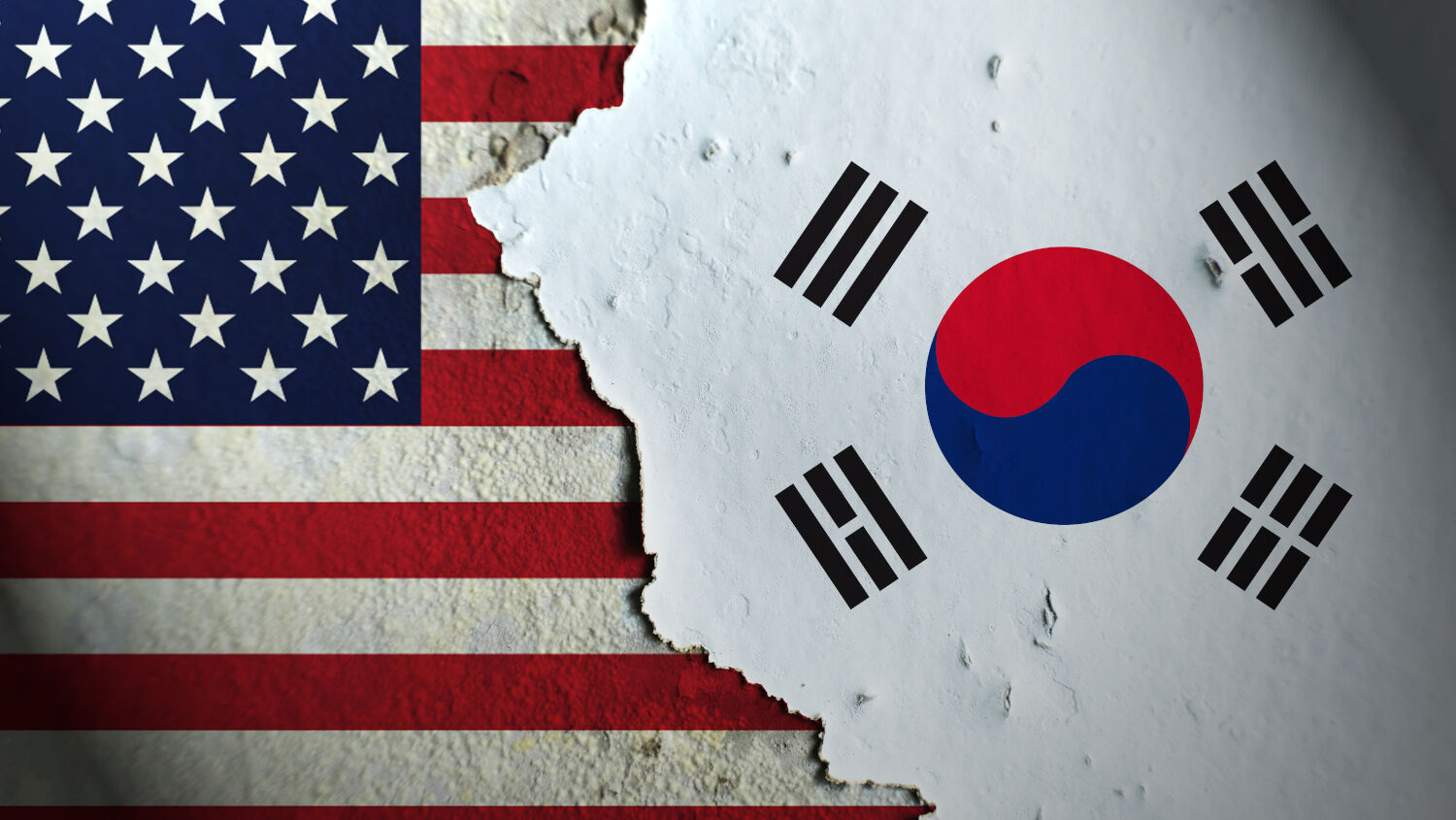
President Trump shook up America’s alliance with South Korea yesterday. In a Truth Social post, he abruptly announced “substantially” scaling back joint military exercises scheduled to start today. Why? “Based on my very good relationship with Kim Jong-un of North Korea.”

President Trump’s order captures a persistent tension in his foreign policy.
- On one side stands a legitimate demand that allies stop sponging off American power and resources.
- On the other lies a pattern of belittling long-standing alliances and paying unusual deference to authoritarian leaders like Kim Jong-un.
In his post, Trump argued the “Ulchi Freedom Shield” drills are costly—mostly paid for by the U.S.—and complained about South Korea’s refusal to join America’s efforts to neutralize Iran.
- The critique is not baseless. South Korea hosts tens of thousands of U.S. troops and benefits from the American security umbrella while the U.S. shoulders major costs and risks.
Trump also said the drills send an “inappropriate and hostile” signal to a North Korea that has been “unthreatening and respectful” under his presidency. This is wishful thinking.
- North Korea has been anything but “unthreatening.” Besides continuing ballistic missile tests, Kim’s dictatorship has deepened its military partnership with Russia and supplied munitions, ballistic missiles and even combat troops for its war in Ukraine. North Korean forces have gained real battlefield experience there, and recent reports indicate its commitment is growing.
South Korea faces a dilemma. Its alliance with the U.S. remains the foundation of its security strategy against its rogue, dictatorial, nuclear-armed neighbor. But President Trump’s unexpected move raises questions about reliability.
- It’s extraordinary for an American president to intervene in a military exercise this way, let alone do so in order to publicly characterize a key alliance as secondary to rapport with a dictator who is actively arming Russia and testing missiles. But it’s consistent with Trump’s unorthodox foreign-policy track record.
- Cheong Seong-chang, vice president of the Seoul-based Sejong Institute, told the Guardian that while the U.S.-South Korea alliance is “extremely important,” Seoul should reduce its security dependence on the U.S. and move toward securing its own nuclear deterrent. South Koreans broadly support that idea, though the government rejects it and the international community opposes it.
Such doubts could push South Korea to look harder for regional alternatives.
- When America’s commitment appears conditional, unstable or even impulsive, closer security coordination with Japan, greater investment in its own capabilities, and deeper ties with other Indo-Pacific partners become more attractive.
Bible prophecy foretells shocking global upheaval in the time just ahead—new alliances forming in the Middle East, in Europe and in Asia (including, assuredly, South Korea), and some of these briefly working together to topple America and forge a radically altered world order.
Unwittingly, President Trump is driving several of these trends toward fulfillment. It is stunning to witness. Stay tuned.
A New Alliance Guards the Red Sea
On August 13, Saudi Arabia announced that a coalition of 39 countries will patrol the Red Sea. The Multinational Maritime Defense Coalition is based at the Saudi Red Sea port of Jeddah and is almost certainly designed to deter the Houthi terror group in Yemen, although the coalition statements did not mention it by name.
Saudi Arabia and 13 other nations in the group have reportedly completed all formalities in joining, with the others affirming their intent to do so.
- Many members of the coalition—including Bahrain, Kuwait, Qatar and the internationally recognized government of Yemen—have directly fought with the Houthis or their sponsor, Iran, within the past few months.
- Others, like Bangladesh and Nigeria, are far away from the Middle East but are majority Muslim.
Intriguingly, Pakistan is in the alliance, contributing its deputy leader under a Saudi commander. Saudi Arabia has signed two separate mutual defense treaties with Pakistan. The first, signed in 2025, almost got activated against Iran during the Iran war’s active fighting, sometime in March or April. The second was signed August 7.
Pakistan shares a direct border with Iran and has nuclear weapons.
- Pakistan’s involvement in the Red Sea reflects its increasingly powerful role in protecting fellow Sunni Muslim states from Shia Iran and its proxies.
Keep watching the Red Sea. One of the most important trade routes has become the focus of a fight between two power blocs. Your Bible ties a fight over this exact choke point to the return of Jesus Christ—as Gerald Flurry explained in his Trumpet cover article “The Battle for the Red Sea.”
Pope Leo Helps Stir Christians Against Israel
Pope Leo accused Israel of persecuting Christians in the West Bank of Sunday, stating: “I renew my appeal for an end to the ongoing violence against the Palestinian civilian population in the West Bank.”
The context: The pope’s statement amplifies a narrative Catholic leaders have been voicing for weeks: Israel is persecuting Christians in the West Bank.
- Taybeh, located near Ramallah, is the last remaining fully Christian town in the roughly 2,000-square-mile area of the Jordan River’s West Bank. Israeli settlers there are accused of intimidating local Palestinians. The Israel Defense Forces have declared it a closed military town, blocking the movement of Israelis while leaving Palestinians free to come and go.
- Qusra is a little further north. Extremist settlers have been accused of targeting at least two families there. The idf has entered the area to remove the settlers and protect the Palestinians.
Several Catholic leaders have drawn attention to these attacks, often blaming Israel in general rather than a minority of settlers—settlers whom Israeli forces are actively opposing for the benefit of Palestinians.
- Bashar Fawadleh, a local priest in Taybeh, said on August 10 that the town was the victim of “a deliberate strategy of harassment designed to create a climate of fear and pressure Palestinian families into leaving their land.”
- James Curry, the lead bishop for the Holy Land for the Catholic Bishops’ Conference of England and Wales, implied Israel was being disingenuous in closing access to the town: “This ban will lead to a vital loss of income from tourism and pilgrimages and, thereby, international scrutiny on the situation.”
- Pierbattista Pizzaballa, a cardinal and the Latin patriarch of Jerusalem, visited Taybeh the day before the pope’s comments and urged residents to confront evil.
Lies have been spread about Taybeh before. Last summer, settlers were accused of trying to burn down the Church of St. George in Taybeh.
- “Radical Israelis from nearby settlements intentionally set fire near the town cemetery and the church of St. George. … This is not only a violation of property, but a targeted attack on a community that has long been a symbol of coexistence and peace,” Greek Orthodox Patriarch of Jerusalem Theophilos iii said as he visited the site.
- Pizzaballa stood by his side in Taybeh as he gave his speech. The Patriarchs and Heads of Churches in Jerusalem said “settler violence” was responsible, “both facilitated and enabled by state policies.”
The truth: Palestinian Arabs started fires to stop Israeli settlers from grazing their livestock. Video footage purported to show settlers fanning the flames actually showed them running with fire extinguishers to put them out. The church itself was not damaged at all.
Given that the same people claiming Taybeh is under attack were caught lying about it just a year ago, skepticism of their claims and a look at their motivation and agenda are warranted.
Catholic media skipped the question-asking and instead held this up as proof that Israel persecutes Christians. Consider some of the headlines from Crux’s “Church in the Middle East” section:
- “Israel’s Christians Rely on Faith and Allies as They Fear Rising Harassment”
- “Israeli Settlers Creating ‘Climate of Fear’ for West Bank Christians”
- “‘Disheartening’: Attacks Against Christians Nearly Double in Israel, Territories, Says Report”
- “Lebanese Christians on the Edge of Israel’s Occupation Live With Fear and Rising Tensions”
Entirely missing was the most dramatic attack on Christians in the Middle East over that period: July’s lynch mob attack on a Coptic Church in Egypt. It was only halted when police arrived—and arrested some of the Christian victims.
These articles, and even the pope’s statements, present a noticeably one-sided account of the news, describing Israel’s response but often omitting the Palestinian attacks that triggered it. Statistics are given about settler attacks on Palestinians, for example, but the far larger number of Palestinian attacks on settlers is ignored.
The most powerful people in the Catholic Church are laying the foundation for a call for Europe to return to the Middle East to defend the region’s Christians—not simply from their far more numerous Muslim persecutors, but also from Jews.
- Israel holds Jerusalem, so it is actually the Jewish state and Jewish people who are the main targets of these papal propagandists.
Pizzaballa has condemned “Christian Zionism” as heresy. Catholics want to unite Christians against the Jews. Last summer’s incident at the church in Taybeh shows they are willing to lie to do it.
These lies are building toward a new Catholic crusade to retake the Holy Land. The Bible says it is coming. To understand why, read Gerald Flurry’s article “Reviving the Dark Ages.”
IN OTHER NEWS
Chinese leader praises perpetrator of Tiananmen massacre: Chinese General Secretary Xi Jinping said Monday that China needs an “indomitable fighting spirit” to achieve its ambitions. His speech also praised the late Chinese ruler Jiang Zemin for his leadership during the Chinese Communist Party’s 1989 ruthless massacre of thousands of pro-democracy advocates in Tiananmen Square. He said that “comrade Jiang Zemin resolutely supported and implemented the Central Committee’s correct decisions, effectively maintaining stability in Shanghai.” Under Xi, the Chinese Communist Party continues to glorify oppression and embrace violence both within China and beyond its borders. Xi’s speech indicates that this will intensify.


