

Is Political Profanity All-American?
A United States senator spent part of a congressional hearing this week tearing into Dr. Anthony Fauci—and Fauci deserved every bit of the scrutiny. But partway through, the senator dropped some foul language, on record, in an official hearing.
This wasn’t an isolated slip of the tongue. President Trump, for example, has unleashed profanity-laced tirades describing what he plans to do to Iran—and to Fauci.
“Political profanity is having a bleeping moment,” wrote Axios. When even Axios feels obligated to write about it, something has changed.
Politicians are increasingly abandoning scripted language and publicly cursing as profanity becomes a more common political tool. … The shift suggests politicians are using profanity intentionally to project authenticity, signal confrontation, and distance themselves from traditional Washington norms.
They had the evidence to back it up:
- Presidents and presidential candidates are known to have used profanity at least 692 times since 1919, according to data from Cardiff University.
- 605 of those times have been in the last 10 years.
- Donald Trump and Joe Biden account for 78 percent of all recorded presidential profanity.
Swear words are now a branding tool. Curse at a hearing, and the clip goes viral. The cruder the outburst, the farther it spreads. Studies show that voters find swear words more informal, which makes candidates seem more “authentic,” “ordinary” and “relatable”—more like them.
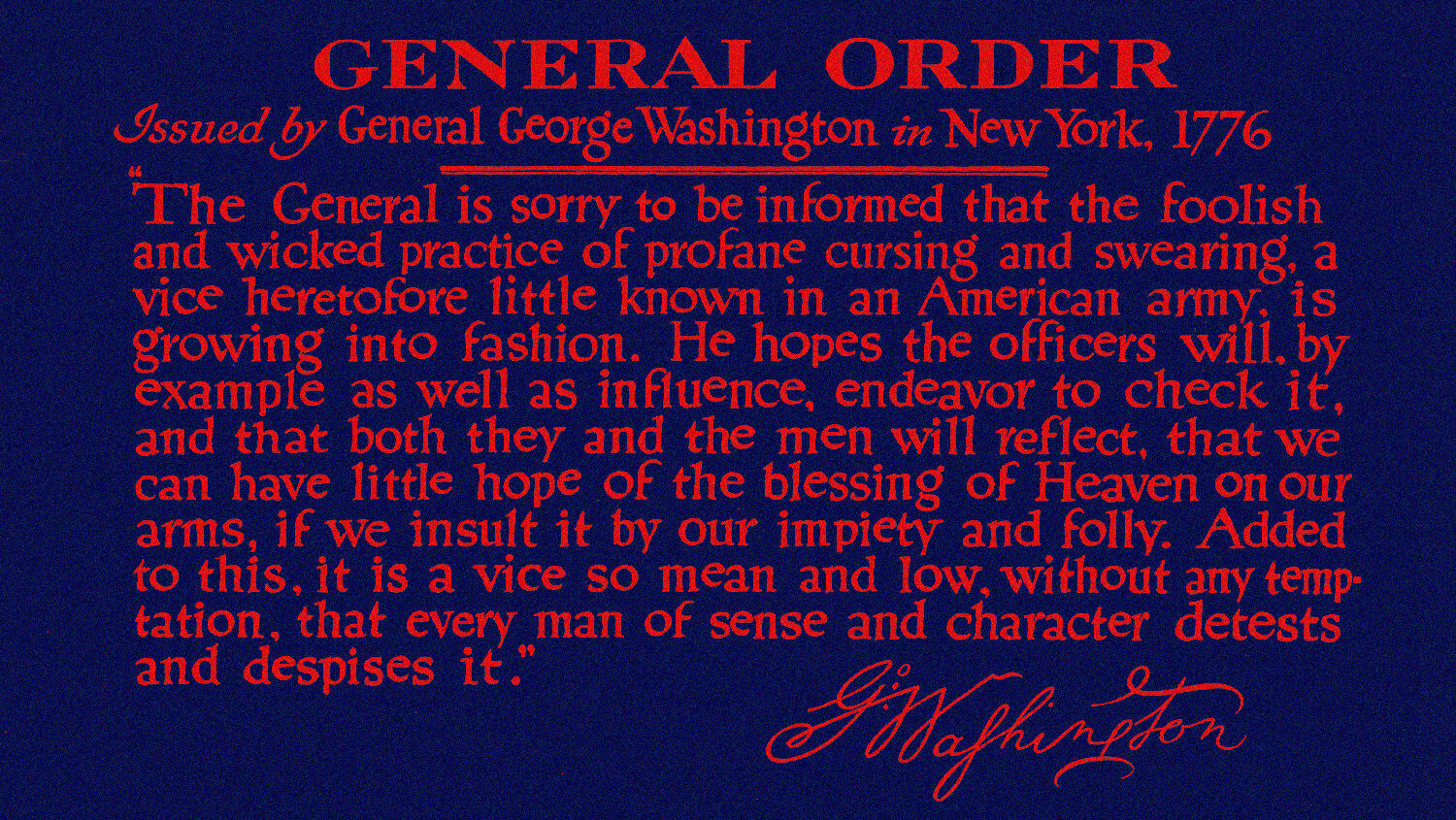
Two hundred and fifty years ago this Monday—August 3, 1776—America’s first commander in chief issued a general order to his army. Read it and ask yourself whether it is more American and more virtuous to speak like the current president or the original.
The General is sorry to be informed that the foolish and wicked practice of profane cursing and swearing … is growing into fashion. He hopes the officers will, by example as well as influence, endeavor to check it … that we can little hope of the blessing of Heaven on our arms if we insult it by our impiety and folly. … It is a vice so mean and low, without any temptation, that every man of sense and character detests and despises it.
—Gen. George Washington
George Washington tied profanity and obscenity directly to whether his army would receive God’s blessing.
If we insult Heaven with our own mouths, why would Heaven bless our efforts?
This is bigger than manners. Even more important than this sentiment from one of our nation’s Founding Fathers are the commands of the Bible, which connect our communication to our personal and national standing before God.
Hear the word of the Lord, ye children of Israel: for the Lord hath a controversy with the inhabitants of the land, because there is no truth, nor mercy, nor knowledge of God in the land. By swearing, and lying, and killing, and stealing, and committing adultery, they break out, and blood toucheth blood.
—Hosea 4:1–2
Notice the first sin on this list: swearing. It is not listed as an afterthought: It is the first named symptom of a nation with no truth, no mercy and no knowledge of God.
The blessing our first president feared losing was never a given. It is something we are, right now, choosing to forfeit when we choose to sin.


