

South America’s Shift to the Right Is ‘an Unusual Alignment of the Stars’
America’s backyard is the pope’s playground, despite the “Donroe Doctrine”—the Trump administration’s efforts to exert influence over the region. Strong Catholic conservative leaders are taking charge under the guise of solving crime, allying with the United States, and fixing economic issues. Within just the last seven months, three such leaders have been elected.
This is an “unusual alignment of the stars for Trump,” as Steven Levitsky, professor of Latin American Studies at Harvard, stated.
While these new leaders claim to be pro-American and may seem aligned with President Trump, Bible prophecy warns their nations will turn against America in favor of a revived Holy Roman Empire in Europe, where the continent’s roots lie.
Chile’s New Catholic Strongman
José Antonio Kast was elected as Chile’s president with 58 percent of the vote in December. He campaigned largely on fighting crime, reducing government spending and bringing in foreign investment. Those pledges might cause you to think Kast is an ordinary politician, until you dive deeper.
He’s openly Catholic and a member of the Schoenstatt Movement, a Catholic movement founded in Germany by Joseph Kentenich, which advocates for the infusion of Catholic teaching in everyday life—which, naturally, means politics in Kast’s case. That isn’t too unusual for a South American politician; however, Kast has an unusual backstory.
His father, Michael Kast, was a member of the Nazi Party and fought for Germany as a first lieutenant in World War ii.
Michael Kast, along with his son, José’s brother, Miguel Kast, are accused of working with Augusto Pinochet’s National Information Center, Chile’s former intelligence agency. Augusto Pinochet was Chile’s devout Catholic dictator who reigned from 1973 to 1990 and killed an estimated 3,000 citizens for political reasons.
Support for tyranny seems to run in the family; José Kast supports Pinochet openly. He was heavily influenced by Jaime Guzman, an adviser to Pinochet, while studying law at the Pontifical Catholic University of Chile. On the topic of education, his primary and secondary education came from the German School of Chile, which suggests his father’s ties to Germany continued.
Since taking office on March 11, José Kast has commissioned the construction of a border wall to halt illegal immigration from Peru, proposed the construction of mega-prisons like El Salvador’s, and began using artificial intelligence for mass surveillance around the border.
He also joined the Shield of the Americas, an alliance led by the Trump administration meant to bring together right-wing governments throughout the Americas to combat crime and illegal migration.
Colombia’s Catholic Crime Cruncher
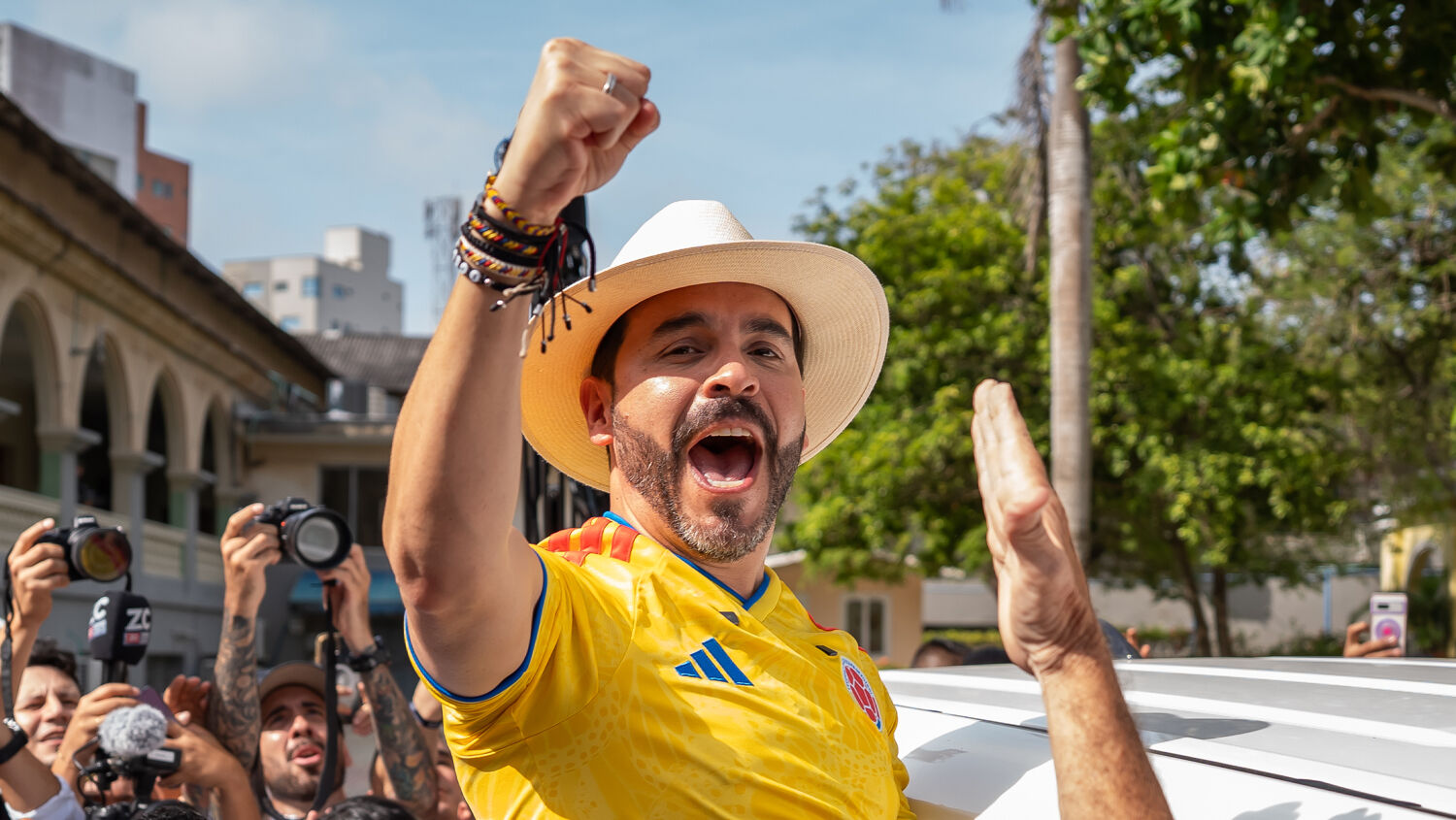
On June 24, Abelardo de la Espriella was declared the winner in Colombia’s close presidential election; he will take office on August 7. His election dashed any hope the left had as the incumbent, Gustavo Petro, was the nation’s first liberal leader in decades.
Espriella is a:
- Trump-endorsed political outsider
- Millionaire businessman
- U.S. citizen who spent over a decade in America
- Recent Catholic convert
He campaigned on cracking down on crime and strengthening Colombia’s alliance with the United States.
Many fear he will be a strongman. Nicknamed “El Tigre,” he’s vowed to end Petro’s strategy of negotiating with armed criminals and to resume full-scale military operations to fight crime. He’s also pledged to destroy over 800,000 acres of cocaine crops.
- He has the endorsement of former President Álvaro Uribe Velez, who has been accused of human rights abuses during his government’s fight against paramilitary groups.
- He has suggested that Colombia exit the United Nations and the Inter-American Court of Human Rights and follow El Salvador’s example of mega prisons, like Kast.
To tighten ties with America, he’s announced that Colombia will join the Shield of the Americas coalition.
The Trump administration, for its part, also wants to work closer with him. Trump stated after Espriella’s win that he looks forward to building a relationship with Colombia, “which will bring new levels of greatness for both of our countries.”
Notably, like Kast, Espriella is staunchly Catholic, converting five years ago from atheism after the death of his aunt due to covid-19. As Christianity Today wrote on June 22: “Her death plunged him into a severe depression that left him unable to speak for 12 days. Yet during her funeral mass, he said he experienced a peace unlike anything he had ever felt before.”
Since his Catholic beliefs are not just a matter of tradition, he may be more fanatically Catholic than many South Americans.
Déjà Vu in Peru
Looking south of Colombia, Peru held runoff elections this month. Keiko Fujimori, the right-wing Catholic candidate, was declared the official winner on Monday and will assume office on July 28.
Fujimori:
- Was the first lady of Peru from 1994 to 2000 during her father’s tenure
- Studied business administration at Boston University and has a master’s degree from Columbia University in Washington
- Is a U.S. citizen
- Despite her Japanese heritage, is a devout Catholic
She ran three times before, yet this time she won. What changed? Crime rates and political instability. Homicides have doubled since 2019, and there have been nine presidents in the past decade. She campaigned on a platform of fighting crime, bringing stability and welcoming investment from the U.S.
What’s particularly interesting about Fujimori is her father. Alberto Fujimori served as Peru’s strongman from 1990 to 2000. He was forced to leave office due to corruption and promptly fled to Japan. Later, he was imprisoned for 16 years for human rights abuses when he tried to make a political comeback in Peru from Chile.
Keiko Fujimori’s election despite her father’s reputation shows the desperate desire for strong leadership, even at the risk of freedom, to get the crime rates under control.
A Common Trait
Catholicism is a trait shared by all of these leaders. That makes sense because South America is a Catholic continent. But even then, depending on the nation, only 46-65 percent of the general population is Catholic, while all but one South American leader, excluding the non-Latin countries of Guyana and Suriname, is: the president of Uruguay. Uruguay is a small nation of 4 million and is arguably also the most liberal in the region.
What makes this wave of Catholic leaders especially interesting is that the number of Catholics in the region has shrunk.
Other recent right-wing Catholic elections in South America include:
- Ecuador, which elected Daniel Noboa in 2023, who is Catholic, conservative, tough on crime, and, interestingly, also American.
- Argentina, which elected libertarian Javier Milei in 2023, a Catholic libertarian.
- Bolivia, which elected Rodrigo Paz Pereira, son of former President Jaime Paz Zamora, in October.
- Paraguay, which elected right-wing Catholic Santiago Pẽna on April 30, 2023.
With all of these countries under right-wing Catholic leaders, the question is which Latin-speaking South American countries aren’t helmed by Catholic conservatives.
Other than Uruguay, it’s just Brazil. Its current leader, Luiz Inácio Lula da Silva, though Catholic, is not conservative. However, that could change soon. Brazilian elections are slated for October.
‘An Unusual Alignment of the Stars’
Reuters quoted Steven Levitsky, professor of Latin American Studies at Harvard, as stating, “This is an unusual alignment of the stars for Trump. Rarely do you see a large number of governments as ideologically convergent as we’re seeing now.”
Indeed, it is rare. However, this is not in Trump’s favor, as Levitsky believes. These Catholic conservative leaders, though they may appear loyal to the United States, as devout Catholics, are ultimately more loyal to the Vatican.
The Bible warns in Isaiah 23 of America’s coming economic besiegement at the hands of a German-led and Vatican-guided united Europe. An “ideologically convergent” South America is exactly what Germany needs to besiege the U.S.
Trumpet editor in chief Gerald Flurry wrote earlier this year that we are witnessing a “well-calculated German strategy to unite the whole world against America!” He was specifically referring to the EU’s trade deal with mercosur. That makes Kast’s strong ties to Germany especially worrying.
The mercosur agreement, signed on January 17, is between the EU and key South American nations: Argentina, Bolivia, Brazil, Paraguay, Uruguay and partially Chile, Colombia, Ecuador, Peru, Panama and Guyana. That marks the creation of a $22 trillion economic zone that also encroaches on the U.S.’s trade.
The Trumpet’s predecessor, the Plain Truth, warned in May 1962 that “the United States is going to be left out in the cold as two gigantic trade blocs, Europe and Latin America, mesh together and begin calling the shots in world commerce.”
As the Bible prophesies in Ezekiel 5, once these nations mesh together to besiege the U.S., it will lead to famine and violence across the nation. The U.S. will finally be brought to its knees, completely impoverished. The siege will precede an invasion, which will see one third of those in the U.S. taken captive. This siege will usher in the worst suffering ever upon the English-speaking countries and, eventually, the world.
For more information, read “Germany Unites the World Against America.”


