

Black Friday: Record Spending and Record Debt
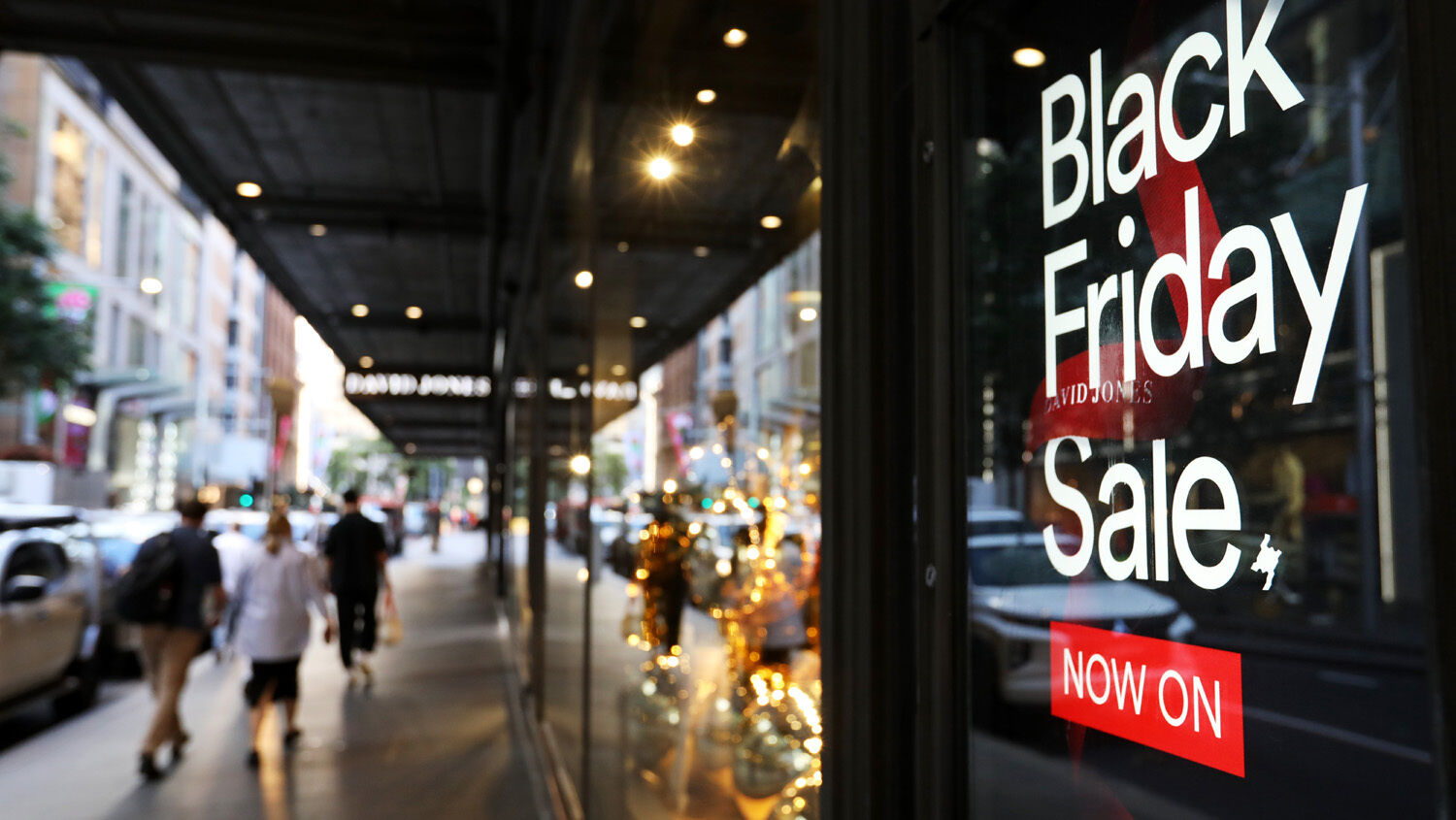
Americans are more indebted than ever. Yet at the same time, more Americans than ever are expected to go shopping today.
- Americans will spend nearly $13 billion online, up almost 10 percent from the year before, Adobe Analytics forecasts.
- 126 million Americans plan to shop today; 84 million plan to go to a store in person. If they follow through, that will be 4 million more than last year.
- Mastercard Economics predicts that in-store spending for the whole Christmas season will be up 3.6 percent, with online sales up 11 percent.
Where is all the money coming from? The wealthiest Americans are richer—they own stocks and other assets that have risen greatly in value over the last year. But for middle America, prices are rising faster than their income. They’re saving less money than last year—if they’re saving at all.
So what is funding the Black Friday spending? For too many people, the credit card.
Credit card debt is record high, according to figures released by the New York Federal Reserve earlier this month, sitting at $1.3 trillion. The average American now owes $6,678 on his credit card.
A higher proportion of new cards is going to borrowers with low incomes and low credit scores.
It’s not just credit cards either. Americans owe $1.7 trillion in vehicle debt. One in 5 is paying more than $1,000 a month in car payments, as the average price of a new vehicle reaches a record high of $51,109.
Yet with all this debt, the spending continues. How are people affording it all?
The answer is, in part, new types of debt. Bloomberg identified “buy now pay later” spending as one of the key trends for this year’s Black Friday. Lenders like Klarna, Clearpay and PayPal make it easy for people to spend now and pay it off in installments. Bloomberg expects nearly 8 percent of this year’s holiday spending to be financed with buy-now-pay-later spending. Because buy-now-pay-later is more commonly used for online spending, it’s expected to reach over $1 billion on Cyber Monday.
Welcome to the new U.S. economy: record spending, but only because we invent new ways to borrow money.
Consider an apparently unrelated story: Jensen Huang’s return to nvidia. He’d slept with the enemy and his own staff. Under normal circumstances, his job would have been gone for good. But because he made the stock market go up, he was quickly reinstated. Morals don’t matter; only money.
But we shouldn’t have been surprised. This is the way American businesses have operated for years. Easy loans, a system built around spending and debt. All this appeals to and encourages greed.
The negative effects of debt are clear. Nearly a third of American adults in a relationship said that money was a major source of conflict, according to a 2014 study. A 2012 study found that financial disagreements were the strongest type of disagreement for predicting divorce. In the United Kingdom, those who said they had problems managing debt were two to three times more likely to be anxious or depressed. People with problem debt are three times more likely to have considered suicide during the previous year.
Yet stores encourage people to overspend at this time of year, often with fake sales that exaggerate the scale of discounts offered. And banks step in with easy ways to borrow.
Let’s use some old-fashioned Bible language to describe what is happening. Borrowing like this is sin. Psalm 37:21 says, “The wicked borrows, and cannot pay back, but the righteous is generous and gives” (Revised Standard Version).
Not all debt is sinful. In today’s economy, good luck buying a house without getting a mortgage (or even with a mortgage). A car loan might be necessary for some, though there are good reasons to avoid one if you can.
God sets out His law, including His laws of finances, in His Bible. It is all for our own good. God forbade ancient Israel from setting up an economy based on debt. He outlaws the attitudes of greed, instant gratification and materialism that Black Friday is built on. And it is all for our own benefit.
Embracing debt is hurting millions. It will soon destroy the United States economy. It will explode in the faces of all those businesses that try to entice people to spend more than they can afford.
What’s the solution? It’s in the day that comes before Black Friday. “[G]odliness with contentment is great gain,” wrote Paul (1 Timothy 6:6). If more Americans spent Thursday expressing their thanks for what they already have, fewer would be going into debt today.
Such gratitude would point America back to God and His laws, which bring blessing and prosperity. Our free booklet Solve Your Money Troubles! reveals the causes of America’s financial collapse, as well as the solutions you can implement in your life today.


