

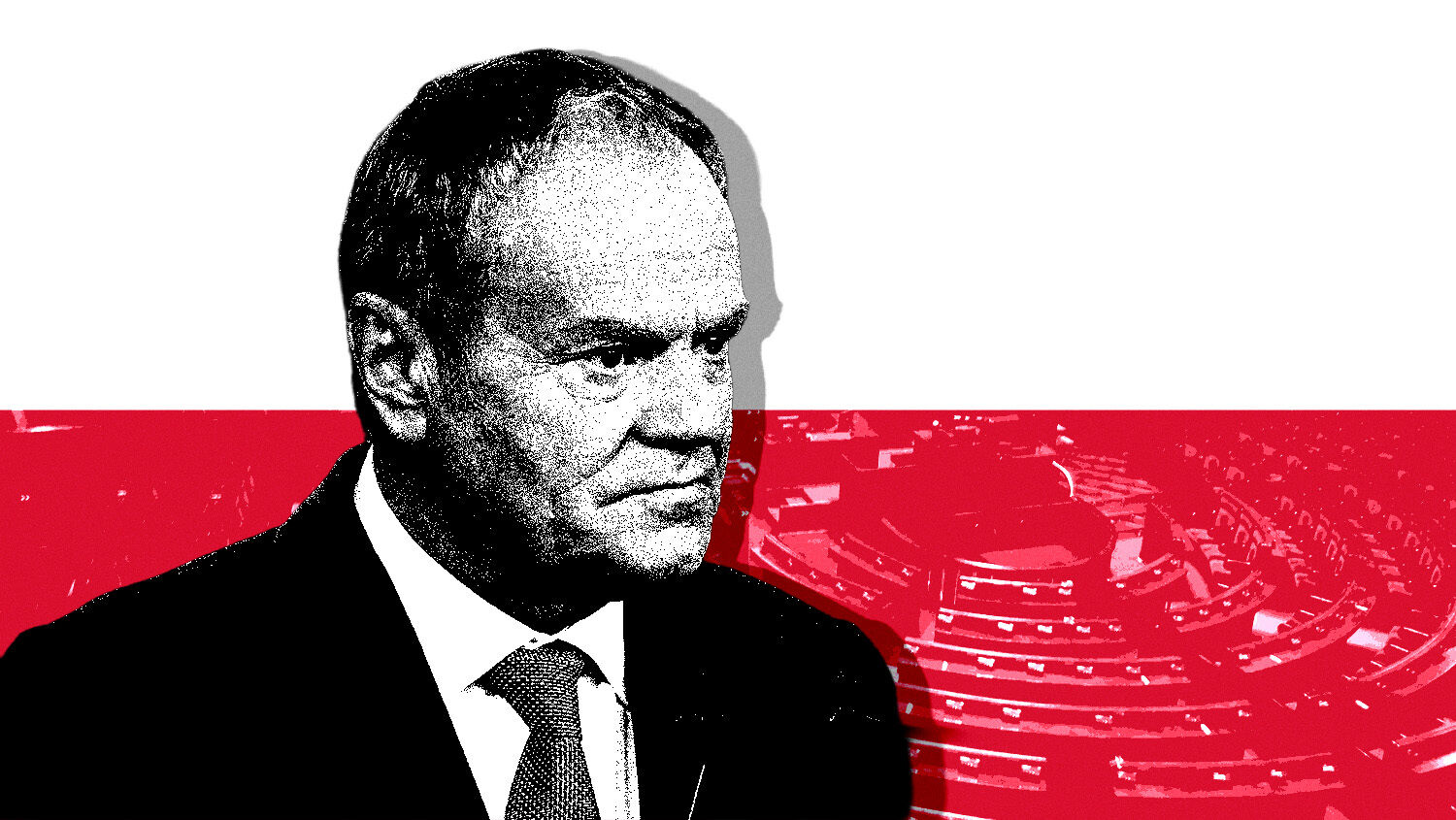
Polish Prime Minister Attempts Judicial Coup
In many democracies, the country’s supreme power is not the president, prime minister or parliament. It is with a supreme or constitutional court. The court decides the outcome of close elections, redefines marriage and family, and tells voters they cannot remove migrants, no matter how much they want to.
- The logical outcome of these courts’ growing power is that debates about the future of the country become fights over control of the court.
Poland demonstrated this dramatically over the weekend, when the Polish prime minister tried to take over the Constitutional Tribunal by force.
It began with a technical dispute on constitutional law. Poland’s legislature, the Sejm, elects new judges. These judges must take an oath of office, administered by the president, before taking office. Because there is no definitive court ruling on the matter, the two main political factions interpret this requirement in opposite ways:
- The liberal, pro-EU faction, led by Prime Minister Donald Tusk, argues that administering the oath is a mandatory formality. They believe the president—acting strictly as a symbolic head of state—is constitutionally required to swear in whoever parliament chooses.
- The conservative faction argues that the president has the discretion to refuse the oath. They believe this gives the president ultimate veto power over any newly elected judges.
Conflict escalated when the Sejm attempted to bypass the president and swear in some of the disputed judges themselves. However, the Polish courts have refused to recognize this process as legal.
- This impasse is part of a much larger, decades-long battle. Conservative factions argue that Poland’s judiciary was never properly “de-communized” (purged of Communist-era influence) after the fall of the regime in 1989, fueling ongoing political efforts to reshape the courts.
On Friday night, at the start of a four-day holiday weekend, the prime minister tried to decide the issue by force while President Karol Nawrocki was on a plane to Senegal.
- Backed by government police, a group of liberal judges suspended the court’s conservative chief, Bogdan Święczkowski, and his deputy and barricaded the building. The government then escorted their preferred parliament-appointed judges into the tribunal through a secure side entrance accessible from the prime minister’s residence.
- Learning of the takeover midflight, President Nawrocki ordered his plane to turn back to Warsaw. Despite rumored attempts by Tusk’s faction to block his landing, the president returned to the capital and physically forced his way into the building to reinstate the conservative leadership.
The EU has consistently backed Tusk, who previously served as president of the European Council.
- Polish courts have claimed that they, not the European courts, are the final authority on Polish soil.
- European courts disagree and have fought back hard.
- German courts are allowed to overrule the EU—but other countries are not allowed the same status.
This is the type of news we’re used to hearing from Third World countries. Democracy in Europe is not as stable as many assume.
The EU supported a coup against the constitutional court of one of its member states. For now, it looks like the coup has failed; even some who supported Tusk in the past are outraged. This could blow back badly on Brussels. Nation-states won’t like the idea that the EU can launch a coup against you if it doesn’t like your politics.
Poland’s conservatives are Germany’s biggest critics. Jarosław Kaczyński, Poland’s most important right-wing politician, accused Germany of trying to create a “Fourth Reich” “built on the basis of the EU.” Germany helped bring Tusk to power and has attacked the conservatives repeatedly. The German-led EU will override all norms and laws to get these critics out of the way. The attack on Poland’s conservatives exposes the rise of this German-dominated Holy Roman Empire.


