

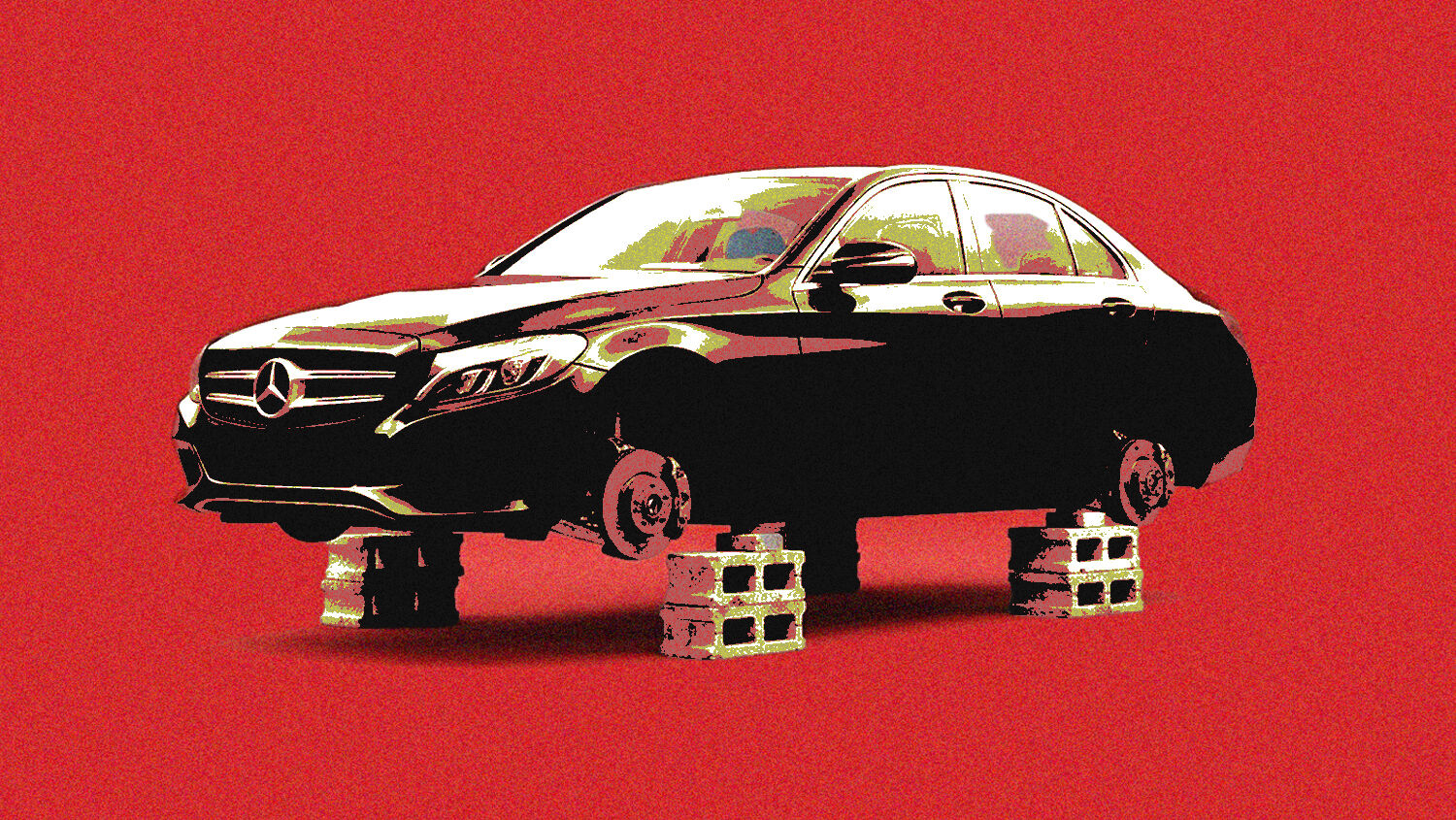
The Wheels Are Off Germany’s Car Industry
Germany’s Volkswagen Group posted its worst quarterly results in a decade yesterday—an operating loss of $6.5 billion. The last time the company did this badly was during the 2015 “Dieselgate” emissions scandal. It is already trying to cut around 100,000 jobs.
- At the same time, operating profit at Mercedes-Benz’s core car division has fallen by half from a year earlier, largely due to slumping sales in China.
The future looks bleak for German carmakers. Their production setup is designed around making petrol and diesel cars—not electric. Investors worry that they are about to be left behind.
- The Iran war has sent fuel prices in Europe sky-high. In Germany, diesel costs about €2.30 per liter (almost $10 per gallon). Petrol is slightly cheaper, at about $9 per gallon.
- This has turbocharged demand for electric vehicles. In the first half of 2026, battery-electric car sales in the European Union rose 40 percent compared to the same period last year. In the second half of the year, they’re expected to rise even further.
- Companies like VW make electric vehicles, but investors fear that these cars earn smaller profit margins than petrol cars and that, in the long run, the German firms won’t be able to compete with cut-price Chinese rivals.
Tesla is now worth 10 times more than all the major German carmakers combined. This includes Volkswagen AG, Porsche AG, bmw and the Mercedes-Benz Group, and the brands owned by these companies: Mini, Rolls-Royce, Audi, Škoda, seat, Cupra, Bentley, Lamborghini, man and more.
- These companies still make many times more cars than Tesla, but investors believe these companies are the past while Tesla is the future.
The industry’s decline is not only making Germans poorer, it is also stripping them of the one thing they are permitted to be proud of. Pre-1945 history is off limits. So national pride rests on the postwar economic miracle and the factories that built it—in particular the automakers, whose cars are prized worldwide.
Germany’s defense industry offers some relief: The decline in car manufacturing adds motivation to keep people in jobs and firms profitable by building military machines instead. But people buy tens of millions of cars per year, and governments buy only a few dozen new tanks. It can’t fully make up the difference.
This is just one of the economic pressures behind Europe’s unrest. Its industries are failing, and unlike China and the U.S., it has failed to create the dynamic start-ups that can take advantage of new technology. Young Germans are planning to take to the streets this weekend, inspired by the French protests.
Europe needs strong leadership to turn these long-standing problems around. This economic crisis is part of a wider leadership crisis that will prompt Europe to demand a strongman. The next issue of the Trumpet magazine addresses this in more detail. Look for the link in a Morning Brief next week.


