

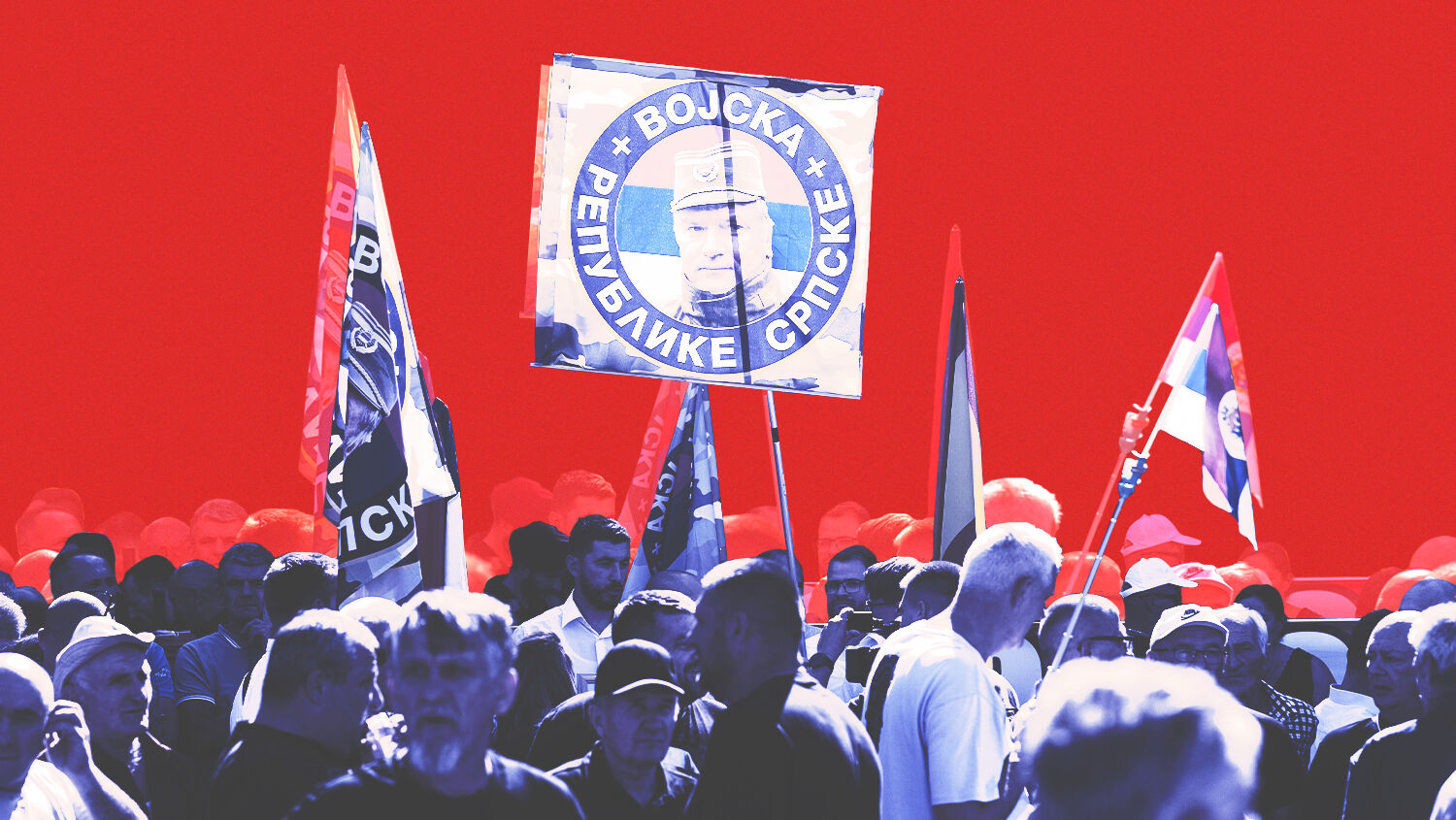
Europe Pushes Back Over Mladić Funeral
Bosnian Serb Col. Gen. Ratko Mladić was buried in Belgrade, Serbia, on Monday with military honors following his death on August 27 in the Netherlands, where he was imprisoned due to alleged genocide. Thousands attended the funeral, despite European Union leaders’ criticism of Mladić.
The pushback from the German-led EU is a continuation of Germany’s century-long war against the Serbs.
- On Friday, EU Commissioner for Enlargement Marta Kos canceled her planned visit to Serbia, stating that “the glorification surrounding his death is incompatible with the values on which the EU path is built.” Serbian President Aleksandar Vučić called that “very short but stupid.”
- EU High Representative for Foreign Affairs Kaja Kallas said that Serbia joining the EU in the future “requires an unequivocal commitment in fundamental European values and historical truth.” In other words, nations that hope to join must submit to the EU version of historical truth, and Serbia doesn’t.
Mladić is a divisive figure. To Serbs, he’s a hero. To most in the West, he’s “the butcher of Bosnia.”
- He was commander in chief of the Serbian Army when it committed the 1995 Srebrenica massacre of 8,000 Bosnian Muslim men and boys.
- What most Western news sources ignore is that the Srebrenica massacre wasn’t unprovoked. It was a reaction to atrocities committed by Naser Oric, who oversaw the Muslim forces in the town. (For more information, read “What Really Happened in Bosnia.”)
- War crimes were committed by all sides.
The war actually began when Croatian independence, denied by virtually all major world powers, was recognized by the Vatican and Germany. (Get your free copy of Germany’s Conquest of the Balkans.) Independence fighters across the Balkans took up arms against the Serbs, who controlled Yugoslavia and resisted its breakup. Germany used the situation to drastically weaken Serbia, its enemy from World War ii.
- The massacre Mladić oversaw must be seen in that context. He understood Germany’s objectives in the region.
In the November 1995 Trumpet, Gerald Flurry drew attention to Misha Glenny’s book The Fall of Yugoslavia, which describes Mladić’s perspective:
For him, the creation of an independent Croatia is the natural revival of a German compulsion to rule Europe. …
From early on in the conflict, Serbia became convinced that Croatia’s bid for independence meant that the Germans had begun the establishment of the Fourth Reich!
Germany’s forceful establishment of the Fourth Reich indeed began with the 1991–2008 breakup of Yugoslavia. Mladić recognized this and fought it. That doesn’t justify his means, but it explains why he is demonized today.
Germany’s plan for the Balkans and for Europe is still underway. In fact, as Mr. Flurry writes in Germany’s Conquest of the Balkans, Yugoslavia was “the first military victim of World War iii.”


