

Is Israel Returning to the Brink of Civil War?
The State of Israel stood on the brink of civil war. That was the sober warning in March 2023 from the country’s president, Isaac Herzog. “The abyss is within touching distance,” he said.
Mass protests were routine. Over 10,000 reservists, who often volunteered for duty, said they would no longer serve. The Israeli Air Force struggled to have sufficient pilots.
One of our representatives on the ground, who lives near the prime minister’s and president’s residences in Jerusalem, stated: “I recall witnessing many protesters marching up and down the street here in central Jerusalem once a week—then twice a week—then every second night—then every night. Finally one night, when the protesters began carrying flaming torches, I thought, Things are about to get very bad very quickly.”
Then came the Oct. 7, 2023, attacks. The division may have meant some had taken their eyes off the ball, more focused on internal enemies than external threats. Hamas’s brutal massacre of 1,200 civilians put everything into perspective and united former enemies.
But the key fault lines remain. October 7 is still fresh in Israelis’ minds, but with the nation heading for its first election since the war, the old divides are reemerging.
The ‘Unreasonable’ Conflict
Some parts of the old conflict feel like ancient history. In 2023, the immediate issue was the power of the Supreme Court. Judges had the ability to strike down any law they deemed “unreasonable”—a standard so flexible it gave them power to overrule the government on almost anything. People from all political sides had criticized the situation for years. But when Prime Minister Benjamin Netanyahu promised to remove this power—and fight the courts if they refused to be constrained—it ignited a firestorm.
Some feared the reforms would mean no one could force the prime minister to submit to the rule of law—that he’d be essentially above the law. The law passed in 2023, and the Supreme Court struck it down in January 2024. This was the nightmare scenario many had feared. Would the government ignore the court and enforce the law, triggering a constitutional crisis?
No. With the nation fighting Hamas and Hezbollah, it was no longer a priority.
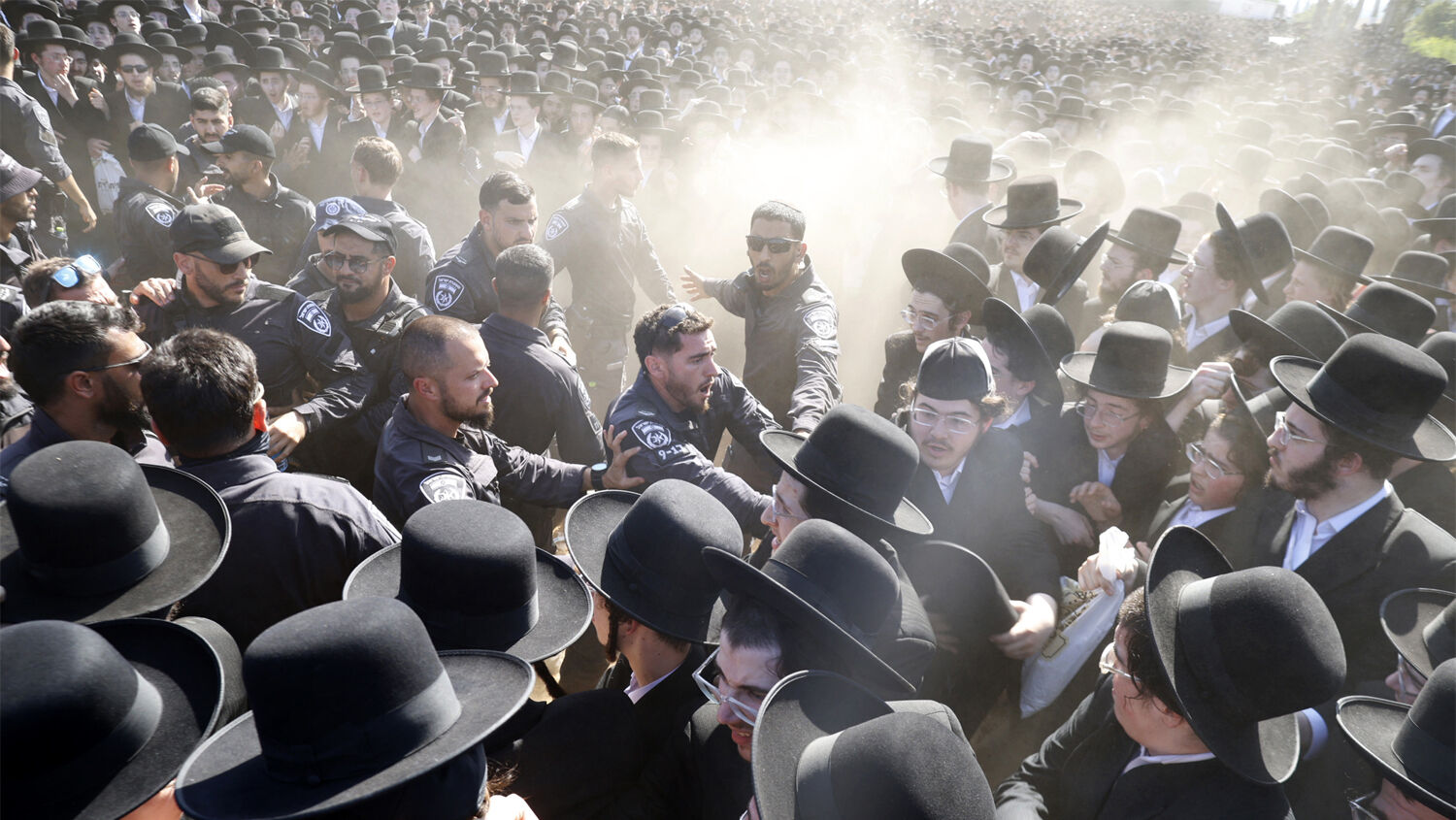
But the deeper divisions behind the Supreme Court dispute remain. Israel’s ultra-Orthodox, or Haredi community, stands apart from the rest of Israeli society—not just because of the black coats and hats they typically wear. Their students are generally exempt from military service, while their lifestyle is heavily subsidized by the state. Religious and secular Jews feel that they are unfairly carrying the burden for these ultra-Orthodox.
Netanyahu often governed in coalition with ultra-Orthodox parties. The price for their support was more privileges for their voters. Meanwhile, the Supreme Court generally sided against the ultra-Orthodox.
Many in Israel saw the Supreme Court as the only institution protecting them from being forever taken advantage of by free-riding ultra-Orthodox.
The more general religious-secular divide also played a role. The court generally stood against more religion in public life—such as restrictions on public transport on the Sabbath or the segregation of men and women. Secular Jews feared that without the Supreme Court, their country could turn into something more like a Jewish theocracy.
Turbocharging all divisions are the charges against Benjamin Netanyahu. He is being hauled through the courts on three accusations:
- That he helped wealthy businessmen who had given his wife expensive gifts
- That he intervened in favor of the news outlet Yedioth Ahronoth in exchange for favorable coverage
- That as communications minister, he gave favors to the telecoms business Bezeq in exchange for favorable coverage from the news website owned by Bezeq’s owner
To Netanyahu’s supporters, the charges are the courts and “deep state” fighting to keep power from the one man who could challenge them. To his opponents, Netanyahu is going after the court system that is trying to hold him responsible for his crimes.
Refusing to Fight
The Supreme Court’s “reasonable” conflict and the charges against Netanyahu still exist, even if they are not the all-consuming divide they had been. Instead, that’s been taken over by another issue: ultra-Orthodox military service.
Since October 7, around 1,000 Israelis have sacrificed their lives to fight for their country. In 2024, the Supreme Court ruled that Orthodox yeshiva students must be drafted. In practice, nothing much changed. Draft letters started to go out, but with ultra-Orthodox parties an important part of the coalition, those who failed to respond to the summonses were generally not punished. In April this year, the court ruled again: They said the government was not doing enough to uphold their earlier ruling and that state benefits must be removed from those who refused the draft.
In a country of around 10 million, just about everyone knows someone who has died. To have an entire segment of the population refuse to serve is very unpopular. But the ultra-Orthodox believe the government is persecuting them over their deeply held religious beliefs.
This plays into other divides. Protests outside Café Basimta, near an ultra-Orthodox neighborhood in Jerusalem, have become symbolic of the nationwide clashes. The café stays open on the Sabbath, which has drawn protests from its ultra-Orthodox neighbors. Its patrons, some of whom are taking a break from the front line in Gaza, resent being yelled at by those who won’t fight.
The attack and the war itself add more controversy. Should Netanyahu step down because October 7 happened on his watch? What about his opponents, who seemed more concerned about stopping him than stopping terrorists? Should Israel have done more to negotiate with Hamas over the return of the hostages?
The divisions have not reached the levels of summer 2023 yet, but the protests, chants and anger are all back.
The Source of Division
A lot of the division in Israel, just like in the United States, traces back to the influence of former U.S. President Barack Obama. His foreign-policy decisions weakened America abroad, and his social stance and relentless statements that America is a fundamentally racist society sowed division at home.
Netanyahu was one of Obama’s staunchest opponents. He exposed the Iran deal—one of Obama’s signature foreign-policy initiatives—as the dangerous move it was. Obama hated Netanyahu as a result.
In the aftermath, Obama turned his political machine against Netanyahu. Under both his and Joe Biden’s presidency, the U.S. ambassador to Israel became an anti-Netanyahu political operative. When Obama-era ambassador Dan Shapiro was replaced after Donald Trump took office, he remained in Israel where he could continue to coordinate anti-Netanyahu activity.
The fear that curtailing Israel’s Supreme Court could end the rule of law has been stoked by groups linked to Obama’s network. Under Obama and Biden, the U.S. State Department funded Israeli protest groups like the Movement for Quality Government. Many of the same groups behind the explosion in postal voting in America in 2020 were involved in anti-Netanyahu demonstrations in Israel. Some of those same groups went on to fund pro-Hamas rallies in U.S. universities.
Biden’s Ambassador Thomas Nides took the unusual step of backing the anti-Netanyahu protesters, saying, “I really think that most Israelis do not want America to stay out of their business.” He also warned that America’s support for Israel at the United Nations was based on “democracy” and “shared values”—a veiled threat that if Israel did not comply, America would abandon Israel at the UN.
Lee Smith from Tablet warned at the time that Netanyahu “is in Washington’s crosshairs, for regime change has come to Israel.” In 2024, Biden invited Benny Gantz, then the most plausible alternative to Netanyahu, to the White House and treated him as if he were the prime minister.
That summer, Biden called for Israelis opposed to Netanyahu’s approach to the war to take to the streets. “Everyone who wants peace now must raise their voices,” he said.
Divide and Destroy
With Donald Trump in the White House, Israel is no longer dealing with an administration actively trying to sow division. But the seeds sown by Obama have taken root.
Obama shifted America “toward radicalism, socialism, amorality, class division, civil war and outright destruction,” writes Trumpet editor in chief Gerald Flurry in America Under Attack.
Obama’s movement turned the Democratic Party into an anti-Zionist party. It helped divide America from Israel and spread division within Israel.
The State of Israel cannot afford this level of division. Yet an election campaign, and lengthy and contentious coalition wrangling after it, could soon make these divides even worse.
Anciently, division between the kingdoms of Judah and Israel paved the way for the conquest of the northern tribes of Israel. The warring tribes that had once been a single nation brought foreign adversaries into their conflict—until Assyria conquered Israel, after being invited in by Judah. In the a.d. 70 holocaust, when Rome destroyed Jerusalem, constant internal fighting weakened the Jews to the point where they could be wiped out much more quickly. One faction even burned the food reserves in the city, all but guaranteeing Jerusalem’s defeat.
Israel will soon find itself in trouble it cannot deal with alone and unable to turn to the United States. It will look for other allies—which will prove a catastrophic mistake.
This kind of division is a spiritual sickness. It requires a spiritual cure. Israel and America need repentance.
Mr. Flurry’s free book America Under Attack looks specifically at the causes of the problems in the U.S. Israel and several other nations suffer from the same sickness.
His book explains the Bible’s detailed diagnosis of this disease and the spiritual causes behind it. It shows what is next for America and Israel. It is your guide to the spiritual reality behind these events. Request your free copy.


