

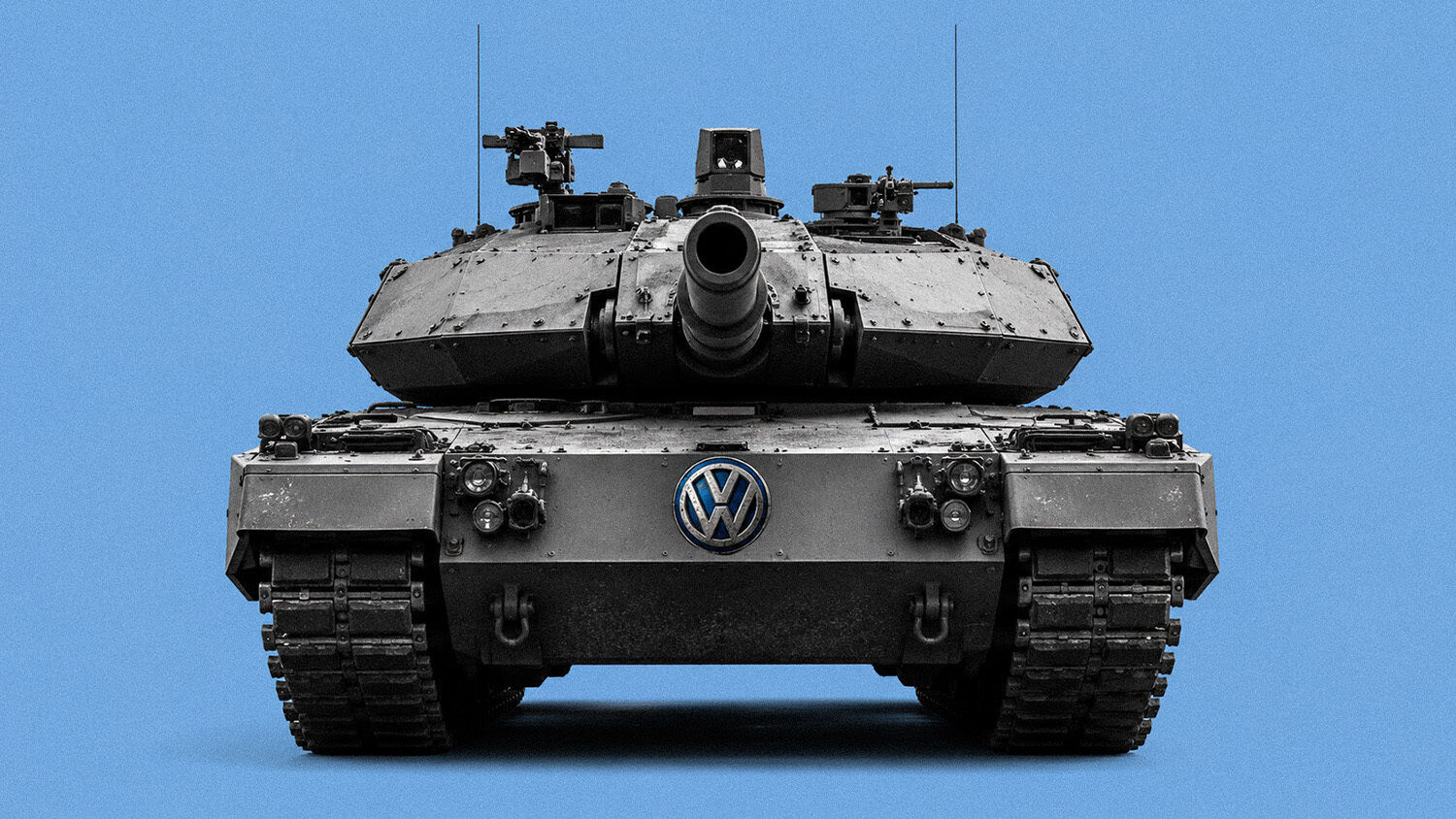
VW’s Military Manufacturing Ambition
Volkswagen, Europe’s largest carmaker, has “a secret rescue plan” to keep its factory in Emden, Germany, open by shifting production from civilian vehicles to military trucks and drones, Bild reported Tuesday based on information from corporate circles.
- This news comes after ceo Oliver Blume announced to employees this week that the company might close some of its factories and cut 50,000 jobs more than the 50,000 it has said it will cut by 2030.
- On Sunday, Blume called the company’s state “more than critical.”
This plan to build military vehicles is a warning sign that Germany is equipping itself to repeat its violent past.
Volkswagen is struggling due to competition from China and tariffs from the Trump administration.
- Car sales in this year’s first quarter were 4 percent lower than in the same quarter last year, down by roughly 80,000 cars.
Volkswagen has been considering this pivot for some time:
- In March, the $43 billion firm was reportedly in talks to build components for Israel’s Iron Dome missile system at its Osnabrück factory.
- Blume said earlier this year that if VW switches to military production, it will “focus on military transport,” which is most closely related to Volkswagen’s “core competence.”
Such a pivot would make sense financially. Military manufacturing is one of the few booming sectors in Germany, due to the government’s drastic increase in military spending to become war-ready by 2029.
However, there’s a deeper, darker reason to pivot to military hardware: It would also make sense historically.
- Volkswagen was founded by the German Labor Front, part of the Nazi Party under Adolf Hitler. After producing roughly 150 civilian cars, the firm rapidly converted its “core competence” to military production of not only tens of thousands of vehicles but also armaments, including the V1 flying bomb.
- This war machinery was produced using forced labor so Germany could fulfill its imperialistic ambitions.
- It is one of several major German industrial companies, such as Rheinmetall, that switched to military production before World War ii.
German industrialists, including Volkswagen leaders, met in 1944, when it became clear Germany would lose the war, to plan the Reich’s revival generations later. Volkswagen’s potential move away from civilian production is a sign those plans to revive the Reich are advancing.


