
Plot Twist: Somalia Is Becoming Powerful
“The Somali government has essentially no control over its borders. It is the textbook definition of a failed state.”
That was our assessment of Mogadishu’s influence in an article we published in March. That assessment was, and largely still is, how the world viewed Somalia’s power.
The territory has three separate autonomous zones that have successfully separated from the government: Somaliland, Puntland and Jubaland. In addition, Mogadishu is in a fight for its survival against the terrorist group al-Shabaab.
However, all this may be changing.
“Control over Somali territory is more important than ever,” reported Warfronts in light of the conflict in Iran. The closure of the Persian Gulf is causing a global fuel crisis. Many fear the situation could become much worse should Iran direct its Yemeni terrorist proxy, the Houthis, to close the Red Sea as well. The terrorist group has proved how much damage it can cause by attacking ships along that route.
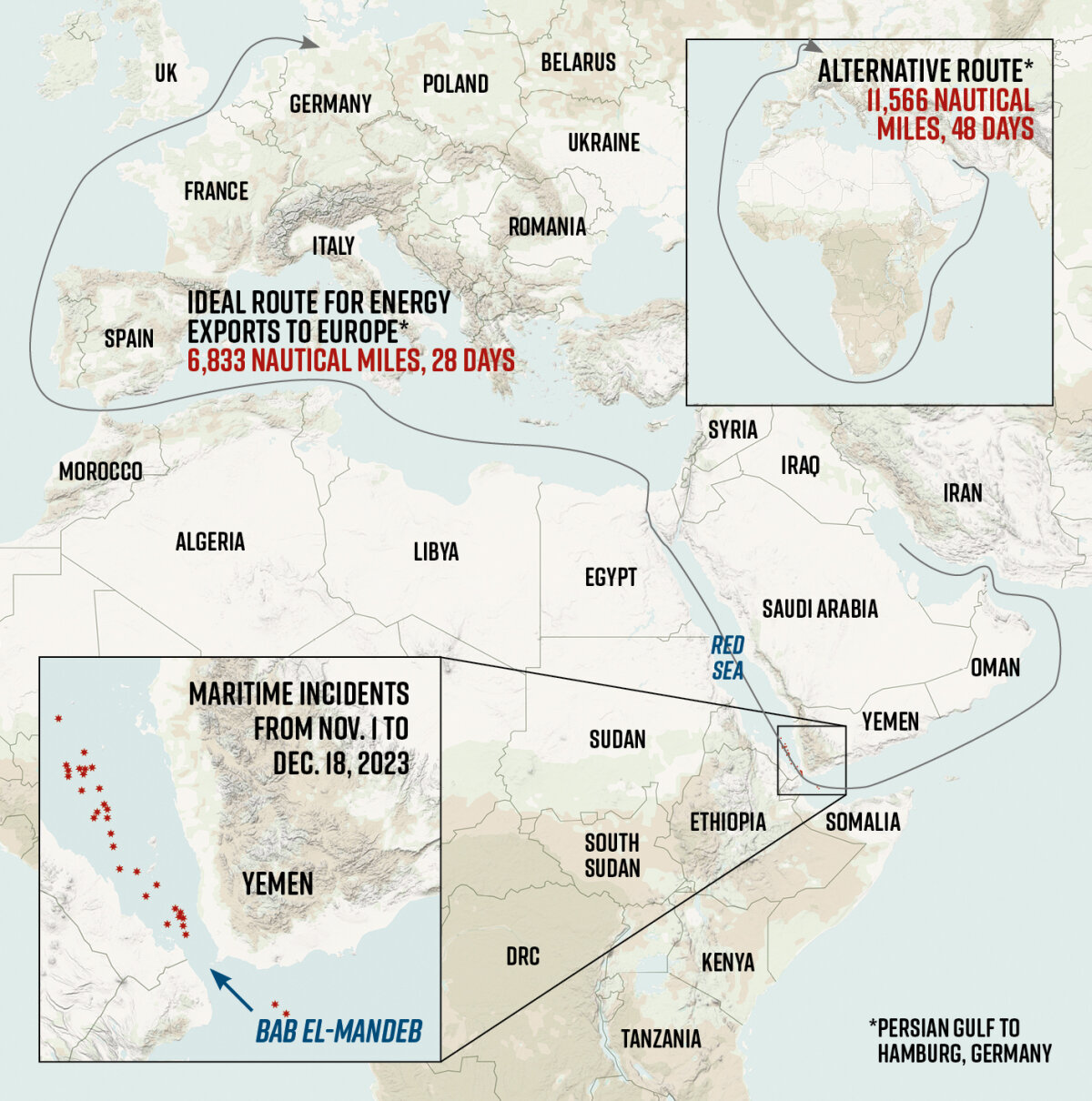
Somalia’s proximity to the Red Sea makes it essential in this fight. For Iran and its allies, it is vital to control this nation to wreak even more havoc on world trade. Those who oppose Iran will need to prevent that.
International players are not oblivious to this. Many are investing heavily in the nation to solidify their influence over this vital geographic choke point.
This increased cash flow is helping to set the stage for a conflict that could have serious implications for who will control the Red Sea in the near future.
Mogadishu’s Friends
In late April, Somalia signed a $900 million deal with Pakistan to acquire up to 24 JF-17 Thunder Block iii fighter jets, in addition to necessary pilot training, ground crew instruction and logistical support packages. This will be a major upgrade for the Somali Air Force, which has been essentially dormant since 1991. Warfronts said this deal “will take Somalia’s air force from its current status as one of the most antique on the African continent and turn it into one of the most advanced south of the Sahara.”
Such international help is aiding Somalia’s efforts to become a more legitimate state. And Pakistan is not the only one helping.
In January, Somalia signed a defense cooperation deal with Qatar that strengthened security and military coordination between the two. This includes increased training for Somali forces.
A few weeks later, Somalia signed a similar deal with Saudi Arabia that increased military cooperation. A few days after that, Egypt sent 1,100 troops to Somalia to help fight insurgents; this was Egypt’s first deployment to the nation. China signed a satellite cooperation agreement with Somalia in mid-April, making good on its pledge to increase cooperation in military, security and economic fields.
Somalia’s best friend at the moment is Turkey. It has been militarily involved in Somalia since 2015, and it is increasing its commitment. In late January, Turkey moved attack helicopters and, for the first time, F-16 fighter jets to the nation. The next month, it sent tanks and began construction on an aerospace base northeast of Mogadishu designed for missile and satellite launches. As of April, the two nations are near an agreement that would give Turkey a naval base in Somalia’s North East state.
Added to this is the increasing number of Turkish boots on the ground. For around eight years, only 400 Turkish troops were stationed in Somalia. However, in July 2024, Ankara approved the deployment of 2,500 troops, sent in installments.
A move that could set the nation up for future success was the stationing of a Turkish deep-sea oil exploration vessel to Somalia in April. The tanker is currently tapping into Somalia’s lucrative oil reserves in one of the globe’s deepest offshore operations. This operation could provide Somalia with a hefty cash flow for years. It has also been reported that Turkey gave Somalia $25 million to help it weather its difficult position.
Somalia’s extra firepower was put on full display in March. Somalia’s South West state severed ties with Mogadishu on March 17 and began preparing to defend its autonomy in its largest city, Baidoa. Though victory would be difficult, many speculated South West could sustain a defense for some time. However, Mogadishu quickly gathered a force to march against South West. With Turkish drones clearing their path, Somali forces arrived in Baidoa on March 30 and controlled the entire city by the end of the day.
Meanwhile, Mogadishu has seemingly regained momentum in its war with al-Shabaab with the help of its allies, including Turkey.
Mogadishu’s Enemies
These events have caught the attention of Mogadishu’s enemies. Following Baidoa’s fall, the regional leader of northeastern Puntland put his forces on high alert, fearing Mogadishu would next target Somalia’s other autonomous zones.
All of this is happening as Somali President Hassan Sheikh Mohamud makes unconstitutional moves seemingly in a bid to achieve one-man rule over the nation. This is earning the government even more enemies.
Mogadishu’s growing power could lead to major internal conflict. Somalia’s autonomous regions have not had to fight to maintain autonomy because Mogadishu lacked the power to subjugate them. But if the government accumulates the power to retake these regions, it’s unlikely it will willingly allow Jubaland, Puntland and Somaliland to continue governing themselves.
For once, Somalia’s autonomous and breakaway regions are feeling the pressure instead of pressuring the capital.
—Warfronts
The government’s growing power could spark a preemptive strike from its enemies. The government’s opposition movement is calling for “national salvation,” a euphemism widely believed to reference a military revolt.
The threat of heightened civil war is extra daunting because Mogadishu’s enemies have foreign backers of their own.
Al-Shabaab is backed by the Houthis, Iran’s Yemeni terrorist proxy, and has been for years. And this relationship seems to be growing rapidly. A report published in February by Somalia’s Saldhig Institute research organization explored this blossoming friendship. For years, the Houth-al-Shabaab relationship was merely strategic, but now the relationship is much deeper. It notes:
In this particular relationship … it is a bit more alarming, it is more systematic, more strategic and it has every sign that it should be a huge concern for anyone concerned about regional security.
The first half of this year has also seen a resurgence in attacks from Somali pirates, which are supported and influenced by al-Shabaab. The United Nations has also reported collaboration between the pirates and the Houthis.
Somalia’s autonomous zones also have foreign backers. Israel and the United Arab Emirates are considered their main backers. Israel became the first nation to recognize Somaliland in December, and the two announced plans on May 19 to open embassies in each other’s nations. Similarly, in 2024 Ethiopia planned to recognize Somaliland and has coordinated with Somalia’s autonomous zones to fight al-Shabaab. Kenya has military ties to Jubaland, and the two fight al-Shabaab together. When South West’s leader had to flee Mogadishu’s offensive, he took refuge in Kenya and began to rally supporters.
The Future
Mogadishu’s rising power is not only setting the stage for proxy war in Somalia but is part of a wider trend in the Red Sea region. The area is becoming increasingly volatile, with two convoluted, but distinct, power blocs emerging.
The Trumpet warned of this trend for years before it materialized, because it is prophesied in your Bible.
The biblical book of Daniel contains prophecy for “the time of the end” (Daniel 11:40), speaking of modern times. Verses 40-43 prophesy of a coming clash between “the king of the south” and “the king of the north,” which our free booklet History and Prophecy of the Middle East proves refers to radical Islam led by Iran and a coming united European military force.
Because of this prophesied clash, Trumpet editor in chief Gerald Flurry warned 13 years ago that these two “kings” would form alliances and violently clash for control of Africa. Somalia’s rival factions are a reflection of the rival blocs developing across eastern Africa. The money pouring into Mogadishu shows international powers’ dedication to control this vital region. To learn more about these blocs, read “Red Sea Battle Lines Are Being Drawn.”