
At Iran’s Mercy
In late February, Donald Trump had towering plans. Like a modern-day Alexander the Great, America’s president unleashed the most powerful military ever assembled by man to crumble the land of Persia before him. In the very first strike, he and his Israeli ally had claimed the life of Supreme Leader Ayatollah Ali Khamenei. Soon, he sent most of Iran’s navy, one of the most powerful of the region, to the bottom of the sea. His goals were lofty: ending Iran’s sponsorship of its terrorist proxy empire, snuffing out its nuclear program, perhaps even instigating a revolution and confining the Islamic Republic to the ash heap of history.
Come August, the roles have reversed. Little, humbled Iran has held the world’s greatest superpower hostage. America came to Iran with bombs, missiles and fighter jets. But none of that could compare to one Iranian asset: the Strait of Hormuz. Iran didn’t have to sink ships or bomb cities. All it had to do was render impassable the single narrow waterway connecting the Persian Gulf and its oil-producing nations to the world’s markets. The price of oil shot to the sky like a Patriot missile. America and the West drained their already-low oil reserves to prevent their economies from crashing. Public discontent threatens to wipe out the Republican Party’s majorities in the House of Representatives and the Senate this November.
President Trump, mindful of public opinion, now finds himself negotiating with Iran—not about a nuclear program or terror groups, but about opening Hormuz. The prewar status quo was Iran granting unconditional free passage to the world’s oil tankers. Now it seems President Trump may not even be able to settle for that. He may be forced to accept permanent Iranian control over the strait, even to the point of charging tolls.
What started as an ambitious display of American power is ending in humiliating defeat—because of Iran’s control over one maritime chokepoint and its effects on the oil trade.
The Philadelphia Trumpet has been warning of Iran’s control over world trade as a major trend in the Middle East for 15 years—far longer than most. We have been expecting Iran to implement this strategy for years. Why?
Because of Bible prophecy.
Daniel 11:40-43 prophesy of a “king of the north,” a “king of the south” and a clash between the two at “the time of the end.” Biblical prophecy and secular history reveal the king of the north to be a united European power led by Germany, the end-time version of the ancient Roman Empire. Based on prophecy and current events, Trumpet editor in chief Gerald Flurry has pointed to Iran fulfilling the role of the king of the south—since 1992! Back then, Iran was an isolated pariah state, nowhere near the greatest power in the Middle East that it is today.
Since then, based on prophecy, Mr. Flurry has made many projections: Iran would gain control of Iraq; Iran would become the face of the Islamic world’s war on Israel; Iran would gain control of Palestinian terror groups. Decades later, these have all come to pass. Mr. Flurry elaborates on the Daniel 11 prophecy in his free booklet The King of the South.
In 2011, he forecast that Iran would gain control over some major sea gates.
A Clue in Daniel 11
Daniel 11:42-43 reveal which nations the king of the north will conquer: “He shall stretch forth his hand also upon the countries: and the land of Egypt shall not escape. But he shall have power over the treasures of gold and of silver, and over all the precious things of Egypt: and the Libyans and the Ethiopians shall be at his steps.” These nations are conquered by the king of the north at the same time as the king of the south. This implies these nations—Egypt, Libya and Ethiopia—are allied with the king of the south.
Mr. Flurry’s article “Libya and Ethiopia Reveal Iran’s Military Strategy” in the April 2011 Trumpet explains how all three countries will eventually fall to Iran. Notice what he wrote in that article: “Why would Iran be so interested in getting some measure of control over Libya and Ethiopia? To me, the answer is intriguing.
“All you need to do is get a good map of the Middle East, with the emphasis on the Mediterranean Sea and the Red Sea. Then you can see why the king of the south, or radical Islam, is so interested in an alliance with or control over these two countries (as well as Egypt and Tunisia). They are on the two seas that comprise the most important trade route in the world!
“Whoever heavily influences or controls Ethiopia will undoubtedly also control the small areas of Eritrea and Djibouti on the Red Sea coastline. These areas only recently became independent of Ethiopia. Also, I believe the Bible view is that these small areas are included as a part of Ethiopia.
“Controlling the Suez Canal is not enough. Egypt tried that in 1956, when Britain, France and Israel kicked it out in one attack. But what if you have radical Islamic nations along this sea trade route with real air power—including missiles?
“That could give Iran virtual control of the trade through those seas. Radical Islam could stop the flow of essential oil to the [United States] and Europe!”
Although many people were following events in the Middle East when Mr. Flurry wrote his article, it wasn’t because they expected Iran to take over the region’s maritime choke points. Yet 15 years later, everyone can now see this has been Iran’s strategy.
How did Iran arrive at this critical point?
Revolution in Iran
Soon after Islamic revolutionaries overthrew Shah Mohammed Reza Pahlavi in 1979 and established a new Iranian regime, Iraq under Saddam Hussein invaded and launched the 1980–1988 Iran-Iraq War. Both nations were major oil exporters that relied on the Strait of Hormuz, the narrow waterway that connects the Persian Gulf to the Indian Ocean and the wider world. The war bogged down in a stalemate, and Iran’s new leadership decided to break it by attacking Iraqi oil platforms and cargo ships. Its most drastic step was to plant mines in the Strait of Hormuz, effectively removing it as a global shipping route. After an American naval vessel hit one of those mines in 1988, President Ronald Reagan ordered U.S. forces to strike Iranian oil platforms and pressure Iran’s ships back into harbor.
Iran saw that its navy could never withstand rivals like the U.S. So, as Michael Connell writes in the U.S. Institute of Peace’s Iran Primer, Iran “developed an asymmetric strategy based on avoiding direct or sustained confrontations at sea. It instead relies on surprise attacks, ambushes and hit-and-run operations. Rather than inflict a decisive defeat, Iran’s maritime forces would seek to inflict enough casualties to raise the cost of victory to an unpalatable level.”
In its standoffs with the U.S. in the 1990s and 2000s, Iran threatened to close the Strait of Hormuz but could not follow through. It also lacked the capacity to seriously challenge freedom of navigation through other regional maritime choke points. But this all changed—starting with the 2011 Arab Spring.
Bab el-Mandeb
In 2011, nearly the entire Arab world was rocked by revolutions against their aging, authoritarian systems. The governments of Tunisia, Libya and Egypt fell. Syria became mired in civil war. Yemen’s dictator resigned. In early 2015, the Houthis, an Iran-backed terror group, drove the Yemeni government from Sanaa, the capital city. To this day, the Houthis, an Islamist theocracy, govern Yemen’s western half, facing the Red Sea.
2015 was the year Iran gained real power to begin disrupting world trade.
In April 2015, Mr. Flurry wrote in “Iran Gets a Stranglehold on the Middle East”: “The Houthi takeover in Yemen proves that Iran is implementing a bold strategy to control the vital sea lane from the Indian Ocean to the Mediterranean Sea.
“We need to understand the gravity of this new situation in Yemen! … Now that Iran controls Yemen, it can virtually close or open this spigot on Middle East oil bound for Europe. And Europe is taking notice!”
Since then, the Houthis have consolidated their power, effectively governing their own country in western Yemen for over a decade. They have amassed an arsenal of expensive, sophisticated weaponry, in large part because of Iranian sponsorship.
When the Houthis declared a blockade on Israel in solidarity with Hamas after the Oct. 7, 2023, terror attack, Iran put that military power to the test. The Houthis declared that they would attack all merchant shipping in the Bab el-Mandeb strait heading to Israel. The result: Shipping through the Bab el-Mandeb virtually halted. Few corporations and insurers wanted to risk sending their ships through a zone explicitly threatened by terrorists, even if they weren’t shipping specifically to Israel. Most ships sailing to Europe opted to sail all the way around Africa, adding roughly two weeks of sailing time and hundreds of thousands of dollars in additional insurance premiums.
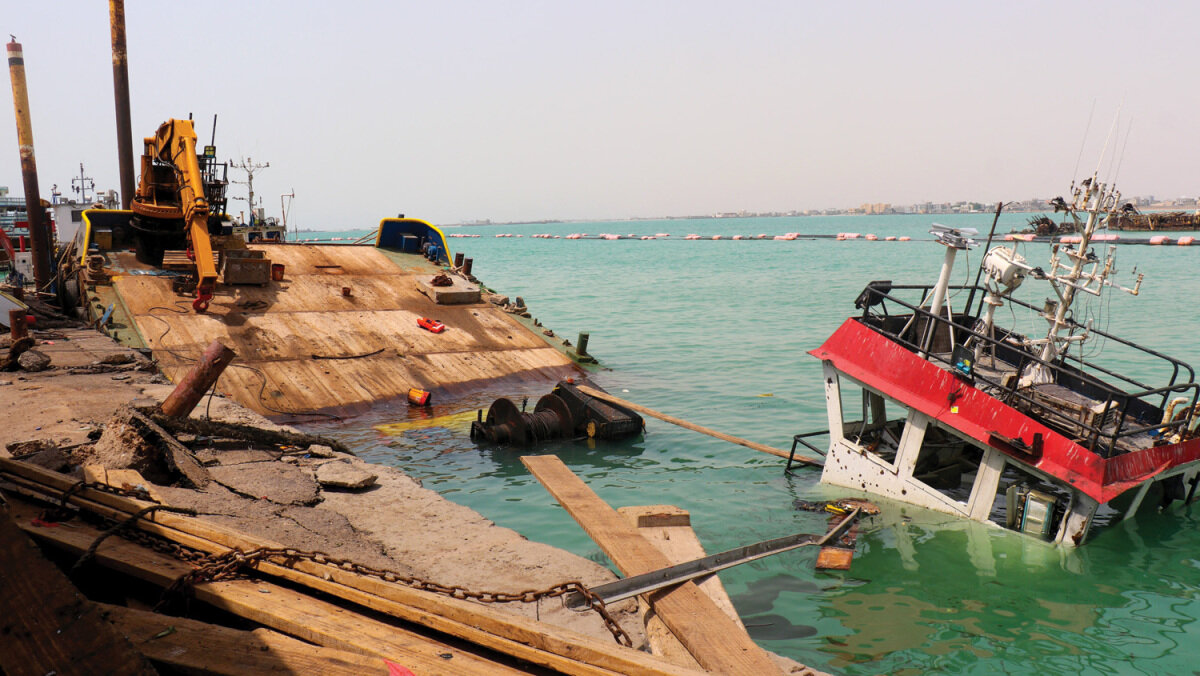
Evidence shows Iran was directly helping the Houthis. The Wall Street Journal claimed on Dec. 22, 2023, that an Iranian spy ship was supplying the Houthis with the intelligence needed to help target its strikes: “Many ships sailing through [the Bab el-Mandeb] have been trying to avoid the Houthis by turning their radios off. The spy ship’s data enabled the Houthis to work around this.” One of the Journal’s sources stated, “The Houthis don’t have the radar technology to target the ships. They need Iranian assistance. Without it, the missiles would just drop in the water.”
Mr. Flurry commented on this in his February 2024 article “The Battle for the Red Sea”: “The Houthis are sponsored and directed by Iran. They would never be making this confrontational move if Iran didn’t tell them to. … Iran has been preparing for this for years, and they showed just how much power they have at their command. … Iran is pushing. Its foreign policy is aggressive and provocative. This is exactly what Bible prophecy says we should expect from Iran.”
Mr. Flurry has identified the “push” by the king of the south against the king of the north (Daniel 11:40), as the aggressive actions by Iran-led radical Islam against German- and Catholic-led Europe. Shutting the Bab el-Mandeb doesn’t impact oil shipments to Asia; North America has closer, alternate supplies. Making the Red Sea impassable hurts Europe most of all.
On February 19, in a small but highly symbolic operation, Europe launched Operation Aspides to keep the Bab el-Mandeb open. Belgian, French, German, Greek and Italian navies all took part in the eunavfor operation, shunning earlier requests from the U.S. and the United Kingdom to join their own mission against the Houthis.
Strait of Hormuz
Israel and the United States began bombing Iran on February 28, with the most active part of the conflict ending on April 8. Iran countered the onslaught with drones and missiles targeting American assets and Israeli civilians, killing scores but failing to deter continued American and Israeli strikes.
Throughout the war’s active fighting from February to April, the Strait of Hormuz became impassable due to its location in an active war zone. In March, Iran had reportedly tried to enforce an unofficial toll by charging foreign ships in cryptocurrency. On April 7, Iran announced the strait would open for transit—subject to coordination with Iranian authorities. Before this point, shipping through the strait had been governed by international treaty permitting free passage without Iranian involvement.
On April 7, Iran essentially declared that it owns the Strait of Hormuz and could do whatever it wanted with it—whether the rest of the world liked it or not. On June 11, it made good on that threat, declaring the strait “closed to the passage of all vessels, including oil tankers and commercial ships, and any traffic will be targeted.” Using the strait without Iran’s permission means risking missile attacks.
Before the war, roughly a quarter of the world’s oil exports transited the Strait of Hormuz, along with about a third of the world’s fertilizer exports and a fifth of its liquefied natural gas exports. Petrostates like Iraq, Kuwait and Qatar have almost no other option for shipping their exports. (Others, like Saudi Arabia and the United Arab Emirates, have pipelines bypassing the strait.) At the time of this writing, hundreds of ships remain stranded in the Persian Gulf, unwilling to risk leaving. American naval missions to guarantee safe passage have done little to change this.
The cost to the global economy has been immense. After February 28, the price of Brent crude repeatedly spiked above $100 a barrel—over a 33 percent jump from prewar prices. The global fertilizer trade is also severely hampered, stirring fears of global crop shortages and food price hikes.
The tangible effects are far-reaching. The war is becoming increasingly unpopular with Americans and threatens to hurt President Trump and the Republican Party in the midterm elections in November.
Iran has responded to having its supreme leader assassinated, navy sunk, economy crashed and alliances cut by not only bombing shipping in the strait but insisting that it will exert more power over it, not less. That is a remarkable fulfillment of Bible prophecy!
Horn of Africa
At the southern Red Sea, Yemen is not the only country where Iran has influence. It also has influence on the other side of the Bab el-Mandeb, in Africa.
Most of the Horn of Africa coast belongs to Somalia, which has been a failed state since 1991 when its central government collapsed. Rival governments and factions now control their own territories. One of these factions is al-Shabaab, a jihadist terrorist group actively fighting U.S. forces in Somalia.
Al-Shabaab is a proxy of Iran: It reportedly receives funding from Iran as well as access to Iranian ports, in violation of United Nations sanctions. Reports suggest Iran uses al-Shabaab to acquire weapons from the rest of Africa to sell to the Houthis.
Also on the coast is Eritrea. Often dubbed “Africa’s North Korea,” this nation is one of the world’s most secretive and dystopian nations, ruled by President Isaias Afwerki since 1993. Because of his tyranny and oppression, which allegedly includes state-sponsored slavery and torture, most Western governments shun cooperation with Eritrea. What little information that can be discerned suggests Afwerki is turning to Iran for sponsorship.
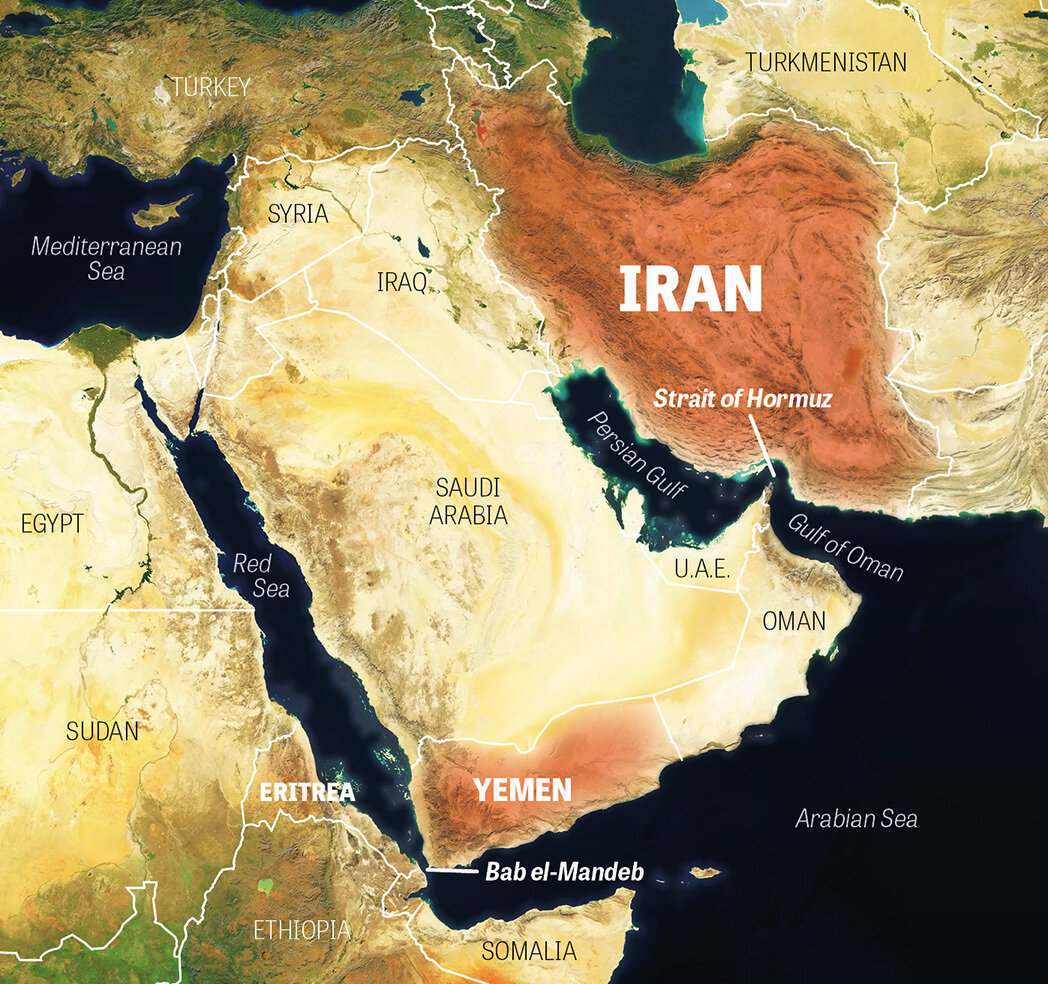
Eritrea harbored an Iranian spy ship from 2016 to 2024. It has refused to accept an Israeli ambassador since 2020, prompting Israel to close its embassy in 2022. When the Houthis were actively attacking ships in the Red Sea, Afwerki allowed them to attack shipping in Eritrean waters with apparent impunity. Reports suggest he allowed the Houthis to use his territory for training camps and weapons-smuggling routes.
Afwerki is not an Islamist. His regime has roots in Maoism, and the majority of Eritreans are Orthodox Christian. His cooperation with Iran and the Houthis may be due to expediency or pressure rather than ideological alignment.
Iran’s control over the Horn of Africa is not as strong as its control over Yemen or the Strait of Hormuz. But it has a significant presence that it could reinforce in the future. Daniel 11:43 mentions Ethiopia as part of Iran’s proxy network. Somalia, meanwhile, is right next door.
The Future
Aarathi Krishnan, ceo of raksha Intelligence Futures, told the Trumpet that Iran’s control of trade routes is “a very, very specific strategy. Iran knows that they cannot win a military fight against the U.S. … But what they can do is hit the pain points that not just the U.S. but the world rely on. And it’s genius.”
When Mr. Flurry was speaking in the 1990s of Iran fulfilling the role of the king of the south, some analysts and leaders did recognize it as a potentially problematic country. Some thought that Iran could use leverage over the Strait of Hormuz to disrupt world trade, but no one predicted that it would implement a strategy to control all of the Middle East’s important trade choke points. Even in 2011, when Mr. Flurry wrote his pivotal article “Libya and Ethiopia Reveal Iran’s Military Strategy,” this analysis was highly unusual. Yet in 2026, it is clear this has been Iran’s strategy—in the making for years.
Yet there is far more in Daniel 11 to be fulfilled. Iran isn’t done yet.
Iran looks degraded right now. The U.S.-Israeli bombing campaign has certainly weakened Iran in some key areas. But its proxy empire remains intact. As Krishnan told the Trumpet, “What we’re all learning from this journey is we’ve underestimated this country, and their ability to maintain this stranglehold is not something we should underestimate.”
Stranglehold is the term Mr. Flurry used in his 2015 article on the Houthis. Secular analysts can see that is exactly what Iran has accomplished with its proxy network. This stranglehold is about to become even stronger.
Notice Daniel 11:42-43 again: “He shall stretch forth his hand also upon the countries: and the land of Egypt shall not escape. But he shall have power over the treasures of gold and of silver, and over all the precious things of Egypt: and the Libyans and the Ethiopians shall be at his steps.”
“This prophecy indicates we are about to see a far-reaching change in Egyptian politics!” Mr. Flurry writes in The King of the South. “We have been saying since 1994 that this would occur. Look at Egypt today, and you see the nation’s foreign policy and political orientation changing in a way that threatens to transform the entire region! … So you need to watch Libya and Ethiopia. They are about to fall under the heavy influence or control of Iran, the king of the south. That is why they are subdued in the king of the north’s victory.”
Egypt, Libya and Ethiopia are strategic and influential countries. None of them is part of Iran’s proxy network—yet. But all three are highly unstable, and Iran is proving resilient, ambitious and aggressive.
Egypt had its own Arab Spring revolution in 2011, after which the Islamist Muslim Brotherhood took over for one year and immediately began working more closely with Iran. The Egyptian military uprooted the Muslim Brotherhood in a 2013 coup, but Islamism remains popular with many Egyptians, as does the Muslim Brotherhood, despite being outlawed as a terror group. And the current government is struggling to stay afloat amid financial crises.
Libya and Ethiopia, meanwhile, are recovering from traumatizing civil wars. The root issues of both conflicts haven’t been settled, and the countries’ internationally recognized governments are weak. One of Ethiopia’s main cross-border security threats is al-Shabaab, the same terror group Iran backs in Somalia.
Iran has a “stranglehold” on the global oil trade with the trade corridors it already controls. What happens if these three countries join Iran’s bloc?
The rest of Daniel 11 and 12 show that this crisis over Iran and world trade leads to a global “time of trouble, such as never was since there was a nation even to that same time …” (Daniel 12:1). Jesus Christ refers to this time as “great tribulation, such as has not been from the beginning of the world until now, no, and never will be. And if those days had not been shortened, no human being would be saved …” (Matthew 24:21-22; Revised Standard Version).
This is what is at stake with Iran’s control of sea gates and its impact on world trade. This prophecy is well on its way to complete fulfillment.
Bible prophecy doesn’t end with this crisis, however. Matthew 24:22 concludes: “but for the sake of the elect those days will be shortened” (rsv). Daniel 12:1 continues: “at that time thy people shall be delivered …” or rescued. Verse 2 links their redemption with the resurrection of God’s people, which occurs at Christ’s Second Coming (see 1 Thessalonians 4:15-17).
Associating Iran’s control of the Red Sea with the Second Coming may seem odd. But the Bible records so many geopolitical maneuvers because they are a series of events culminating in Christ’s return. When you see Iran fulfill its prophetic role, then you know the Second Coming is near. You know you can trust Bible prophecy. More than that, you can have a part in preparing for Christ’s return and be spared from the terrible events that precede it.