
The Board of Peace appointed Ali Shaath as chief commissioner of the National Committee for the Administration of Gaza on January 14.
On Oct. 7, 2023, Gaza’s last ruler, Yahya Sinwar of Hamas, committed the largest massacre of Jews since the Holocaust. How will Ali Shaath be different? That answer could affect the world.
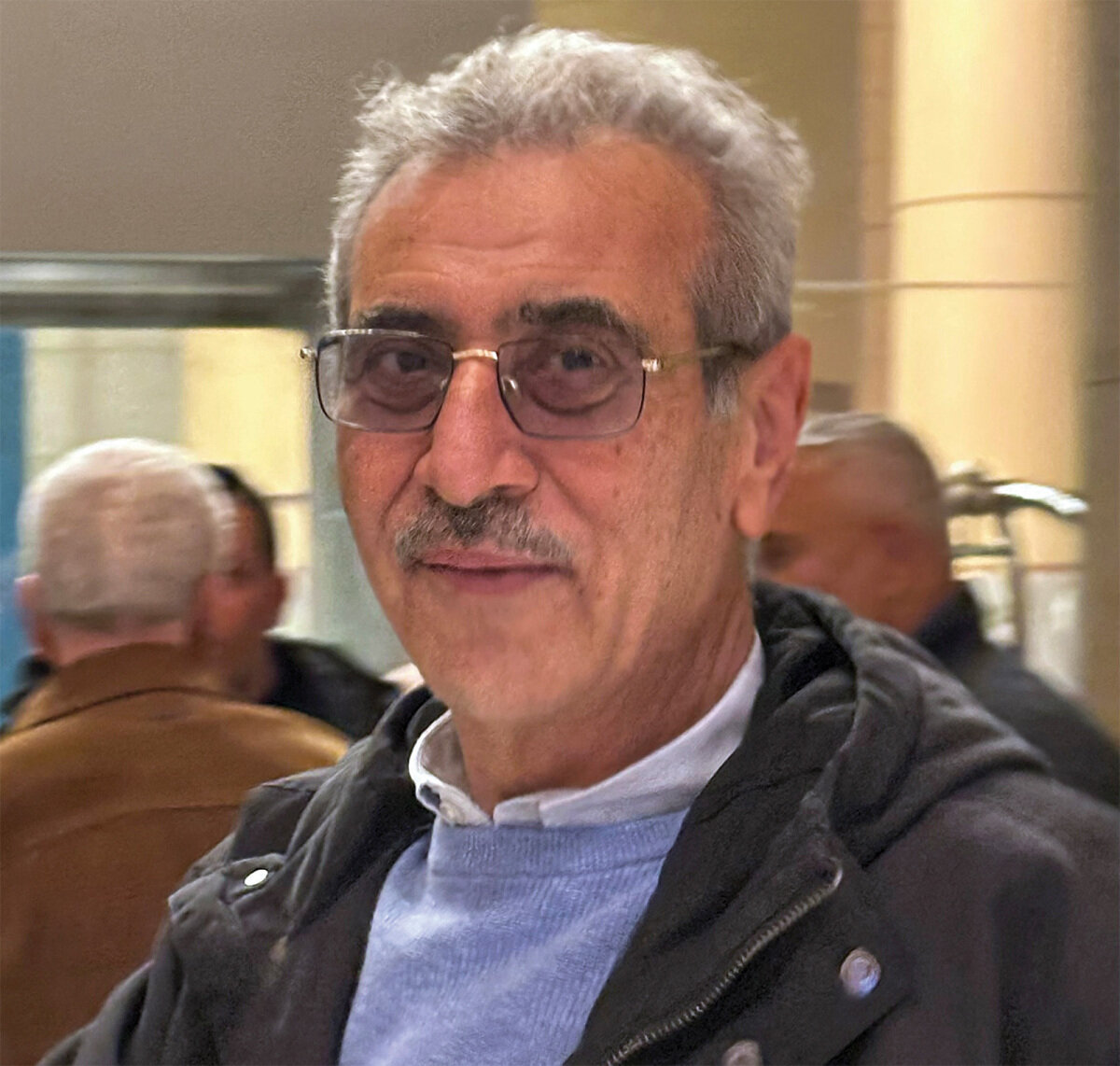
Shaath was born in 1958 in Khan Yunis, formerly Gaza’s second-largest city. He earned a civil engineering degree before becoming a professor in Scotland in the early 1990s. In 1995, he started a career within the Palestinian Authority (PA), the quasi-government established by the Oslo Accords. The PA was led by terrorist Yasser Arafat, and though Shaath was not a member of Arafat’s Fatah faction, many members of his family were.
Shaath has worked in various departments relating to construction and land development. If the fighting between Hamas and Israel actually stops and the National Committee for the Administration of Gaza actually begins administering it, Shaath plans to develop the territory, starting with the removal of an estimated 75 million tons of debris and unexploded ordnance within three years, using some of the rubble to reclaim land from the sea.
In 2005, Shaath was a member of the Final Status Negotiations Committee working to implement a two-state solution. The PA would never have placed somebody on that committee who would compromise with Israel for peace.
Shaath may not be a card-carrying member of a terrorist group or a raving cleric, but neither is he looking for neighborly peace and mutual recognition with Israel. He has advertised his opposition to a U.S.-managed Gaza, yet now the United States is trusting him to manage Gaza.
Psalm 83:4 prophesies of an alliance of various Middle Eastern peoples so “that the name of Israel may be no more in remembrance.” “Israel” includes not only the State of Israel but also Britain and the United States. This anti-Israel alliance consists of modern-day countries like Saudi Arabia, Jordan, Syria, the Palestinian Arabs, Lebanon and Germany (verses 6-8).
In The King of the South, Trumpet editor in chief Gerald Flurry explains a prophecy in Daniel 11 about a Middle Eastern bloc led by Iran clashing with a European bloc led by Germany. Gaza under Hamas was an Iranian proxy for years. But this prophecy led Mr. Flurry to forecast, decades ago, that Iran would lose control of Gaza. He wrote in the previous edition of The King of the South: “The Philistines—the Palestinians of Gaza and even those in the West Bank—will shift their alliance to Germany as well. … There may soon be some significant power shifts in Gaza.”
“Right now,” he writes in the booklet’s current edition, “Gaza’s immediate future is unclear. But whoever reconstructs the rubble that is the Gaza Strip, it is clear that the main obstacle to Gaza aligning with Germany—Hamas’s undisputed stranglehold on the territory—is now history. Gaza is no longer a part of Iran’s proxy empire.”
America is unintentionally laying the groundwork for Germany to fill this role. President Trump has done much to empower many of the Psalm 83 alliance members. He has spearheaded the integration of the new Islamist Syria into the international community.
He has strong ties with Saudi Arabia and other Arab Gulf monarchies. But Psalm 83:3 says the alliance will take “crafty counsel.”
Under Hamas, Gaza was ruled by raving madmen who openly proclaimed their murderous intent. A government led by men like Shaath would not be overtly radical, but will it take “crafty counsel”?
Whoever takes power, America’s sponsorship of New Gaza comes at its own peril.