
Sayonara to Pacifism
“We are committed to see that the Japanese people are liberated from this condition of slavery,” United States Gen. Douglas MacArthur said on Sept. 2, 1945, as he dismantled Imperial Japan’s military.
The slavery he spoke of was of the mind—psychological and unspeakably perverse. It had been fueled by this great people’s belief that their emperor was a god and that they were a superior race, destined to rule the world. This toxic faith had compelled them to fight for 14 years with cruelty so extreme that even Nazi soldiers stationed in Asia are on record expressing their shock.
In the Massacre of Nanjing, Japanese troops murdered an estimated 200,000 Chinese civilians. Even pregnant women, mothers with infants, children and the elderly were bayoneted, tortured, beheaded, burned or buried alive. Soldiers routinely gouged out eyes and tore unborn babies from their mothers.
The brutality of Nanjing was not an isolated case. Earlier conflicts, such as the First Sino-Japanese War, the invasion of Taiwan and the Russo-Japanese War, further reveal this tendency. During World War ii, Japanese troops acted with similar psychosis and violence in several other Chinese cities, as well as in Korea, the Philippines, Singapore and other nations.
By August 1945, Japan’s provocation of its neighbors and nations far distant had cost it some 4 percent of its population, with millions more wounded or gravely ill. Most Japanese were starving, and the country was ash and ruin. Even then, this “condition of slavery” drove soldiers and civilians to fanatically fight to the death. Few surrendered. Nothing short of two atomic bombs could blast apart the chains of fanaticism.
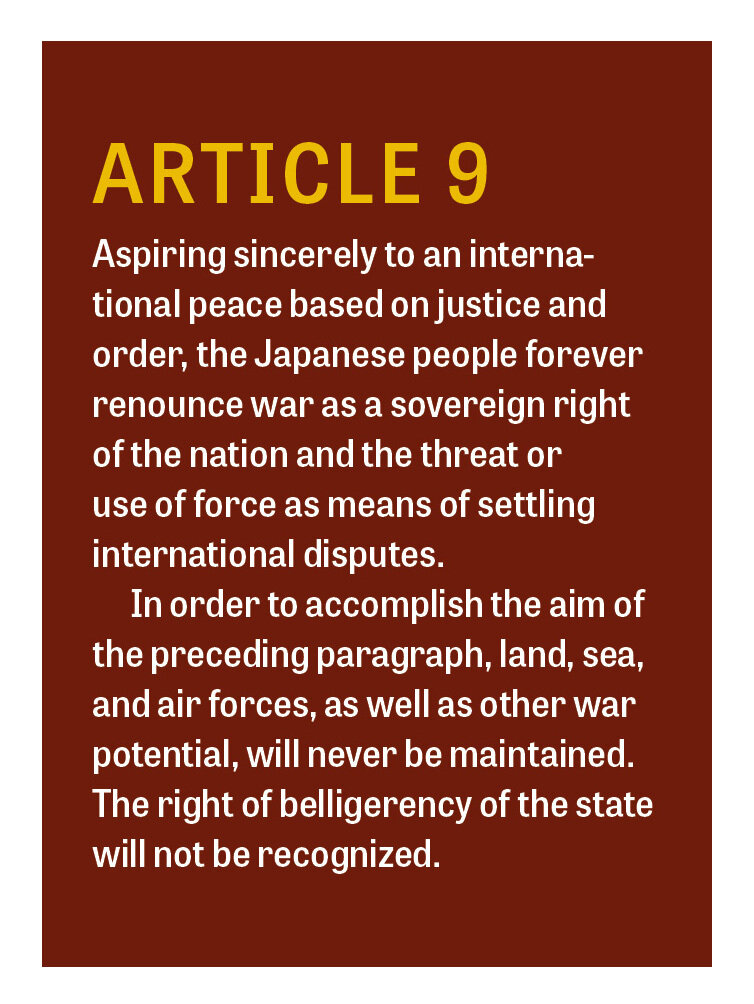
And it was then, in the immediate aftermath of that unspeakable devastation, that the U.S. occupied the defeated nation and drafted its Constitution. In that document, MacArthur’s occupation government established Article 9, a clause banning war as a means for Japan to settle international disputes. The U.S. and Japan then signed the Treaty of Mutual Cooperation and Security, which codified Japan’s dependence on the U.S. for its defense in the event of an attack.
The main goal was to prevent the Japanese people from ever again becoming armed enough to turn belligerence into carnage. The treaty was also of immense strategic value to America, providing access to Japanese bases and enabling the deployment of tens of thousands of American troops at critical nodes in East Asia, close to major current and potential adversaries.
MacArthur’s team also stripped Emperor Hirohito of political power and outlawed all emperor worship. They required him to deliver his famous “Declaration of Humanity” radio address to the nation, denouncing the idea that he was a god and that the Japanese are a superior race.
More than 80 years have passed since MacArthur’s landmark speech and these dramatic measures. For decades they accomplished their overall goal of preventing the Japanese from shackling themselves again to that perverse and deadly mental slavery. But as regional threats mount and U.S. commitment to its allies wavers, the Japanese now feel justified in abandoning pacifism and building stunning firepower.
First Gradually and Discreetly
Japan’s earliest moves away from full pacifism were limited advances that likely appeared trivial to many at the time. The first occurred back in 1954, when U.S. officials encouraged Japan to turn its National Police Reserve into the Japan Self-Defense Force (sdf). The Japanese quietly obliged, though they minimized the sdf’s visibility and capped its budget at just 1 percent of gross domestic product.
Every yen was spent shrewdly, though, and by the early 1990s, the sdf was an advanced, highly capable security apparatus.
Japan’s leaders were not content merely to possess this formidable military force; they sought to put it to use and to give a new generation of personnel real-world military experience.
In 1992, the Japanese government passed a law authorizing sdf participation in nonmilitary aspects of United Nations missions. This meant that, for the first time since World War ii, Japanese troops could be stationed beyond Japan’s borders. They were soon deployed to nations such as Angola, Cambodia and El Salvador.
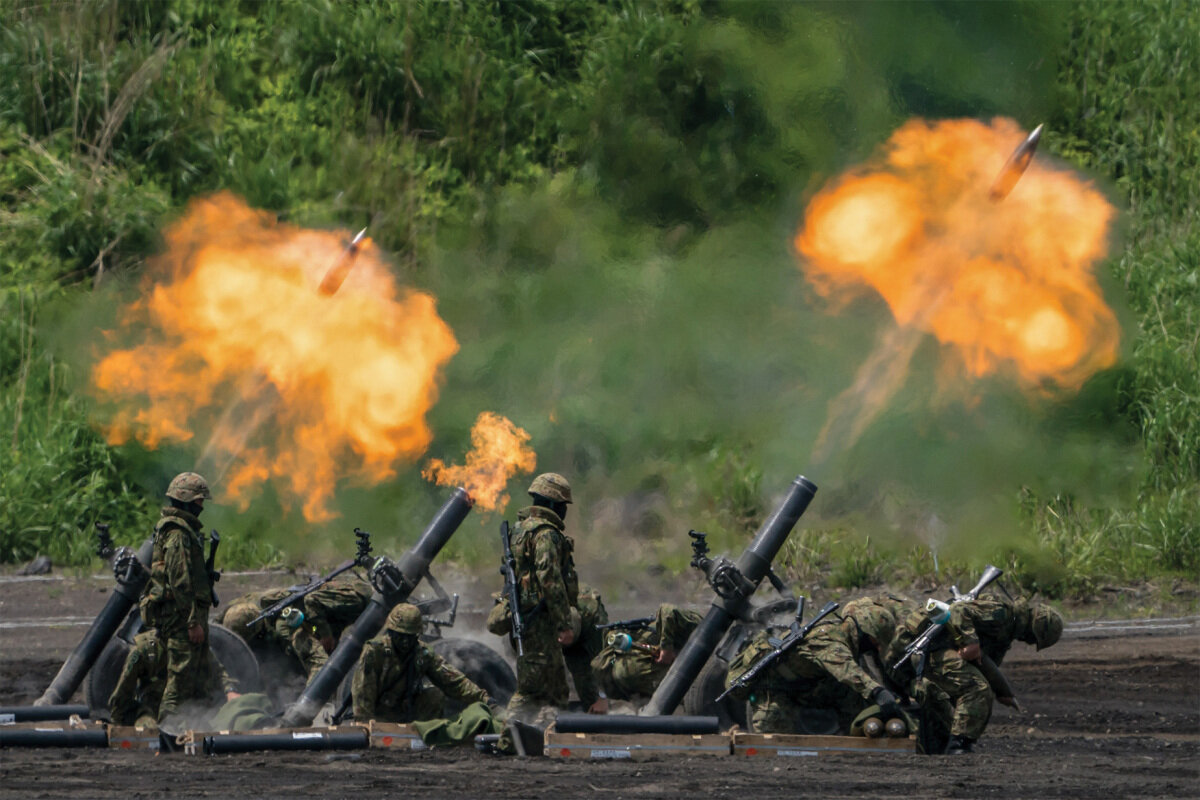
At the same time, Japan’s leaders kept allocating more resources for the sdf’s technological advancement and integration. By the turn of the century, the Japanese military was a fully integrated, ultramodern assemblage of land, sea and air forces.
Then came the Sept. 11, 2001, terrorist attacks against Japan’s primary ally. This triggered what the New York Times called “the most significant transformation in Japan’s military since World War ii” (July 22, 2007). It included Japan acquiring missile defense systems, practicing dropping 500-pound live bombs, and sending maritime troops to the Indian Ocean to assist with U.S. operations.
These were major moves. Japan expert Richard Samuels said they showed that, in the eyes of the nation’s leaders, “the statute of limitations on Japan’s misbehavior during the Pacific War had expired.”
And the Japanese were just getting started.
The Quiet Era Ends
On March 11, 2011, a magnitude-9.0 earthquake struck Japan, causing a tsunami and a severe nuclear crisis. The sdf leaped into action, carrying out rescue operations with more than 100,000 soldiers, an utterly unprecedented number in the postwar era. “It is no exaggeration to say that the earthquake has spurred the most significant Japanese military operations since the end of World War ii,” World Politics Review wrote (April 13, 2011).
Most importantly, the rescue efforts dramatically improved the Japanese public’s perception of the nation’s forces. Almost overnight, the sdf went from being a painful reminder of Japan’s shameful past and “condition of slavery” to a source of pride.
Japan’s leaders harnessed this tide of pride in 2013 to further accelerate the military buildup, implementing a wildly ambitious plan to double annual defense spending by 2027.
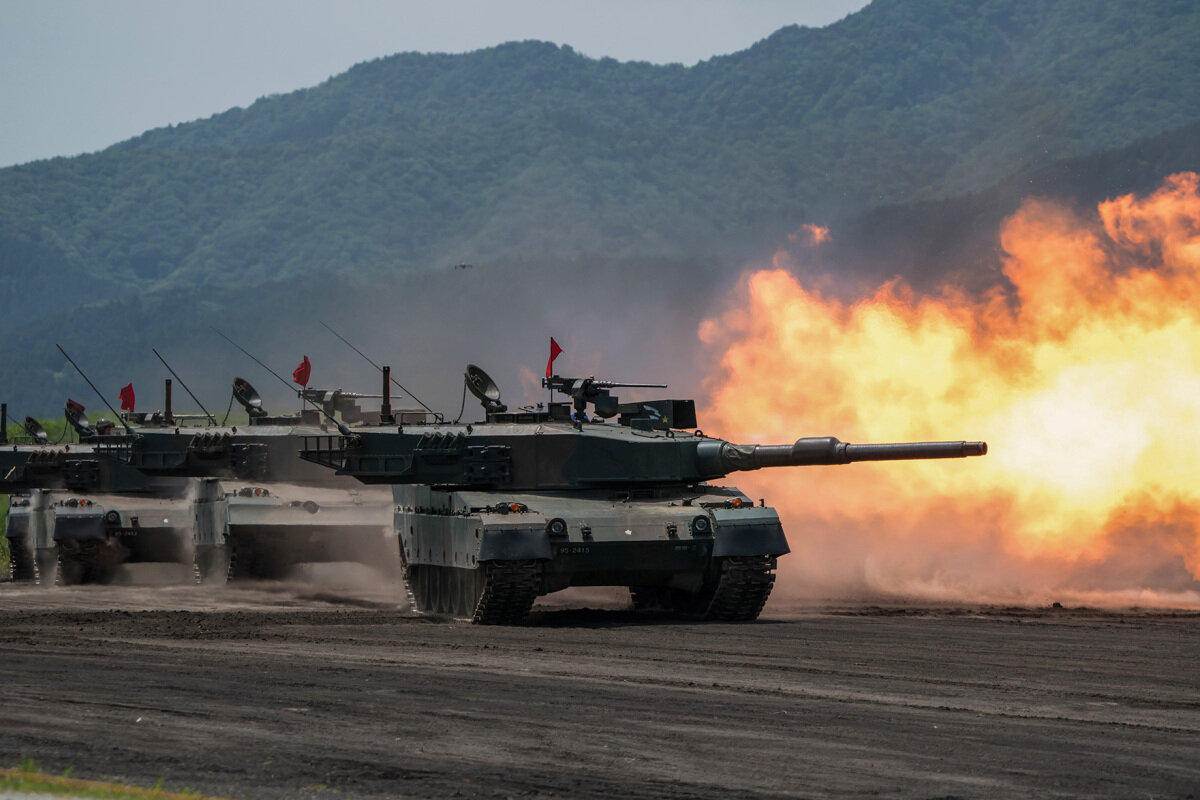
In the years that followed, they voted to “reinterpret” the constitutional ban on collective self-defense and used some of the new funds pouring into the military budget to greatly expand Japan’s naval power. They upgraded submarines, enhanced anti-ship missiles, purchased 147 cutting-edge U.S.-made F-35 fighter jets and, for the first time since World War ii, built aircraft carriers.
Still another landmark arrived in 2022 when Japan committed to acquire long-range missiles and the legal latitude to use them preemptively. This means if an adversary has a missile aimed at a Japanese target, Japan now has the capability and legal authorization to destroy that missile before it leaves the launchpad.
At the same time, more and more Japanese leaders began calling for the development of the weapons whose extreme devastation Japan alone has suffered firsthand. “We should not put a taboo on discussions about the reality we face,” former Prime Minister Shinzo Abe said in 2022, referring to Japan building nuclear weapons.
In 2024, shortly before becoming prime minister, Shigeru Ishiba said Japan must “consider America’s sharing of nuclear weapons or the introduction of nuclear weapons into the region.”
“I think we should possess nuclear weapons,” a senior security official in new Prime Minister Sanae Takaichi’s office told reporters on Dec. 17, 2025. The need is driven not only by rising threats in Asia but also doubts about America’s promise to protect Japan under its nuclear umbrella. “In the end,” he said, “we can only rely on ourselves.”
The idea of Japan going nuclear is no longer confined to fringe debate but is being discussed at the highest echelons of government. Japan possesses a highly developed civilian nuclear industry and a pantheon of world-class physicists and engineers, so it can develop nuclear armaments in a matter of months. Building a Japanese arsenal, analysts say, would require only a “screwdriver’s turn.”
In recent years, Japanese nationalist politicians and parties have also gained traction. They have revised history textbooks to ensure that the nation’s students learn a whitewashed, pro-Japan version of World War ii and other conflicts. Along with that revisionism, they are using mottos such as “Japanese People First,” along with calls to restore political power to the emperor, to reestablish popular nationalism and ethnocentrism.
These developments make clear that Japan is undergoing a profound transformation, rapidly resuming a militaristic and ideological posture that could reshackle the people in the “condition of slavery” that MacArthur’s team took extraordinary steps to free them from. If he and his team were on the scene today, they would recognize the dangers of Japan’s current shift and take action to reverse it.
But modern American leaders show no concern. They are apparently too focused on the threat from China to remember Japan’s potential for belligerence. And so, far from stopping or even denouncing Japan’s transformation, they are cheering it on. In fact, they are pushing the leaders to hasten it.
At America’s Behest
In March, Japan will achieve its goal of spending 2 percent of gdp on its military—almost two years ahead of what was already a remarkably ambitious schedule. But U.S. Under Secretary of Defense for Policy Elbridge Colby says this is still not enough. In a statement about Asian policy, he wrote: “Japan should be spending at least 3 percent of gdp on defense as soon as possible and accelerating the revamp of its military.”
In August, a senior U.S. defense official called Japan’s current spending and buildup “manifestly inadequate,” adding that the nation “should spend as much as possible on defense, as quickly as possible.”
These U.S. leaders view Japan only as an ally. They see a trustworthy and steadfast democracy that should take on more of the burden of defending the free world from authoritarian regimes. They fail to remember its perverse military history or to recognize that the modern Japanese could find themselves chained once again in the iron grip of fanaticism.
“I just wonder who did this,” President Trump said in April, referring to the U.S.-Japan Security Treaty and the way it obligates America to protect Japan, without requiring the reverse. Those responsible for the agreement are “people that either hate our country or didn’t care,” he said.
Even a cursory look into the life of Gen. Douglas MacArthur shows that he was a steadfast patriot whose devotion to America guided his career and decisions. And a look at Japan’s historic propensity for fanatic militarism shows why the extraordinary U.S.-Japan arrangement was made. But the history—both of Japan’s wartime brutality and the success of the enforced pacifism, including the immense strategic benefits the arrangement has given America—has been forgotten.
So the Japanese war drums keep pounding, and America keeps applauding the rhythm, urging an ever faster tempo.
‘Kings of the East’
The Japanese are an exceptional people with numerous remarkable aptitudes and stunning technological and economic abilities, especially considering their nation’s limited natural resources and geographic disadvantages.
It’s no wonder why, after spending five years living among the Japanese, helping the nation accomplish its dramatic reconstruction and transition to democracy, MacArthur bestowed the highest praise on them. “The Japanese people, since the war, have undergone the greatest reformation recorded in modern history,” he said in his Farewell Address to Congress in 1951. “With a commendable will, eagerness to learn, and marked capacity to understand, they have, from the ashes left in war’s wake, erected in Japan an edifice dedicated to the supremacy of individual liberty and personal dignity …. I know of no nation more serene, orderly and industrious, nor in which higher hopes can be entertained for future constructive service in the advance of the human race.”
Looking back on the decades since, it is undeniable that Japan’s extraordinary creativity, diligence and cultural and technological contributions have enriched the human experience for billions around the globe, as MacArthur predicted. It seems that most anything the Japanese set their minds to do, they can accomplish with astonishing success.
Yet Japan’s disturbing wartime history still looms large. It reminds us of what those brilliant minds can accomplish when they are directed toward destruction, and it flashes giant neon warning lights about the nation’s current return to militarism.
And it is not only history that is emitting the danger signals. Bible prophecy, too, raises the alarm.
It is not uncommon to hear references to the biblical word Armageddon found in Revelation 16:16, but few discuss “the kings of the east” mentioned in the same chapter. This phrase in verse 12 describes an alliance of Asian nations that will coalesce in the near future. It will be a major cause of the cataclysmic events of Armageddon.
Revelation 9:16 says that this multinational Asian force will consist of a stunning 200 million troops. Ezekiel 38 shows that this colossal force will be led by Russia and will include China. Verse 6 specifies that the alliance will also include “Gomer” and “Togarmah,” ancient names that refer partly to the peoples comprising modern Japan.
At present, animosity and fear are surging between the peoples of Japan and China, motivating both of these world-leading peoples and economies to build up their militaries. But these Bible passages make clear that the animosity will not last. The two nations will soon join forces, if only briefly, under Russian leadership to play a central role in the most devastating war in human history.
At this future time, the Japanese will again be shackled into a “condition of slavery”—consumed by an obsession to destroy and conquer. This time, they and their allies will have nuclear weapons, making their warfare exponentially deadlier than anything Imperial Japan could unleash in World War ii.
Jesus Christ prophesied of this coming war, saying, “For there will be greater anguish than at any time since the world began. And it will never be so great again. In fact, unless that time of calamity is shortened, not a single person will survive …” (Matthew 24:21-22; New Living Translation).
Every yen Japan spends on its Self-Defense Force today brings this extinction-level calamity nearer. Every increase in Japanese firepower pulls it closer and renders it more lethal.
But this story will not end with mankind’s annihilation.
Right after Jesus prophesied that this war would almost wipe out mankind, He added this promise: “But it will be shortened …” (verse 22; nlt).
Before the psychotic fanaticism of Japan and other nations annihilates humanity, Christ will interrupt the war with superior power! He will subdue the kings of the east and other military blocs and establish a new government. This literal government of God will liberate Japan from its “condition of slavery” far more effectively than any man could ever dream to do! It will usher in an age of unprecedented peace and prosperity for the Japanese and all nations and peoples. Of this future age of global peace, Isaiah 2:4 says that “nation shall not lift up sword against nation, neither shall they learn war any more.”