
Germany Conquers the Baltics
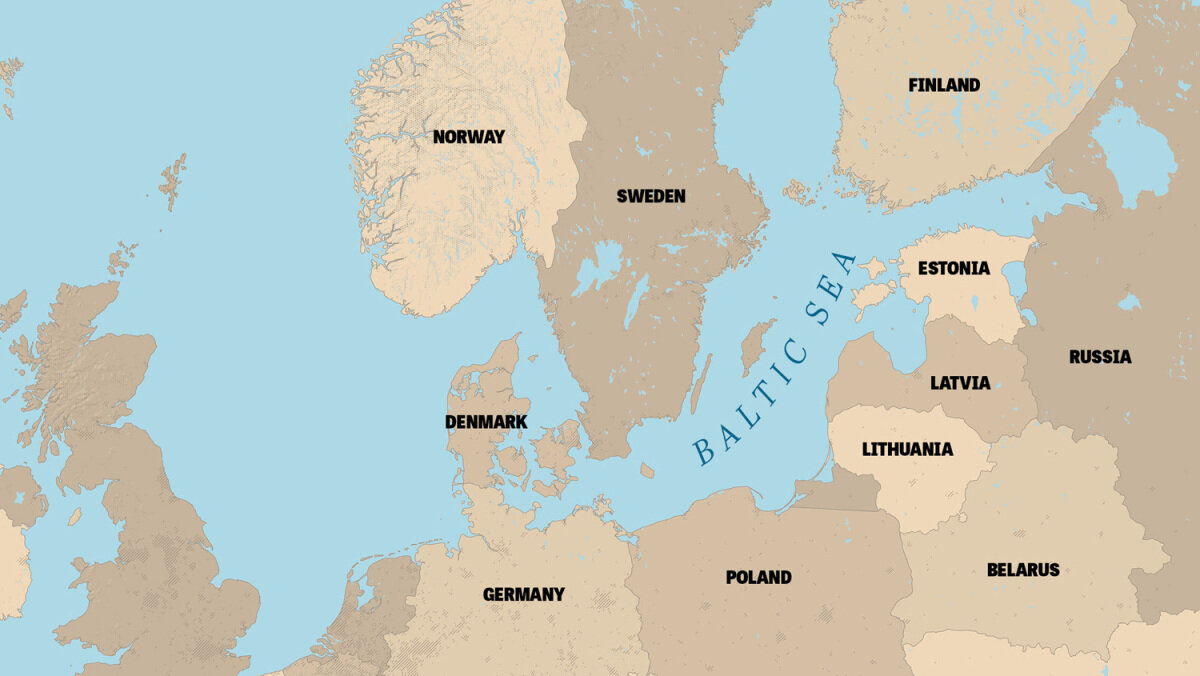
As conflict engulfs Europe, the Baltic Sea and its coastal nations are becoming a strategic battleground. Germany considers controlling the area’s trade routes and ports essential to its very existence. This is why recent Russian provocations have prompted Germany to strengthen its military presence there.
From here on, this struggle will only get more intense and more violent.
The Baltic Sea has long been considered “a virtual German sea,” the late Plain Truth publisher Herbert W. Armstrong wrote in 1939. In the 13th century, the Teutonic Knights sought to forcibly convert the Baltic peoples to the Catholic religion, leaving a lasting imprint on the region. By the 14th century, German merchants—especially those of the Hanseatic League—had established dominance over Baltic trade. Even today, the Baltic Sea remains a crucial artery connecting Germany to northeastern Europe and Russia.
While Russia is trying to absorb parts of Eastern Europe, Germany is solidifying its control over the Baltic region.
Strategic Importance
The Baltic Sea is one of the busiest maritime regions in the world, with more than 2,500 cargo ships traversing its waters daily. Germany is “by far the most important foreign trader in the region,” accounting for more than 10 percent of those ships, according to Centrum Balticum. It also serves as the route for the controversial Nord Stream pipelines, symbols of real and powerful economic cooperation between Moscow and Berlin.
The German military’s official website highlights the important sea routes that Denmark, Finland, Poland, Sweden and Germany rely on. It warns of how serious any loss in the Baltic Sea would be: “Blockades or armed conflicts in the Baltic Sea may have the effect of interrupting these trade flows …. The delivery of even everyday products and resources such as supermarket items or fuel would then [be] affected.”
But the threat isn’t just economic—losing the Baltic Sea would also pose a military threat to nato, that website continues: “[T]he most important supply routes for nato to Finland and the Baltic states—and thus to the Enhanced Forward Presence troops stationed there—run over sea.” The land routes connecting Europe and the Baltic states can’t handle near as much traffic as the sea routes, and “They may also be quickly interrupted in case of conflict.” On top of that are the threats to energy infrastructure: wind farms, data and power cables, natural gas pipelines.
Truly, Germany recognizes control of the Baltic Sea as key to its survival.
It also saw this in the lead-up to World War ii. In his book series The Second World War, Winston Churchill wrote, “The command of the Baltic was vital to the enemy. Scandinavian supplies, Swedish ore and, above all, protection against Russian descents on the long undefended northern coastline of Germany—in one place little more than a hundred miles from Berlin—made it imperative for the German Navy to dominate the Baltic. I was therefore sure that in this opening phase Germany would not compromise her command of that sea.”
Churchill thought Britain should take control: “The command of the Baltic was the obvious supreme prize, not only for the Royal Navy but for Britain.”
Today, however, that sea has been left to Germany.
Russia Provokes
On September 10, Russian suicide drones entered Polish air space while attacking Ukraine. Poland scrambled jets and shot the drones down, marking the first time that Russian drones were downed over nato territory.
Polish Prime Minister Donald Tusk warned, “We are closer to war than at any time since World War ii.”
However, some, including United States President Donald Trump, dismissed the incident, wondering if it was accidental. Moscow quickly made its intentions clear by sending manned fighter jets into the air space of the Baltic state of Estonia on September 19.
Similar incidents followed:
- On September 21, a Russian reconnaissance aircraft flew over the Baltic Sea and was intercepted by German and Swedish fighter jets.
- On September 22, Copenhagen Airport, Denmark’s busiest hub, shut down after large drones were spotted.
- The same day, Oslo Airport in Norway also shut down due to drone sightings.
- On September 26, a drone swarm was spotted over the German state of Schleswig-Holstein near government buildings, critical infrastructure and Thyssenkrupp’s marine division—sites that analysts believe would be among the first targets in a war.
- On October 13, two Russian planes entered into Lithuania’s airspace.
Not all these incidents have been proved to be Russia’s doing, but the uncertainty exacerbates the tension.
One key reason for Putin’s aggression is to expose the weakness of the Western military alliance. If drones can fly unhindered into the Baltic Sea and surrounding countries, who can guarantee the free passage of trade and people? Even worse, what if these incidents foreshadow a much larger war?
This is where Germany enters the picture.
Germany and the Baltic Sea
On Nov. 19, 2021, a German general, Jürgen-Joachim von Sandrart, became commander of nato’s northeastern flank, which oversees Estonia, Hungary, Latvia, Lithuania, Poland and Slovakia. At the time he told Bild, “The people on nato’s eastern flank, in the three Baltic states and in Poland, rightly expect the defense alliance to which their countries belong to be ready and able to protect them against any threat.”
Germany understands these nations’ fears and has spent years trying to unite them under its military leadership.
In 2007, Germany launched “Northern Coasts,” an annual naval exercise in the Baltic Sea involving the European Union and nato partners. Regular participants include organizers Germany, Denmark, Sweden and Finland; as well as other Baltic countries Lithuania, Latvia, Estonia and Poland; along with France, Great Britain, Norway and the U.S.
Last year, the German Navy inaugurated a Maritime Command Headquarters in Rostock, on the shores of the Baltic Sea. The naval center is not a nato headquarters, as some erroneously presumed, but a German naval tactical headquarters with multinational participation.
From this headquarters, Germany led 13 other nations, including all the nato allies that connect to the Baltic Sea, plus the U.S., the United Kingdom, France and Canada, in a two-week military exercise in September. The 8,000 soldiers, 40 vessels, 30 aircraft and 1,800 vehicles focused on securing sea lanes and transporting troops to Lithuania.
Germany’s chief of defense, Gen. Carsten Breuer, remarked, “We are seeing close up today what it means in concrete terms when Germany takes international responsibility.”

Lithuania
In our August issue, Gerald Flurry drew attention to Germany’s military ambitions in the Baltic nation of Lithuania. He wrote, “Many people know nothing about Lithuania; they couldn’t even identify it on a map. Almost no one is paying attention, but some crucial, consequential history is repeating itself before our eyes in this little East European country.
“For the first time since World War ii, Germany has established a permanent foreign military base—and it did so in Lithuania.”
Germany deployed the 45th Armored Brigade to Lithuania in May. The brigade will consist of 5,000 Bundeswehr personnel and aims to be fully operational by 2027. The Bundeswehr’s website says it will consist of three major combat units: the 122nd Mechanized Infantry Battalion and 203rd Tank Battalion (both from Germany), and the Multinational Enhanced Forward Presence Battlegroup Lithuania.
Germany’s military presence in Lithuania is especially notable considering that its occupation of Lithuania in World War ii “brought severe repression, including the persecution and murder of Jews, with significant collaboration from local Lithuanians,” Mr. Flurry said.
The extent of collaboration between the German armed forces and the Lithuanian authorities nearly resulted in the eradication of Jewish life. Nine out of 10 Jews were killed. The vibrant Jewish culture was erased.
And this wasn’t the only time Germany altered the country’s history.
When the Teutonic Knights crusaded against the Estonians, Latvians and Lithuanians from 1193 to 1435, an estimated 50,000 to 150,000 people were killed—all in an effort to convert the Baltic states to Catholicism and bind them to the Holy Roman Empire.
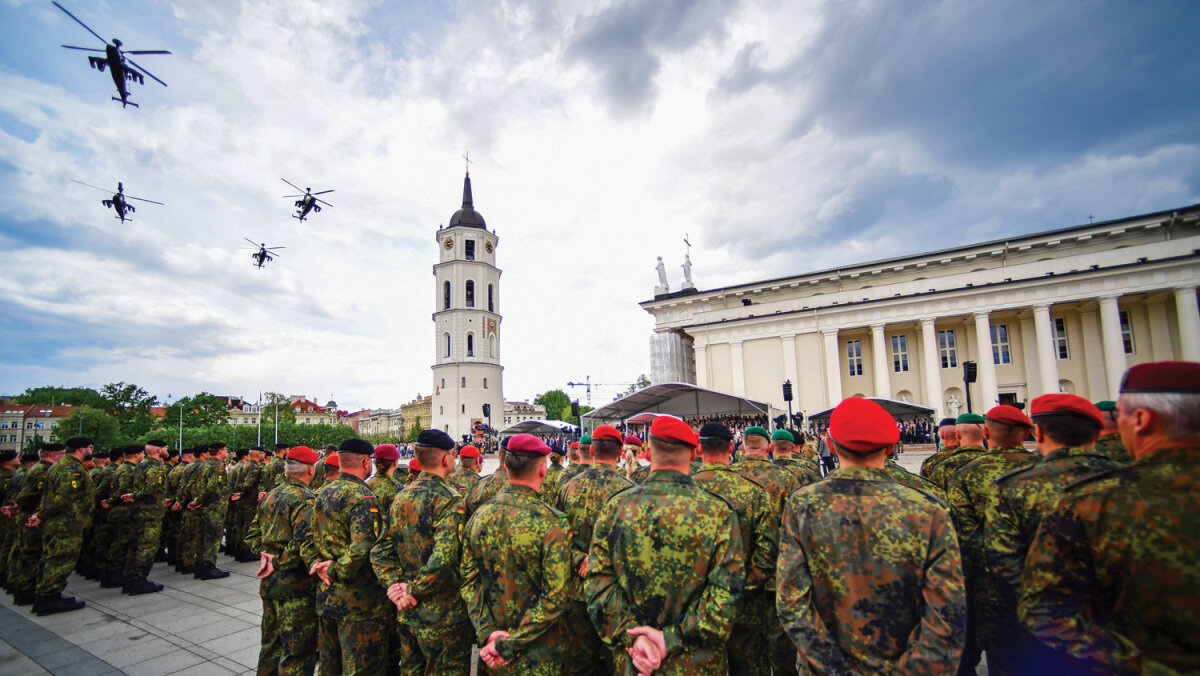
To this day, Lithuania is overwhelmingly Catholic; about three fourths of its population adheres to the faith, compared to about one fifth of Latvians and less than 1 percent of Estonians. This stark difference stems from Lithuania’s late conversion and its deliberate alliance with Catholic Poland in the late 14th century to become independent from the Teutonic Knights and Orthodox Russia.
The Germanic people have shaped Lithuania in profound and lasting ways—through conquest, religion, trade and war. But the final chapter is yet to be written.
The Bundeswehr’s website notes, “When F-4F Phantom II jet fighters first secured the airspace of the three Baltic states of Estonia, Latvia, and Lithuania in 2005, the people there knew they could rely on the aircraft with the black cross. Familiarity with this symbol has its roots in the past and, like the national colors of black, red, and gold, is considered a positive identifying mark both in the Baltic region and in other parts of the world.” The German military’s Iron Cross originated with the Black Cross of the Teutonic Knights. This cross is now back in Lithuania.
Yet with Lithuania long since converted, its mission today is not to change its faith but to hold the frontier of a new Holy Roman Empire.

Latvia
Latvia also fosters close defense ties with Germany and the German defense industry. In September, the Latvian government signed a deal with German defense manufacturer Rheinmetall to establish an artillery ammunition factory on Latvian soil. Rheinmetall said that besides making ammunition for Latvia’s military, it would “strengthen security of supply chains and be available to partner countries.”
Latvian Prime Minister Evika Siliņa said the partnership with Rheinmetall “not only builds stronger national defense but also contributes to security of supply in Europe, enhancing industrial capacity as well as facilitating economic growth.” At the German-Latvian Business Day in Rostock in September, Silina expressed hope for deeper military cooperation with Germany for example in the area of testing drones.
The meeting also highlighted the cooperation between the German Aerospace Center in Neustrelitz and a large Latvian telecommunications company on technologies for controlling maritime drones.
Estonia
In 2022, the German Air Force and the Navy’s Nuclear, Biological, Chemical Defense Unit trained with Estonian troops in the binational exercise “Baltic Tiger 2022.” The exercise sought to use a lesson Germany learned in the 1940s. The Bundeswehr’s website explained: “During World War ii, air and naval forces were often deployed separately; there was only limited coordination between them. Air forces were mainly in charge of air attacks, air reconnaissance and airborne support of ground forces, while the Navy was responsible for operations at sea, including submarine warfare, naval operations and maritime defense.” It then noted that this exercise in Estonia “was the first event where specialized forces of the Air Force and the Navy jointly practiced the protection of critical infrastructure, including ports and airports.”
For Germany, it was a crucial exercise; for Estonia, a security guarantee.

Finland
Finland joined nato on April 4, 2023, just over a year after Russia invaded Ukraine. Within 10 days, Finland participated in a joint military exercise. The Finnish, Portuguese and German forces in Standing nato Maritime Group 1 were commanded by a German admiral.
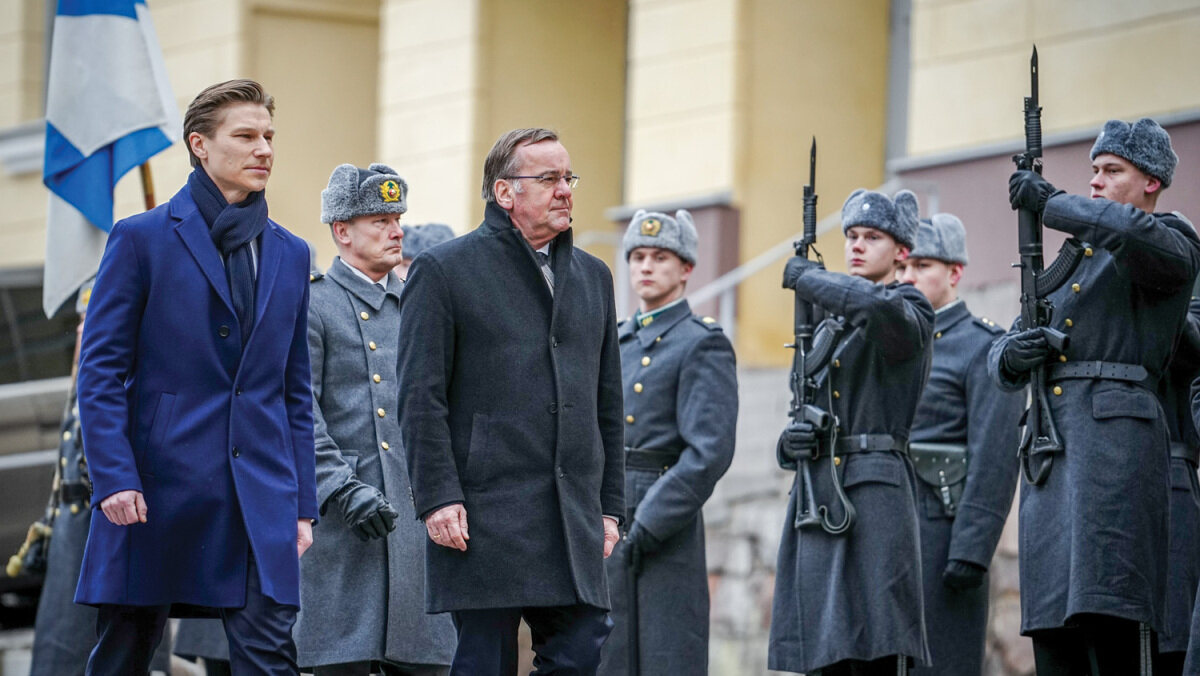
A year later, German Defense Minister Boris Pistorius addressed junior officers of the Finnish Armed Forces and promised that Germany would become more involved in the Baltic Sea region. “Your security is our security,” he assured them.
He praised Finland’s readiness to fight off a Russian invasion and expressed his desire to see more of this mentality in Germany.
Sweden
“Sweden is an important and indispensable partner for Germany and for the entire alliance in nato,” Pistorius said, welcoming his Swedish counterpart for a visit on September 23. The Nordic country joined the alliance last year.
At the meeting, Pistorius announced that both countries intend to deepen their defense cooperation and plan to assign a permanent German officer to the Swedish Defense Ministry to improve mutual exchange.

Denmark
Germany and Denmark pursue many defense cooperation projects. In June 2024, Germany and Denmark agreed to strengthen their military cooperation in light of an increasingly hostile Russia.
In September, Copenhagen hosted the German-led “Northern Coasts 2025” exercise in the Baltic Sea. Belgium, Canada, Estonia, Finland, France, Latvia, Lithuania, the Netherlands, Poland, Sweden, the UK and the U.S. joined Germany and Denmark in the exercise “to further develop the capabilities for national and Alliance defense and to demonstrate Allied presence,” nato’s website said. The naval organization consisted of around 8,400 military personnel and 40 units from 14 nations.
“We are pursuing the goal of strengthening the cooperation and military capabilities of the navies in the Baltic Sea,” noted German Rear Adm. Stephan Haisch of the Commander Task Force Baltic. “In doing so, we consistently rely on realistic threat scenarios from all dimensions: air, land, water and cyber.”

Poland
Together with Germany and Denmark, Poland leads the Multinational Corps Northeast with responsibility in the northeastern flank of nato at the borders of Poland and the three Baltic states. Its headquarters is located in Szczecin, Poland.
Fear of Russia also opened the door for German military expansion into another country in the Baltic region: Poland.
On August 4, the German Air Force deployed five Eurofighter jets to a military airfield in Poland. The deployment was the first of its kind, lasted nearly a month, and involved around 150 German soldiers.
The timing proved critical. Weeks later, Russian drones violated Polish air space.
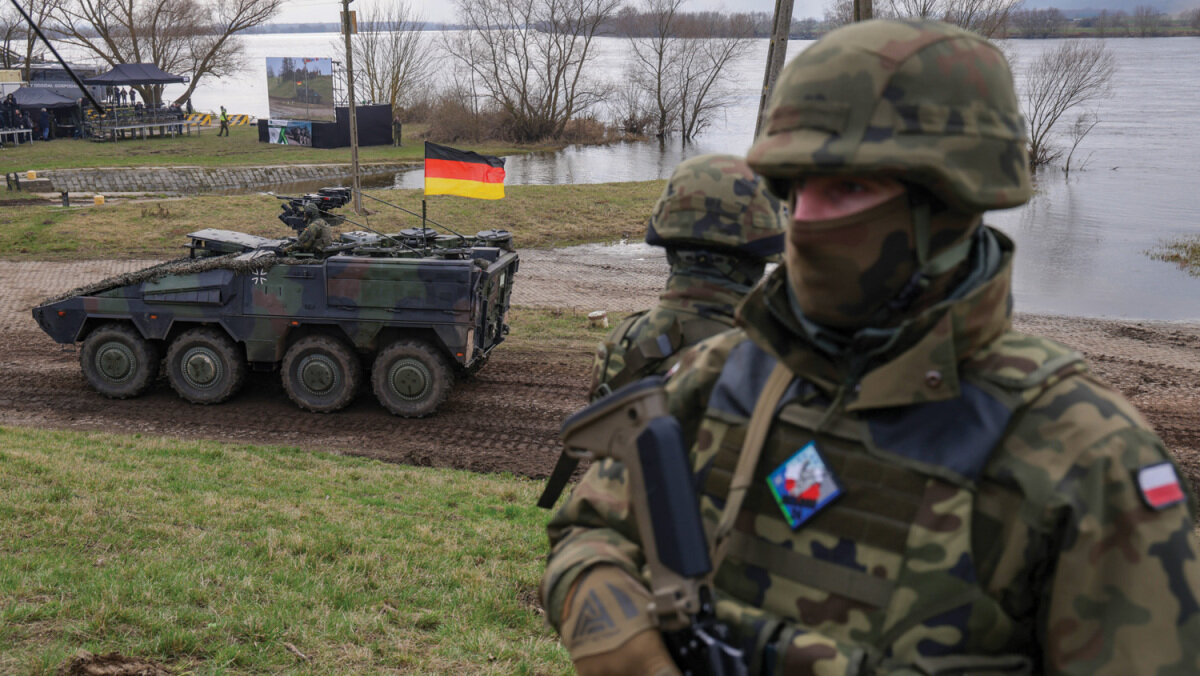
Thus, German jets are returning to Poland. At an October 15 meeting of nato defense ministers, Pistorius announced that Germany would deploy a number of Eurofighter jets to the Polish military air base in Malbork. He noted that the additional air patrols would make Germany “even more active, more present, and more visible on the eastern border of the alliance.”
Germany has also participated in armed protection flights over Poland from the Rostock-Laage air base. The mission, which originally involved two Eurofighter jets and was set to end on September 30, has been extended to December 31 and now involves four jets.
Poland’s trust in German military defense is highly significant. The late Herbert W. Armstrong warned that fear of Russia would cause Europe to unify and militarize. Back in 1980, he asked if Poland would “free itself from Soviet domination” to join Germany in this rising empire.
Fulfilled Prophecy
In the March 1950 Plain Truth, Mr. Armstrong stated that “the nations of Europe, directly in the very shadow of the great Russian bear, are becoming disturbed, distrustful of America, and thinking more and more about uniting themselves into a united states of Europe.”
This empire is now rising before our eyes, as prophesied in Daniel 2 and Revelation 17. “And the ten horns which thou sawest are ten kings, which have received no kingdom as yet; but receive power as kings one hour with the beast. These have one mind, and shall give their power and strength unto the beast” (Revelation 17:12-13).
Europe is uniting under Germany’s military leadership—unaware of how Germany plans to use this power.
As Mr. Flurry explained in “Germany’s Secret Deal With Russia—Exposed” (theTrumpet.com/25675), Germany and Russia are both “working to empower themselves and each other at the expense of Europe and the U.S.-led world order. Both want to tear down that order and build themselves into great empires! Those empires will inevitably clash, but for now it is in both Germany’s and Russia’s interest to weaken everyone else and strengthen themselves and each other. With this in mind, Germany’s duplicitous behavior is easy to understand.”
Germany today is increasing its power over the Baltics to replace the nato-led alliance. At the same time, it is preparing for the time when its deal with Russia breaks.
A prophecy in Daniel 11 shows that after Germany expands its military empire into the Middle East, “tidings out of the east and out of the north shall trouble him” (verse 44).
Back in 2008, Mr. Flurry wrote, “You can already see the fulfillment of this prophecy occurring in embryo today! Europe is deeply troubled by developments in Russia and China.” He added in 2021: “These tidings will come from the Communists—Russia and China and their allies. They will amass an unprecedented 200 million-man army! (Revelation 9:16). No one will be able to stop them from sweeping through Europe and totally devastating the area (Daniel 11:45). This will happen because your Bible says so! But it’s leading to the best news you could ever possibly hear.”
Germany’s military preparations in the Baltic are a direct response to this threat. But in the end, they will find that they are no match for this rising Asian alliance.