
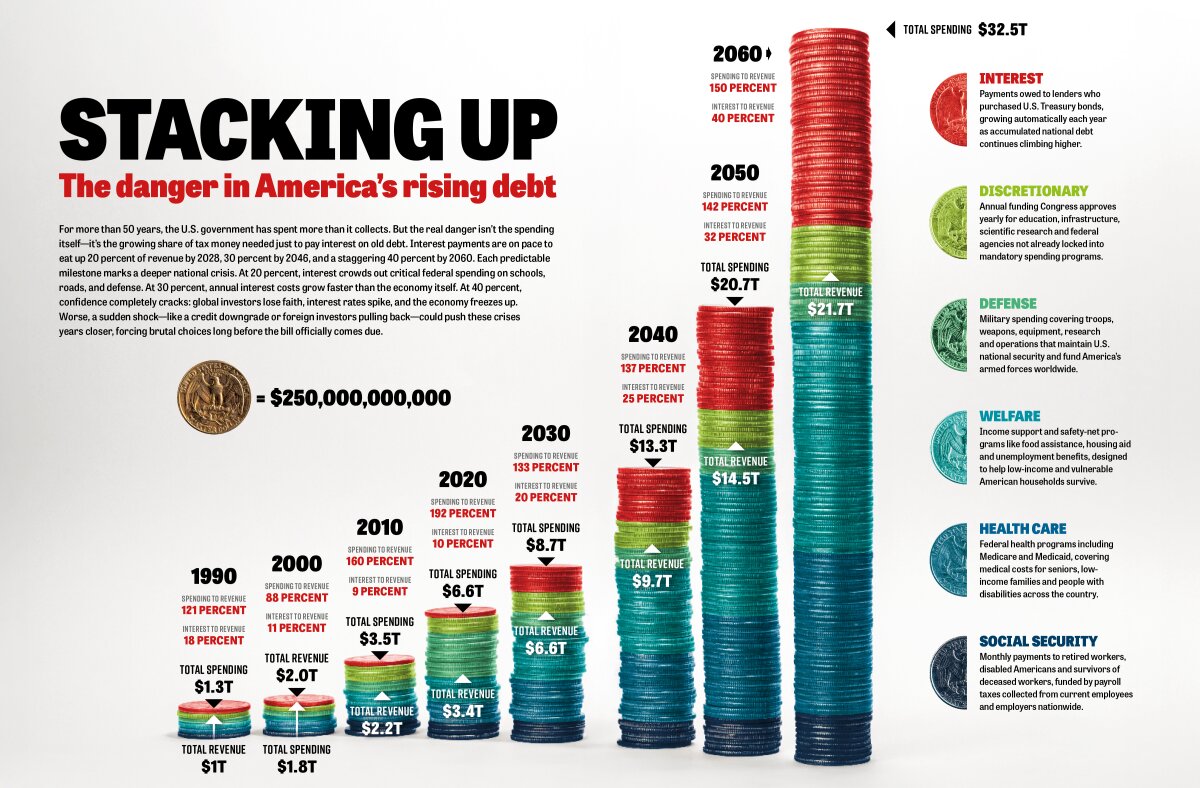
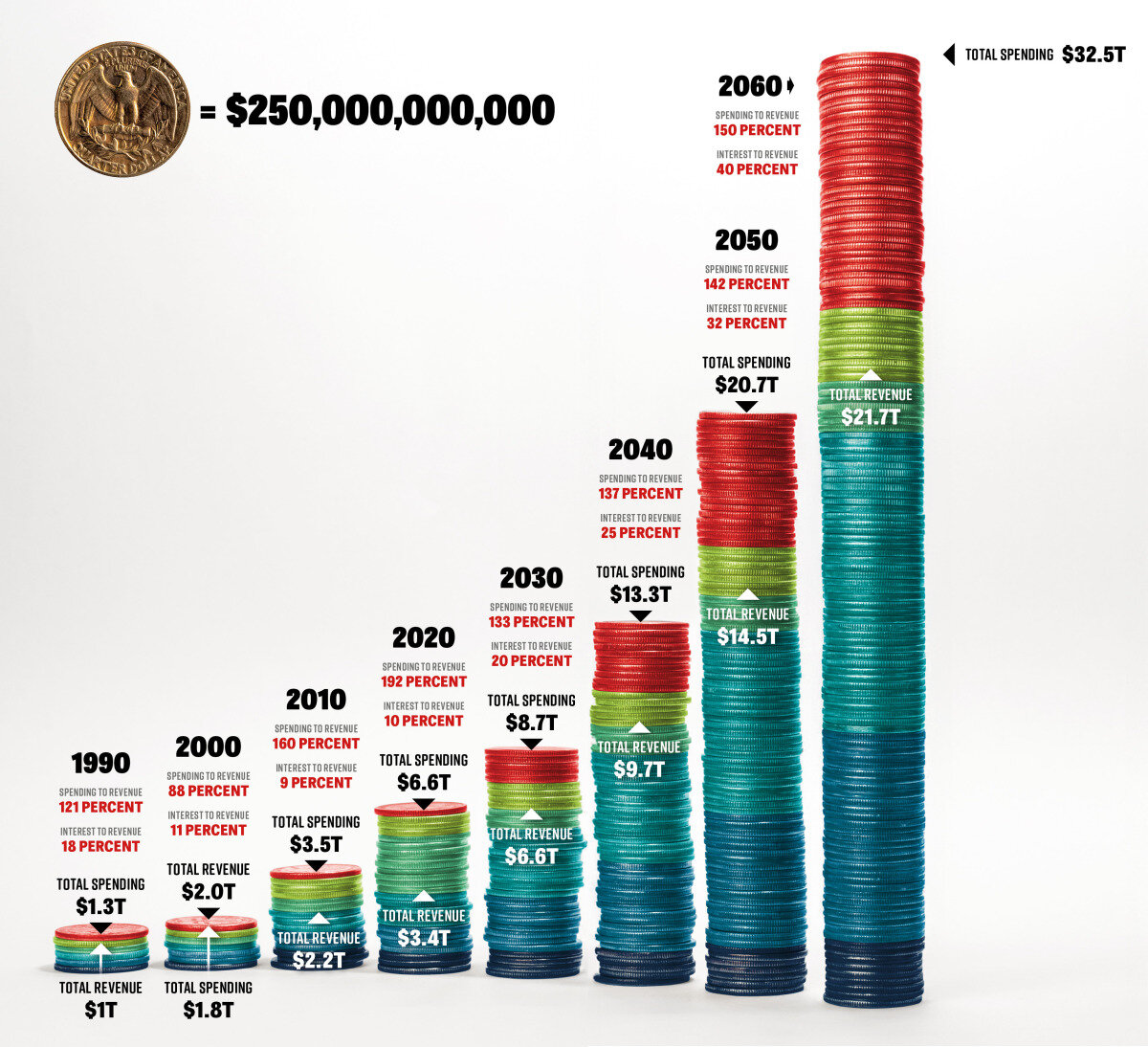
For more than 50 years, the U.S. government has spent more than it collects. But the real danger isn’t the spending itself—it’s the growing share of tax money needed just to pay interest on old debt. Interest payments are on pace to eat up 20 percent of revenue by 2028, 30 percent by 2046, and a staggering 40 percent by 2060. Each predictable milestone marks a deeper national crisis. At 20 percent, interest crowds out critical federal spending on schools, roads, and defense. At 30 percent, annual interest costs grow faster than the economy itself. At 40 percent, confidence completely cracks: global investors lose faith, interest rates spike, and the economy freezes up. Worse, a sudden shock—like a credit downgrade or foreign investors pulling back—could push these crises years closer, forcing brutal choices long before the bill officially comes due.

See the complete infographic.
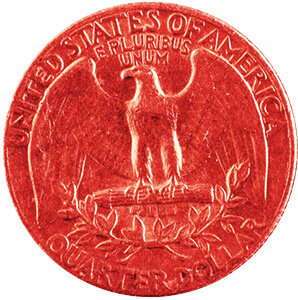
Interest
Payments owed to lenders who purchased U.S. Treasury bonds, growing automatically each year as accumulated national debt continues climbing higher.
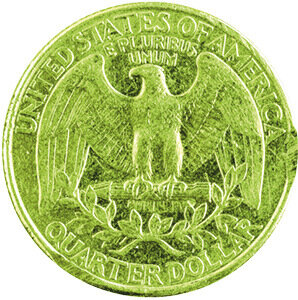
Discretionary
Annual funding Congress approves yearly for education, infrastructure, scientific research and federal agencies not already locked into mandatory spending programs.
Defense
Military spending covering troops, weapons, equipment, research and operations that maintain U.S. national security and fund America’s armed forces worldwide.
Welfare
Income support and safety-net programs like food assistance, housing aid and unemployment benefits, designed to help low-income and vulnerable American households survive.
Health Care
Federal health programs including Medicare and Medicaid, covering medical costs for seniors, low-income families and people with disabilities across the country.
Social Security
Monthly payments to retired workers, disabled Americans and survivors of deceased workers, funded by payroll taxes collected from current employees and employers nationwide.