
Without NATO, Europe Will Erupt
Their village was doomed. The 7,000 residents of Zafferana Etnea prepared to watch their homes and livelihoods destroyed forever. The 1,000-degree centigrade lava from Mount Etna’s latest eruption was flowing slowly downward. Who could withstand a literal force of nature?
As it turns out: nato could. In the spring of 1992, the Italian military dug embankments, blew up lava tubes, and set up barriers. And the United States Navy and Marine Corps airlifted numerous 4-ton concrete blocks to divert the lava away from the town.
Only a single house, on the outskirts of Zafferana Etnea, was burned.
American aid was made possible by the Sigonella airbase in eastern Sicily, just 15 miles away. This incident was a powerful example of how sharing a base with the U.S. can benefit a nation.
‘All Your Bases Belong to Us’
In 1957, Sigonella was undeveloped agricultural land marred by the ruins of a German wartime airfield. To strengthen nato’s southern flank against the Soviet Union, Italy opened it up to the Americans, who brought amphibious landing craft filled with materials and equipment and constructed one of the key American bases in the Mediterranean theater: Naval Air Station Sigonella. In 1965, Italy’s 41st Antisubmarine Warfare Wing moved in. Today, roughly 2,000 American troops and 1,000 Italian troops are stationed there.
When Italy denied America use of the base on March 31 during hostilities with Iran, the U.S. Air Force was stunned.
Similar stories played out across the Continent. Bases America built, bases the Europeans asked for, bases they benefited from for decades, were suddenly closed to American forces.
Iran is an undemocratic, authoritarian, oppressive, radical Islamist regime. It is the enemy of every liberal cause so cherished by Europeans. It has been threatening and attacking America and other nations for 47 years. It is the world’s biggest state sponsor of Islamic terrorism. It was and is trying to build nuclear bombs. The United States is outside the range of their missiles, but Europe is not.
It is reasonable therefore for the U.S. to expect help from its nato allies.
But Spain and France closed their airspace entirely to all U.S. aircraft involved in the Iran war. France refused access to aircraft trying to rescue a downed pilot. Even Poland, one of America’s closest European allies, rejected a request to redeploy Patriot missile systems to the Middle East. Britain, which has fought side by side with the Americans through so many conflicts, also hampered the effort. It eventually acquiesced and allowed access to its bases, but only for acts of “collective self-defense.”
European nations have the legal right to do this. But America expected more from allies it had protected for decades.
The U.S. continued to seek more help, asking European navies to help open the Strait of Hormuz, through which 10 to 20 percent of European oil supplies flow. The Europeans said they would help patrol it—but only after the war is over.
Earlier this year, Donald Trump’s aggressive rhetoric and pursuit of Greenland—an autonomous territory of nato ally Denmark—had damaged the alliance. But Europe’s stark reaction to the Iran war, effectively aiding the Islamofascists in order to hurt the Americans and the Jews, brusquely nailed the alliance’s coffin shut.
It is hard to escape the conclusion that European leaders are now deliberately sabotaging the union.
Papal Schism
Into this breach stepped Pope Leo xiv—who proceeded to make it wider.
Shortly after U.S. Defense Secretary Pete Hegseth encouraged Americans to pray for victory in the Iran war, Leo spoke out on March 29 to assert, “God does not listen to the prayers of those who wage war.”
On April 10, the pope posted on social media: “God does not bless any conflict. Anyone who is a disciple of Christ, the Prince of Peace, is never on the side of those who once wielded the sword and today drop bombs.”
The next day, apparently still unmindful of the dozens or hundreds of conflicts popes have blessed for the past 2,000 years, Leo said: “Dear brothers and sisters, there are certainly binding responsibilities that fall to the leaders of nations. To them we cry out: Stop! It is time for peace! Sit at the table of dialogue and mediation, not at the table where rearmament is planned and deadly actions are decided!”
A group of three Catholic cardinals went on 60 Minutes to support the pope and criticize President Trump and the war effort. Cardinal Robert McElroy of Washington, D.C., said the war on the Iranian regime “is not a just war.”
Inevitably, President Trump hit back. “Pope Leo is weak on crime, and terrible for foreign policy,” he posted on Truth Social. “… I don’t want a pope who thinks it’s OK for Iran to have a nuclear weapon.”
“I don’t want to get into a debate with him,” the pope responded, then went on to imply the president had “abused” the gospel.
Leo has had much less to say about Iran’s ongoing threat against shipping in the Strait of Hormuz or the tens of thousands of Iranian people the mullahs murdered in January or the hundreds of thousands who could die if Iran gets nuclear weapons.
Vice President JD Vance, a Catholic convert, said: “Was God on the side of the Americans who liberated France from the Nazis? Was God on the side of the Americans who liberated Holocaust camps and liberated those, those innocent people, you know, those who had survived the Holocaust? I certainly think the answer is yes.”
Veteran journalist Melanie Phillips went even further: “The pope’s refusal to support a war to end one of the world’s greatest evils has called to mind the disturbing example of Pope Pius xii during the Holocaust. In 1933, he signed the Reich Concordat, which secured for the German Catholic Church protection from the Nazis and effectively bought its silence over the extermination of the Jews. Arguably, Leo’s stance is yet more shocking, because even Pius didn’t say it was morally wrong to fight Hitler” (New York Post, April 14).
Pope Leo “not getting into a debate” with U.S. leaders by getting into a debate with them seems to have stiffened anti-American resolve in European capitals.
Italian Prime Minister Giorgia Meloni was the only European leader to attend Donald Trump’s inauguration. He has called her “a marvelous woman” and “a great leader.” But Meloni is leader of a 70 percent Catholic country. When forced to choose between president and pope, she chose the latter.
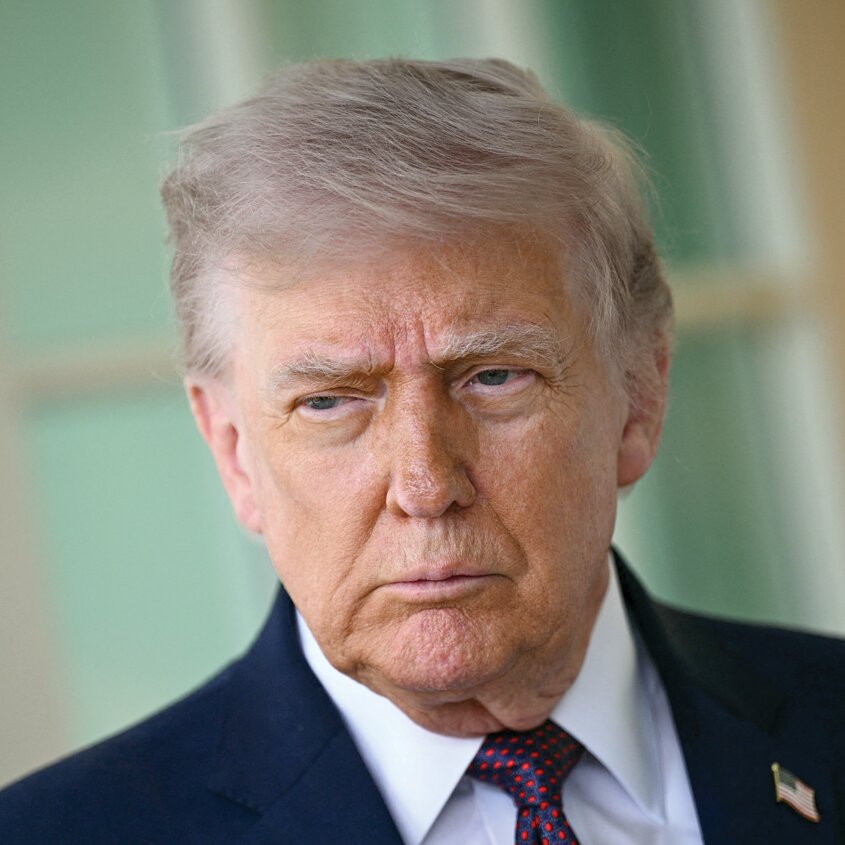
“I find President Trump’s words towards the [pope] unacceptable,” she said in an interview with the Corriere della Sera newspaper. “The pope is the head of the Catholic Church, and it is right and normal for him to call for peace and to condemn every form of war.”
President Trump responded by calling Meloni herself “unacceptable.”
“I thought she had courage, but I was wrong,” he said.
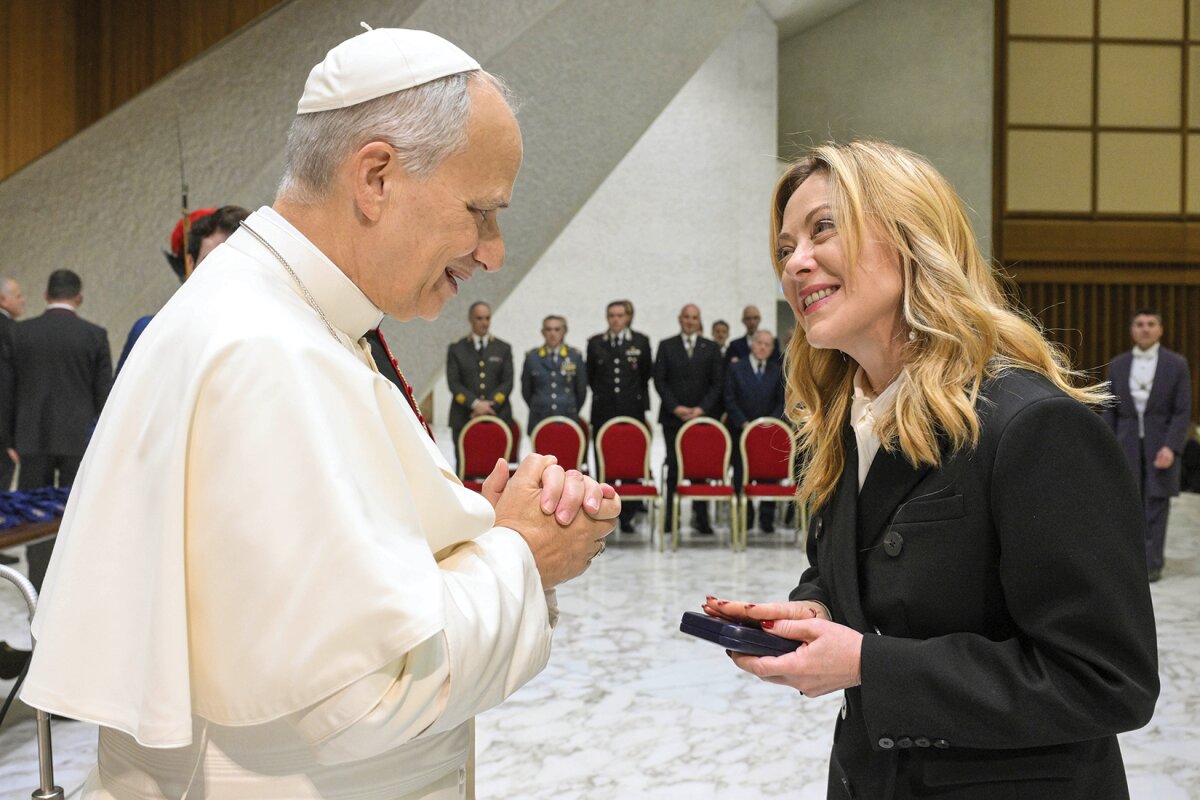
He later tried to patch things up, partially by calling for Iran’s place in the fifa World Cup to be taken by Italy, which had failed to qualify for the contest.
But the Iran war seems to have created conditions for a permanent break between Donald Trump and the few allies he had in Europe.
Fair-weather Friends
After President Trump’s 2024 election victory, the fringe right in Europe jumped on board the Trump train and received enthusiastic support from Trump, Vance, Elon Musk and others. Then Homeland Security Secretary Kristi Noem attended the European branch of the cpac event last year, sharing a stage with many of these figures. President Trump himself sent video messages to cpac Hungary. His national security strategy last year called for America to actively “cultivate resistance” to the European Union by working with these fringe-right figures. The “growing influence of patriotic European parties … gives cause for great optimism,” it says.
But the Iran war and Trump’s criticism of the pope have caused these “patriotic European parties” to decisively reject the Make America Great Again movement.
Many of these parties, like the Alternative für Deutschland (AfD) in Germany and National Rally in France, already had anti-American streaks, but they backed maga partly opportunistically and partly because Trump promised to bring home U.S. troops and stop new wars.
The double whammy of the Greenland spat and the Iran war has destroyed that relationship. Conservative Catholics are prominent in many of these parties, giving the pope’s words special weight.
AfD coleader Alice Weidel has told senior party figures to reduce their trips to Washington and to instead cultivate ties with Russia and China. The party’s other coleader, Tino Chrupalla, accused Israel of dragging America into war with Iran, praised Spain for its refusal to cooperate, and called for Germany to evict American troops from German bases.
Marine Le Pen, a leader of France’s National Rally, called President Trump’s war aims “erratic.” The party’s president, Jordan Bardella, accused Trump of attempting the “vassalization” of Europe.
One of the few right-wing leaders who did not turn on Trump was Hungarian Prime Minister Viktor Orbán. Vance visited Hungary in a strong sign of support for Orbán’s reelection campaign—and Orbán got voted out in a landslide.
The leaders deserting President Trump were never truly friends. Despite the legacy of America’s participation and assistance in fairly recent world wars—including the presence of European bases that connect directly back to those conflicts—these leaders believe America has fundamentally been a force for evil in the world, and they want to see it fall.
Prominent leaders of the AfD have a radically different view of the legacy of World War ii: They think the Nazis were heroes. It should have been obvious to people like Vance and Musk that these were not America’s true friends.
This leaves America with almost no friends in Europe.
New Alliance
European leaders are already creating and operating in a post-American world. The Wall Street Journal reported that they are working on a “European nato,” an attempt to maintain nato’s command structures with European-only personnel—no Americans. Europe’s leaders are “tackling practical military questions, such as who would run nato’s air-and-missile defenses, reinforcement corridors into Poland and the Baltic states, logistics networks and major regional exercises if U.S. officers stepped aside” (April 14).
The EU is tackling the same issue. Article 42.7 of the Lisbon Treaty makes the EU a mutual defense alliance just like nato. But it lacks the clear command structure and set of procedures needed to implement it quickly. At an April 23-24 meeting in Cyprus, EU leaders worked on creating just that.
U.S. leaders sound like they have moved on as well. “I was never swayed by nato,” President Trump told the Telegraph. “I always knew they were a paper tiger, and Putin knows that too, by the way.” When asked if he would re-think America’s participation in nato, he responded: “I would say [it’s] beyond reconsideration” (April 1).
Secretary of State Marco Rubio made a similar statement on Fox News: “I do think, unfortunately, we are going to have to re-examine whether or not this alliance that has served this country well for a while is still serving that purpose” (March 31).
Rubio used to be the pro-nato voice in Trump’s cabinet. Yet apparently even he has turned against it.
“The trans-Atlantic alliance has already been called into question by Trump’s own actions,” wrote Eurointelligence. “But it will not recover from Europe’s coordinated refusal to help the U.S. in this war” (April 2).
Donald Trump lacks the power to formally leave nato; Congress would have to approve such a move, and it is unlikely to do so. But he can effectively cripple it. He could simply state that he would not honor America’s commitment to defend any nato state if attacked, refuse to share intelligence with nato allies, or stop delivering advanced weapons.
Eurointelligence wrote that it is difficult to see how the EU can stand alone “without a political and fiscal union” (ibid). It is right: For these nations to wean themselves off economic and military reliance on America, the EU would have to coalesce as a superstate.
A New Volcano
Mount Etna sits on the fault line between two tectonic plates. When they move and create friction, earthquakes happen. When things heat up too much, an explosion abruptly follows.
Europe itself is primed for an explosion, boiling over with anger. An end-time prophecy in Jeremiah 1:13 describes this rising power as “a seething pot.”
“This symbolic language is describing modern Germany,” wrote Trumpet editor in chief Gerald Flurry. “Beneath the surface, that nation is full of simmering dissatisfaction with the current world order. Germans are angry at the U.S., and especially furious with President Trump. The imperialistic ambition that prompted Germany to start both world wars is alive and well. It is ‘seething’!” (Trumpet, September 2018).
But Germany is not a mindless volcano. Europe’s most ambitious leaders don’t want nato forces dropping road blocks as their power spreads around the region. So they are taking the opportunity to destroy nato now.
“Many elite Germans feel their nation has now gotten all it can from the U.S., and they are ready to move on,” wrote Mr. Flurry. “Some powerful Germans today are thinking more and more about the Holy Roman Empire, and they want modern Germany to assume more power of its own in the spirit of that empire” (ibid).
Revelation 17 describes an alliance of 10 kings (verses 12-13) led by a woman, or church in Bible symbolism (verses 3-4). Based on this prophecy, Herbert W. Armstrong said in 1945 that Germany would rise as part of a “European union.”
nato was designed to prevent Germany from leading Europe and to instead keep it locked into a U.S. alliance.
Now we see a pope helping to bring together a European alliance independent of the United States.
The alliance is building fast. The volcano is ready to erupt. And American forces are being prevented from stopping it.