
The Shock Waves
“There are decades when nothing happens, and there are weeks where decades happen.” Vladimir Lenin’s famous observation has certainly applied to the weeks following Israel’s and the United States’ attacks on Iran that began on February 28. This war is proving to be a catalyst accelerating many crucial prophetic events.
Daniel 11:40-43 prophesy of a “king of the south” power bloc that rises “at the time of the end.” Trumpet editor in chief Gerald Flurry has identified this bloc as radical Islam, led by Iran and incorporating other Middle Eastern and North African radical Islamist nations and groups. It is prophesied to clash with “the king of the north,” German-led Catholic Europe.
How can Iran rival and “push at” Europe when so much of its military and security power has been ground into dust by Israeli and U.S. strikes?
Other articles in this issue show how Iran will remain on the Daniel 11 trajectory. But this war is also accelerating a number of other key trends that will fulfill other Bible prophecies. What is happening in Iran is already having massive geopolitical implications throughout the region and beyond.
Britain’s Dangerous Weakness Exposed
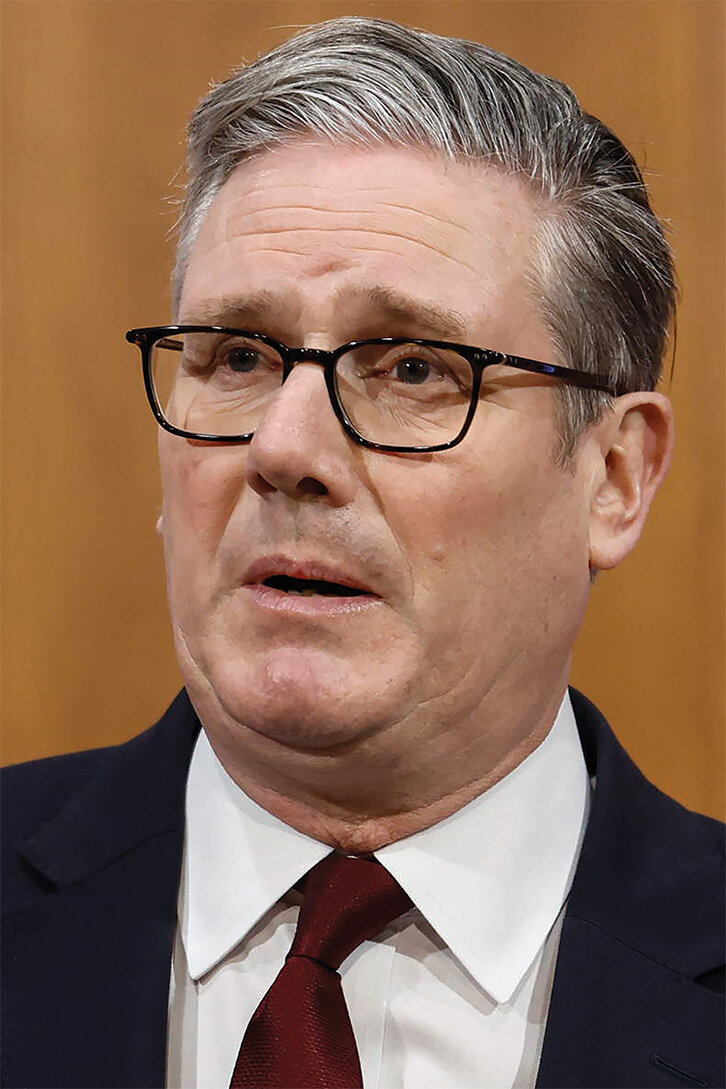
Britain’s response to the Iran war risks ending its special relationship with the United States, losing key strategic bases and confirming to the world that the nation can no longer defend itself.
Far from being America’s closest ally, Britain has done all it can to avoid the war. Afraid that British bases would come under attack, Prime Minister Keir Starmer initially refused to let U.S. warplanes use British bases to bomb Iran. When Iran retaliated and attacked those bases anyway, Starmer still refused to get involved, but gallantly allowed the U.S. to use those bases to defend the United Kingdom.
President Trump expressed disappointment, saying that Starmer is “no Winston Churchill.”
One of those bases was Britain’s sovereign base territory in Cyprus. Only after a strong European response did Starmer announce he would send hms Dragon to protect it. But Dragon was in dry dock and unable to leave for several days. Britain also has a naval base in Bahrain—but no ships.
“[F]or an exposed and strategically important island state, controlling the surrounding seas is existential, and it demands unceasing and expensive effort,” wrote historian Robert Tombs. “… Have we forgotten we live on an over-crowded island? … We rely on the ships that carry our food, fuel and goods. The pipelines. The offshore wind turbines. Perhaps most vulnerable of all, the net of flimsy cables that carry the digital information on which our economy and our everyday life depend. And we struggle to send a single warship to defend our base on Cyprus, the most important intelligence hub we possess. …
“Weakness invites aggression, and we have never been so vulnerable since the Dutch fleet sailed up the Medway and captured the Royal Navy’s flagship in 1667. If we don’t wake up to this ourselves, I fear we shall have a rude awakening at the hands of our enemies” (Telegraph, March 9).
It is also clear that Starmer wants to avoid the war because of pressures at home.
The week before the Iran war began, Starmer’s Labour Party suffered a major defeat, coming in third in a by-election for a seat the party had held since 1931.
For decades, Labour has supported immigration because Muslim migrants tend to vote Labour. Now the Green Party is outflanking Labour with an even more extreme pro-Islam position. It won the by-election with a campaign video entirely in Urdu—the language of Pakistan—and used images of Labour politicians meeting with Israeli Prime Minister Benjamin Netanyahu and India’s Narendra Modi to imply that Labour was not on the side of the Pakistani-British voter. After the war started, Green Party deputy leader Mothin Ali attended a pro-Iran rally where the crowd shouted, “Death to the U.S.A.!” and “Death to Israel!”
The latest polls show the Greens are more popular than Labour and number two in the UK, behind Nigel Farage’s Reform UK.
Starmer is putting party before country, fearing that any support for the U.S. will lose him the Muslim vote at home.
The book of Hosea contains a warning for Britain. Today’s situation is precisely foretold in several passages. Britain is described as a moth-eaten garment (Hosea 5:12) and a burnt-out cake (Hosea 7:8). It looks good on the outside, but when put to the test, it falls apart. Why?
“Strangers have devoured his strength, and he knoweth it not,” God says of Britain (verse 9). It lacks the strength to stand up to Iran because it has let in millions of people who side with Iran over Britain. Migration has also increased the massive welfare and health-care costs that make a proficient military unaffordable.
In its relations with other nations, Britain behaves like a “silly dove” (verse 11), naively taken advantage of by foreign powers.
How could a book written over 2,500 years ago precisely diagnose Britain’s problems today? Why does this book apply so specifically to Britain? Herbert W. Armstrong answered these questions in his book The United States and Britain in Prophecy. It is the fundamental book for understanding what the Bible says about world events. Request a free copy.
Richard Palmer
Europe’s Militaries Swarm Cyprus
The Iranian drone that hit a British air base in Cyprus on March 2 killed no one and reportedly did little damage. Yet the implications for the future of the Middle East could be huge.
Britain’s response was sluggish, and Cypriot President Nikos Christodoulides made a point of spurning Britain and calling on the European Union for help instead.
Greece promptly dispatched two frigates, including its newest and most advanced model. France sent an aircraft carrier strike group, and President Emmanuel Macron went to Cyprus to announce some of the deployments. Italy, Spain and the Netherlands also contributed ships. A British destroyer arrived more than a week after the attack.
None of these moves are necessary to keep Cyprus safe from drone attacks that barely damaged anything. But European powers seized on the opportunity to demonstrate that they have the will and the power to defend Cyprus—and Britain doesn’t.
A Cypriot government spokesman expressed the government’s “dissatisfaction” with Britain’s lack of clear communication. They have demanded that “British bases in Cyprus would under no circumstances be used for any purpose other than humanitarian reasons.” Asked if Cyprus would renegotiate the status of the bases, he responded: “We are not ruling anything out.”
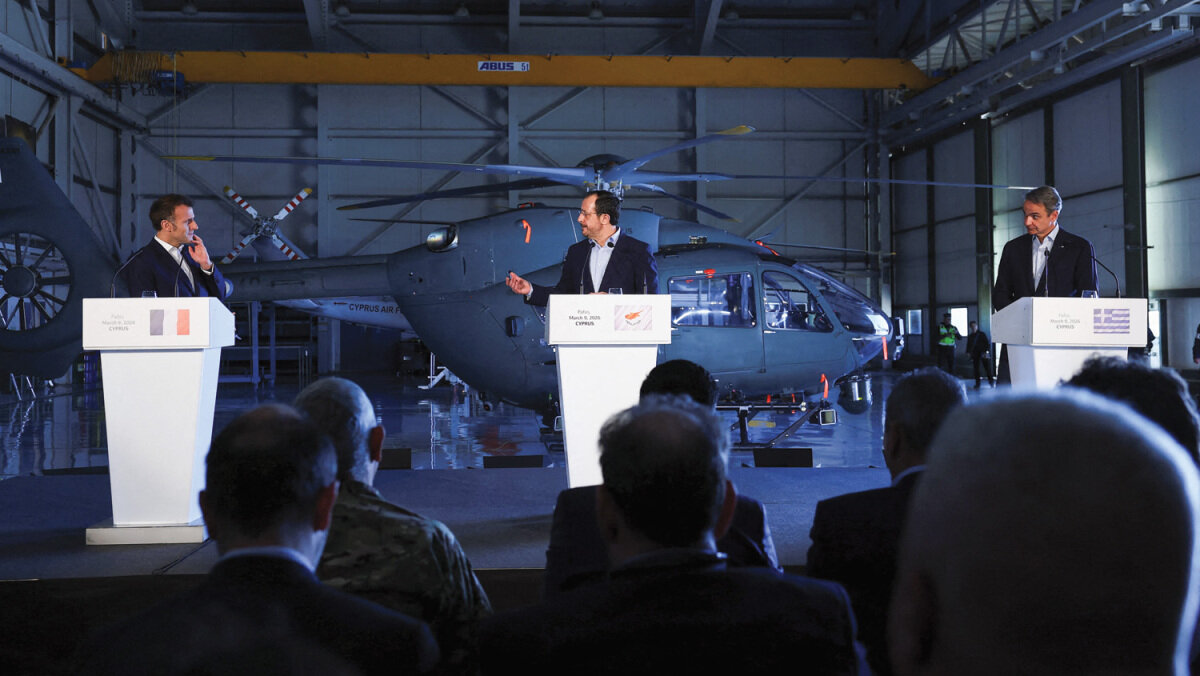
The bases remain British, but clearly Cyprus is looking to the EU for protection, and the EU is eager to offer it. It won’t be long before these bases, like so many others, slip away from Britain.
Cyprus’s intelligence facilities are probably more important than its air bases, and they almost certainly contributed to the attacks on Iran. Leaks released by Edward Snowden show that the U.S. National Security Agency helps fund these listening posts. Britain’s Government Communications Headquarters wrote that one of these, the raf Troodos, “has long been regarded as a ‘jewel in the crown’ by nsa as it offers unique access to the Levant, North Africa and Turkey.”
The U.S. is believed to have helped Israel in its war in Gaza by passing on intelligence gleaned from Cyprus.
After the Oct. 7, 2023, Hamas attacks, Cyprus became a crucial hub for nations evacuating their citizens from the region. Germany and the Netherlands deployed troops to aid in the evacuations, and 16,000 Israelis fled there.
Britain may have bases in Cyprus, but Germany established its economic dominance there after bailing out the country during its economic crisis of 2012–13. In recent years, Germany’s military relationship with Cyprus has stepped up, with Germany basing its naval presence in the region as part of the United Nations Interim Force in Lebanon. In 2022, the two signed their first Bilateral Defense Cooperation Program and began joint military exercises.
“Justified as it might be, Brexit puts the future of those bases on Cyprus in doubt,” Mr. Flurry wrote in 2019. “I forecast that Britain is going to lose control of those bases. This means it is only a matter of time before the United States is pushed out as well” (Trumpet, November-December 2019).
In 1980, Herbert W. Armstrong told Cyprus Acting President Georgios Ladas, based on specific Bible prophecies, that a German-led Europe would take control of the island.
Revelation 17 describes a beast power, a resurrection of previous iterations of the Holy Roman Empire but this time comprised of 10 kings. Based on this prophecy, Mr. Armstrong said in 1945 that Germany would rise again as part of a “European union.” This power would be led by a woman (a prophetic symbol of a church) and would focus on Jerusalem.
“Previous resurrections of the Holy Roman Empire have launched more than one crusade from Cyprus,” explained Mr. Flurry. “That last resurrection of this empire will be led by the Catholic Church, and it will embark on one more crusade. You can see this empire moving toward Jerusalem already in its conquests” (ibid).
This is why the EU is so interested in Cyprus. It’s not doing much to strike Iran now, but it is preparing for great military advancements in the Middle East—on its own terms.
Richard Palmer
Germany Breaks With America
After Trump’s reelection, German Chancellor Friedrich Merz warned that nato may soon be dead. This is quickly becoming a self-fulfilled prophecy.
Three weeks into the Iran war, President Trump called on Europe to help keep the Strait of Hormuz open. “If there’s no response or if it’s a negative response, I think it will be very bad for the future of nato,” he said.
Germany was quick to reject the request.
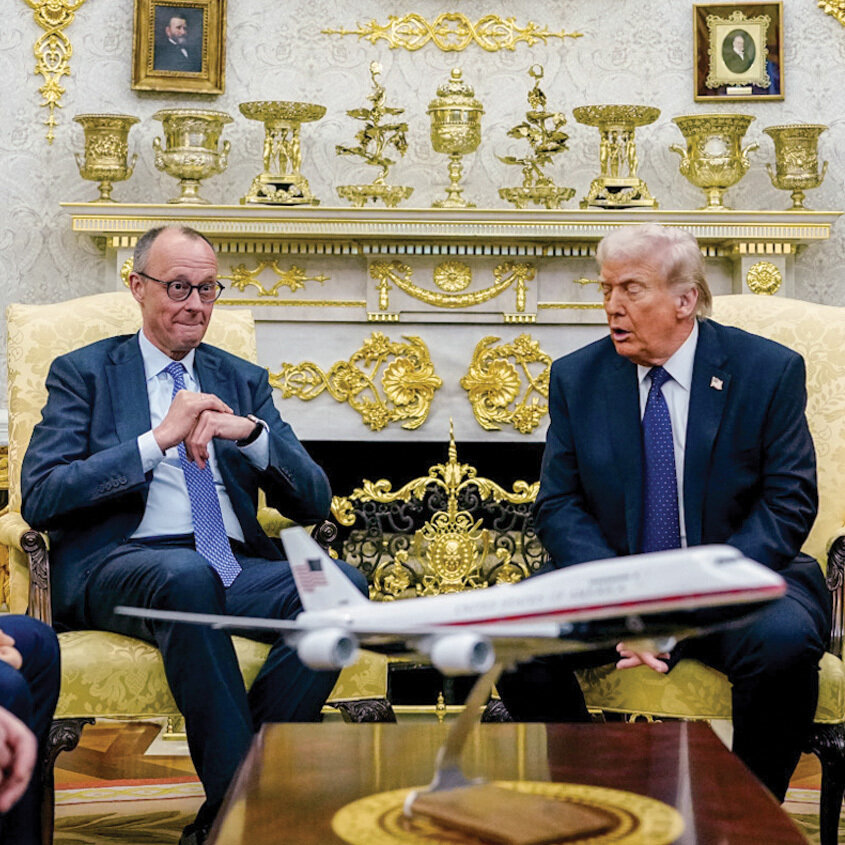
“This war has nothing to do with nato. It’s not nato’s war,” a German government spokesman told reporters on March 16. “nato is a defensive alliance, an alliance for the defense of its territory. As long as this war continues, there will be no involvement, not even in an option to keep the Strait of Hormuz open by military means.”
“Washington did not consult us. We would have advised against it,” Merz told the Bundestag, reiterating that Germany won’t help while the war continues.
Other nato allies responded similarly.
Trump was reportedly outraged. He posted on social media, “I wonder what would happen if we ‘finished off’ what’s left of the Iranian terror state and let the countries that use it, we don’t, be responsible for the so-called ‘Strait?’ That would get some of our nonresponsive ‘allies’ in gear, and fast!!!” (March 18).
The gravestone of the nato alliance is being carved before our eyes. Even war with an evil terrorist regime is straining rather than unifying the alliance.
On March 19, things appeared to turn when Germany, the United Kingdom, France, Italy, the Netherlands and Japan issued a joint statement to express “readiness to contribute to appropriate efforts to ensure safe passage through the strait.” But a German government spokesman quickly clarified that this didn’t change Germany’s position.
The chapter “Atlantic Rift” in our booklet He Was Right explains how this break was prophesied in your Bible. As the Plain Truth wrote in March 1974, “The next few years will bring forth more misunderstanding, conflicts of interest and, at times, outright hostility between the United States and Europe.”
Josué Michels
Arabs Unite Against Iran
After Israel and the United States bombed Iran, Iran retaliated—by bombing U.S. partners in the Arab world. It highlighted a rift that is prophesied to widen.
Bahrain, Iraqi Kurdistan, Jordan, Kuwait, Qatar, Saudi Arabia, Turkey and the United Arab Emirates have thousands of American soldiers, sailors and aircraft operators stationed on their soil. All have been targets of Iranian missile and drone barrages. (Iran also attacked Oman, a neutral party with good relations with both sides; Iran’s statements afterward suggest this may have been caused by trigger-happy Iranian soldiers who lacked government approval.)
One of Iran’s earliest targets was Saudi Arabia’s largest oil refinery in the city of Ras Tanura. The economies of Saudi Arabia and most other Gulf Arab states are almost entirely dependent on the oil trade. Iran is effectively threatening to kill the Gulf Arabs’ economies overnight.
Perhaps the most surprising target so far is Qatar. Iranian drones targeted Qatar’s energy infrastructure, forcing its enormous state-owned liquefied natural gas company to halt production. The nation claims to have shot down two Iranian bombers over its airspace.
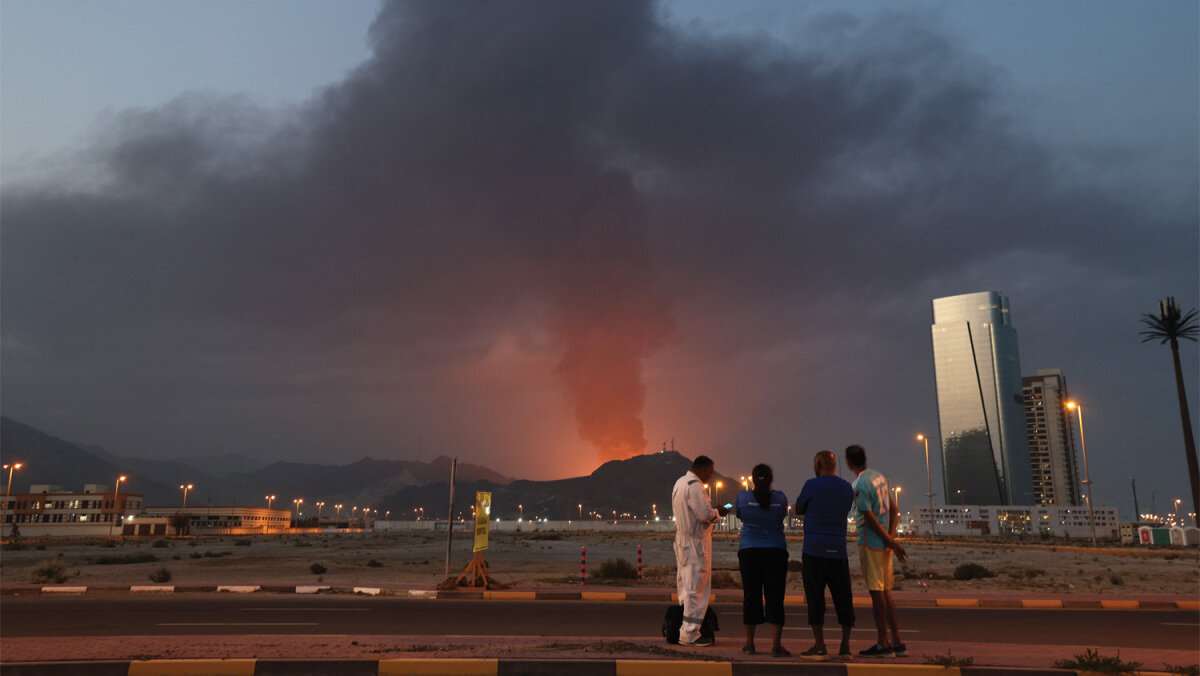
Qatar is a major sponsor of some of the same terrorist groups Iran supports, such as Hamas and the Muslim Brotherhood. It has used its connections with the West to protect these groups diplomatically and financially. It has also used its diplomatic and cultural clout to dissuade the U.S. from harming Iran. In the war’s opening hours, even as its interceptors were downing Iranian missiles, Qatar appeared to be trying to deescalate the war. But after Iran targeted Qatar’s main civilian airport, Majed al-Ansari, adviser to Qatar’s prime minister, said: “This cannot go unanswered. A price has to be paid for this attack on our people.” The Jerusalem Post and Israel’s Channel 12 news claimed that Qatar launched air strikes on Iran in retaliation.
Another striking example is Turkey. Like Qatar, Turkey has relatively good relations with both Iran and the West, and it sponsors terror groups like Hamas. But Turkey also belongs to nato and thus falls under the alliance’s “Article 5” collective defense. America even stores nuclear weapons at Incirlik Air Base.
On March 4, Iran launched a missile apparently aimed at Incirlik. A U.S. destroyer under nato obligations intercepted it. But the possibility that Iran willfully targeted America’s nuclear weapons base in a nato country is still shocking. What kind of counterattack was Iran expecting had the missile hit its target?
The Turkish Defense Ministry responded, “We reserve the right to respond to any hostile act directed at our country.” This is unprecedented. Even threatening such action against Iran marks a drastic change from before this war.
On March 1, Bahrain, Jordan, Kuwait, Qatar, Saudi Arabia and the U.A.E., together with the U.S., released a statement saying they “strongly condemn the Islamic Republic of Iran’s indiscriminate and reckless missile and drone attacks against sovereign territories across the region” and “reaffirm our right to self-defense in the face of these attacks.”
It is challenging to unite the Arab world on any issue, unless that issue is Israel. Some of these countries have sponsored proxy wars against each other. Yet in this case, the Arab world is uniting against Israel’s enemy. In other words, Iran’s pushiness is achieving the impossible.
President Trump has close connections with Qatar, Saudi Arabia and other Arab governments. The Gulf Arabs have previously influenced Trump not to attack Iran. They were trying to do so this time. In attacking them, Iran may have been trying to goad them into pressuring Trump. Iran also knows that one of America’s weak points is unfavorable public opinion. Attacking Arab petrostates means attacking the worldwide oil trade, which drives gasoline prices up. For various reasons, some in Trump’s electoral base are accusing him of betrayal.
Regardless of Iran’s motives, its actions against other Islamic nations appears to have hastened other prophecies.
Psalm 83 records an alliance of various Middle Eastern peoples formed “that the name of Israel may be no more in remembrance” (verse 4). The alliance’s composition is described in verses 6-7: “The tabernacles of Edom, and the Ishmaelites; of Moab, and the Hagarenes; Gebal, and Ammon, and Amalek; the Philistines with the inhabitants of Tyre.” Mr. Flurry has proved that this a prophecy for the 21st century, but to understand it, you must know the modern descendants of these peoples. Pointing back to Mr. Armstrong’s writings, he has shown these to be Saudi Arabia, the Gulf states, Syria, the Palestinians, Lebanon, Jordan and Turkey (read “Deadly Flaw in Mideast Peace Deals”).
The nations listed in Psalm 83—the same nations that normally cannot stand together—are now standing united against Iran.
Verse 8 establishes Assur, or Assyria—modern Germany—as the leader of this alliance. This is already beginning to happen. But pairing this prophecy with Daniel 11 (as we do in the rest of this issue), it becomes clear that one of the motives for this alliance is to counter Germany’s enemy: Iran. Iran’s strikes, and the Arab world’s response to them, are helping to solidify this alliance.
Mihailo S. Zekic
Lebanon Breaking With Iran
Hezbollah, Iran’s Shiite terrorist proxy in Lebanon, attacked Israel on March 2 to support Iran. Israel responded with air strikes against over 50 communities in Lebanon, including the capital, Beirut. On March 6, Israeli commandos entered southern Lebanon to fight Hezbollah. On March 15, Israel announced expanded ground operations.
The scale of the conflict is huge. One fifth of Lebanon’s population—1 million people—are estimated to have been displaced.
In previous rounds of fighting, the Lebanese government has tried to avoid getting involved. A year ago, it announced a ban on armed Hezbollah members, but the terrorist group, which has quasi-government influence in southern Lebanon, ignored it.
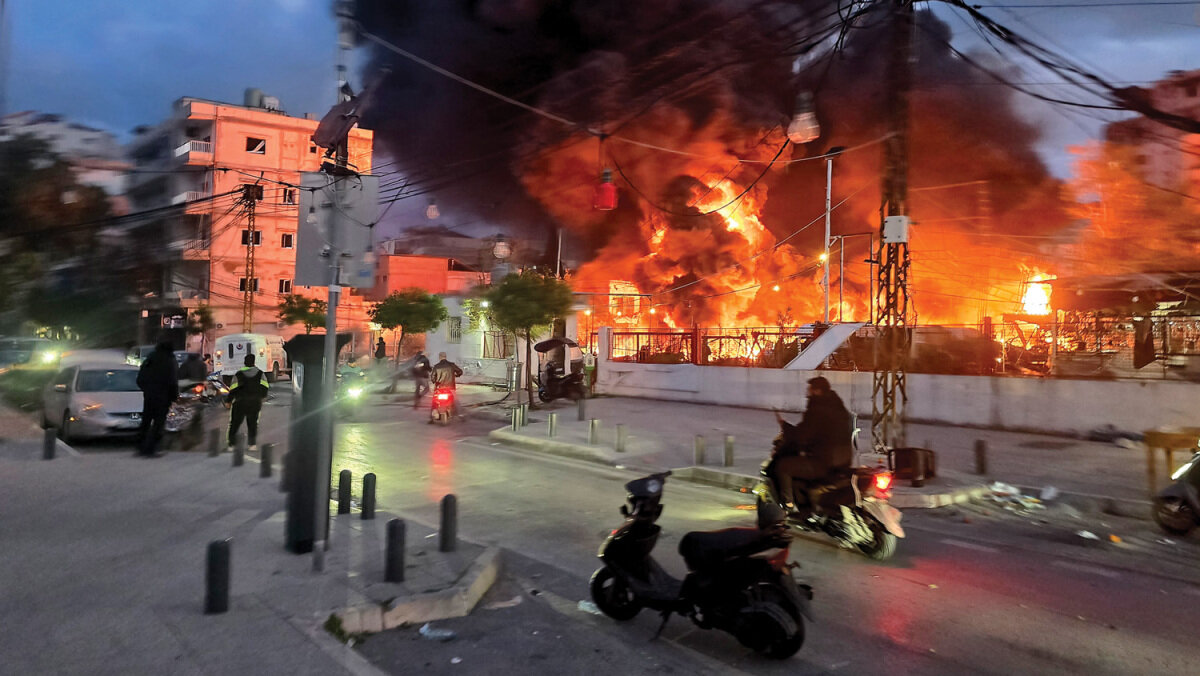
This time, remarkably, the government has blamed Hezbollah, not Israel, for the conflict. Shortly after active hostilities began, Lebanese Prime Minister Nawaf Salam announced that all Hezbollah security and military activities were unlawful and that its armed members must surrender their weapons. With Iran under fire, it may actually be possible to disarm Hezbollah this time.
Meanwhile, the Lebanese government is asking its former colonial master, France, to mediate with Israel over its incursions into Lebanese territory. This may include brokering an Israel-Lebanon peace treaty, which would require Lebanon’s government to recognize Israel, an unprecedented step if it happens.
Israeli Prime Minister Benjamin Netanyahu is reportedly interested in normalizing relations with Lebanon. The Iran war may be opening a window of opportunity for a treaty.
A prophecy in Psalm 83 mentions “Gebal” and “Tyre” (verse 7), two Phoenician city-states that are major Lebanese cities today, as members of an alliance that forms “that the name of Israel may be no more in remembrance” (verse 4). This alliance will be led by Assur, modern Germany (verse 8), which is prophesied elsewhere to dominate the rest of Europe.
“Lebanon was—and is—dominated by Hezbollah, an Iranian proxy terrorist group,” Gerald Flurry wrote in 2020. He explained that Psalm 83 prophesies Lebanon’s future: “It shows that Hezbollah will forfeit much of its power and that Iran will lose its grip over Lebanon—that the nation will instead ally with Saudi Arabia and other moderate Arab states, along with German-led Europe” (Trumpet, October 2020).
Israel’s 2024 war with Hezbollah weakened the group enough for Salam, Aoun and other anti-Hezbollah politicians to gain power. They vowed to neuter Hezbollah’s ability to function as a parallel government, but they were unable to follow through. Now, though, conditions may develop to facilitate Lebanon’s transition away from Iran and toward France and the rest of Europe, as prophesied.
Mihailo S. Zekic
Russia Cashes In
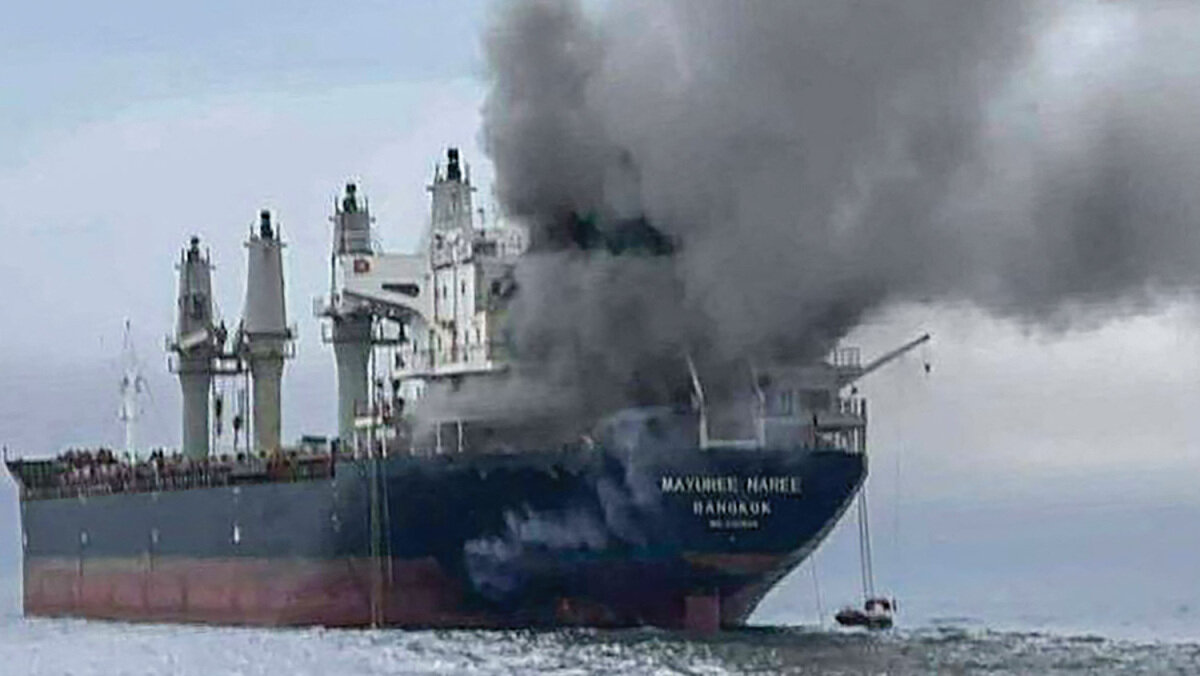
Though the picture is somewhat mixed, the Russian Federation is largely benefiting from the Iran war and becoming stronger and better equipped to carry out its prophesied role in end-time events.
At the center of Russia’s economic fortunes stands a single commodity: oil. Accounting for roughly 60 percent of the country’s total exports, it remains the fuel of the Russian economy. But since the start of Russia’s full-scale war on Ukraine four years ago, Russian oil has been under Western sanctions. A price cap was also imposed that prevents the nation from selling its black gold for more than $60 per barrel.
Russia adapted, selling less to the West and far more to China and India. But even with that shift, the price cap slashed Russia’s oil revenue and put serious strain on its economy. Then in 2025, the global oil supply increased and demand slowed, driving oil prices considerably lower. At the same time, the U.S. convinced India to reduce purchases of Russian oil from 2.1 million barrels a day in mid-2025 to 1.1 million per day in January 2026.
The strain on Russia grew more intense, forcing the nation to sell at ever lower prices—well below the $60 price cap. With certain refineries, Russia was making negligible profits. With others it was even selling at a loss. This was cataclysmic for Russia’s economy. Reuters wrote on February 4: “Russia’s public deficit could balloon to almost triple the official target by end-2026 as a fall in Indian purchases of oil and growing oil trade discounts eat into revenues while spending may be higher than expected.”
The situation for Russia and its ability to keep funding its war was looking bleak. But then came the Iran war and the strangling of the Strait of Hormuz.
Global oil prices shot up, and Russian oil profits rose 14 percent over the daily average before the conflict. Russian crude still sells at a significant discount compared to Brent crude, but the country can now easily sell at $60 per barrel. And with its shadow fleets that disregard the price cap, Russia can now take in $65 or even $70 per barrel.
The Trump administration also issued a 30-day waiver to India on March 5, letting it buy some Russian oil once again to ease rising prices. Russian President Vladimir Putin commented on the turnaround four days later, telling Russian moguls and policymakers that it was “important for Russian energy companies to make use of the current moment.”
The good news continued on March 13 when the Trump administration temporarily allowed any nation to buy Russian oil and petroleum products currently out at sea.
The result has been a significant windfall for Russia. In just the first two weeks of the Iran war, the nation profited some $7 billion in oil and gas sales—enough to buy 17,000 Shahed attack drones every single day.
“U.S. sanctions have forced Russian crude to trade at a steep discount,” said Alexander Kirk of the Urgewald nonprofit. “A rollback closes that gap overnight and hands the Kremlin a revenue boost worth billions, at the very moment that pressure is starting to bite.”
It is true that the war imposes some costs on Russia. Iran’s regime has been one of Moscow’s most important partners in recent years and a significant supplier of military equipment. With it now fighting for its own preservation, it will be less willing to part with ballistic missiles, artillery shells and other matériel. The conflict also chips away at Russia’s prestige since Moscow aims to present itself as a protector of its embattled partners. Now, as with Bashar al-Assad’s regime in Syria and Nicolás Maduro in Venezuela, the Iranian government finds itself under attack with little visible assistance from Moscow.
These are black eyes for Putin’s Russia. But analysts largely agree that the increase in oil revenue offsets those other factors. And if prices remain high, it could mean a significantly better-funded and more brutal Russian military.
Taken together, these developments are yet another reminder that Russia is not going anywhere. In recent months, many voices in the West have insisted that the Russian system cannot endure much longer and that it can’t survive the strain of sanctions and the pain of selling oil at a loss or barely any profit. The headlines have carried a tone of increasing urgency: Russia cannot sustain this. The pressure will build. The economy will crack. Perhaps Putin himself will even be swept aside.
But now instead of collapse, Russia is flush with billions of dollars in energy revenue, and Putin appears as secure as ever at the helm of the nation.
For readers of the Trumpet, this should come as no surprise. For more than a decade, based on prophecies in Ezekiel 38 about an end-time superpower called “Rosh” (verse 2; New King James Version), Mr. Flurry has explained that Putin is prophesied to play a major role in events the Bible says will unfold in the end time—events that still lie ahead. Because of that understanding, we have long maintained that whatever pressures Russia may face—economic strain, sanctions or geopolitical isolation—both the nation and its leader will endure.
Jeremiah Jacques