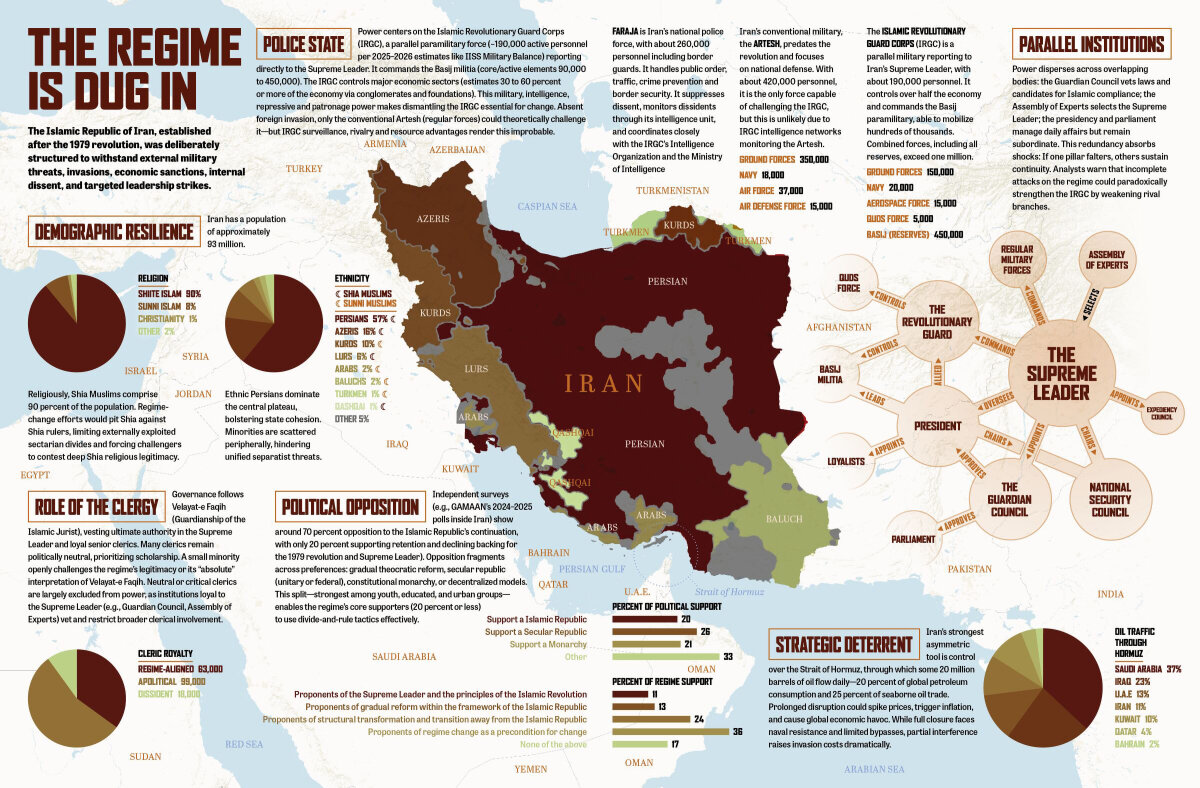
The Islamic Republic of Iran, established after the 1979 revolution, was deliberately structured to withstand external military threats, invasions, economic sanctions, internal dissent, and targeted leadership strikes.

Demographic Resilience
Iran has a population of approximately 93 million.
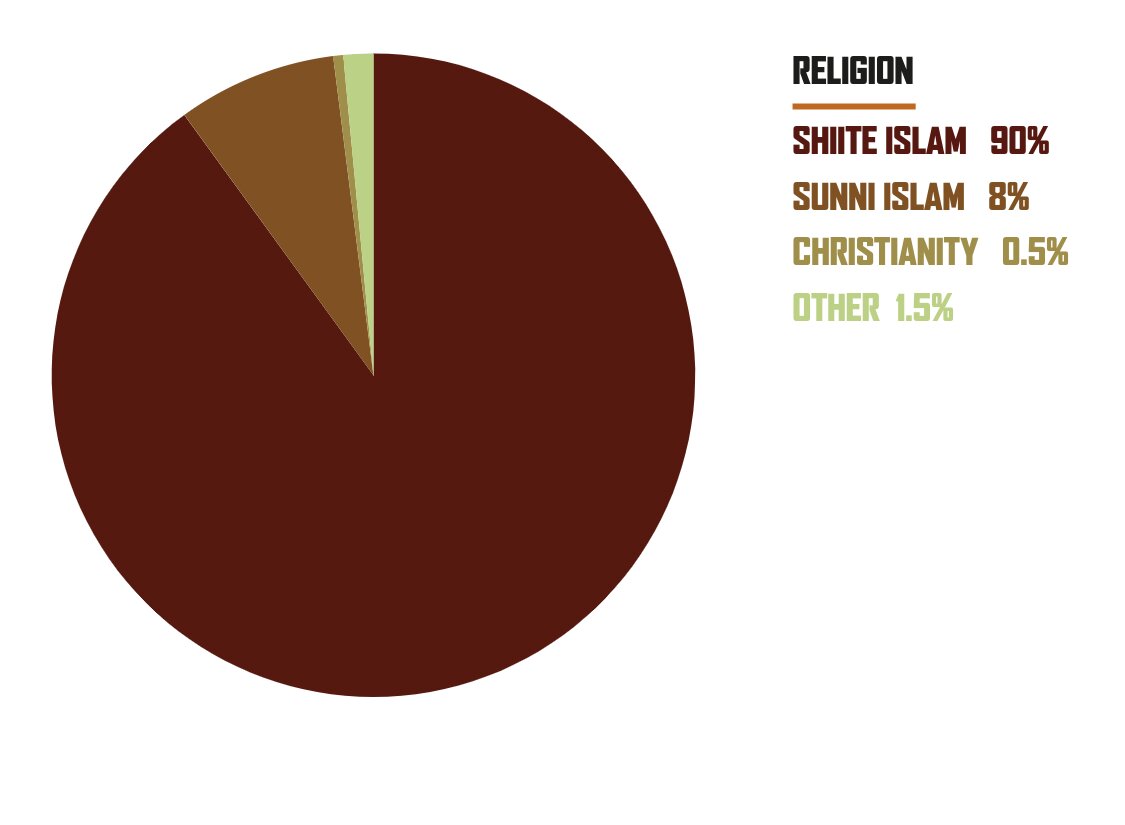
Religiously, Shia Muslims comprise 90 percent of the population. Regime-change efforts would pit Shia against Shia rulers, limiting externally exploited sectarian divides and forcing challengers to contest deep Shia religious legitimacy.
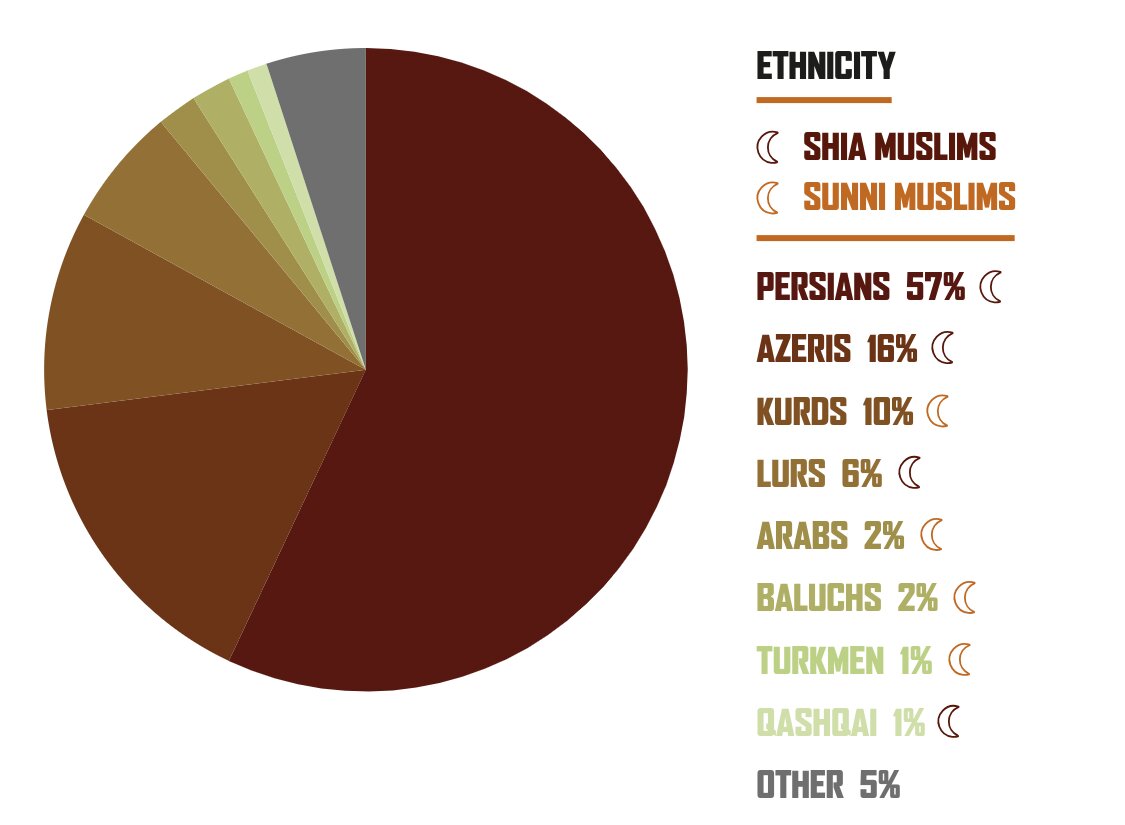
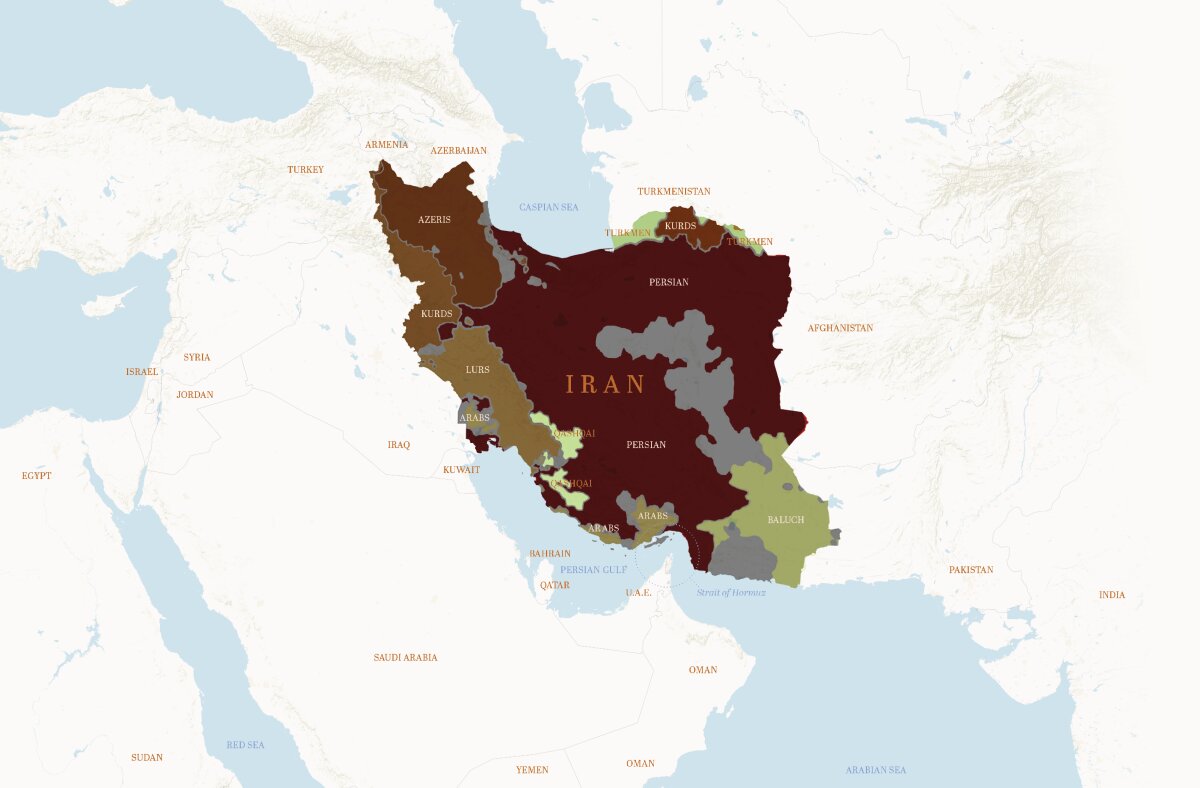
Ethnic Persians dominate the central plateau, bolstering state cohesion. Minorities are scattered peripherally, hindering unified separatist threats.
Role of the Clergy
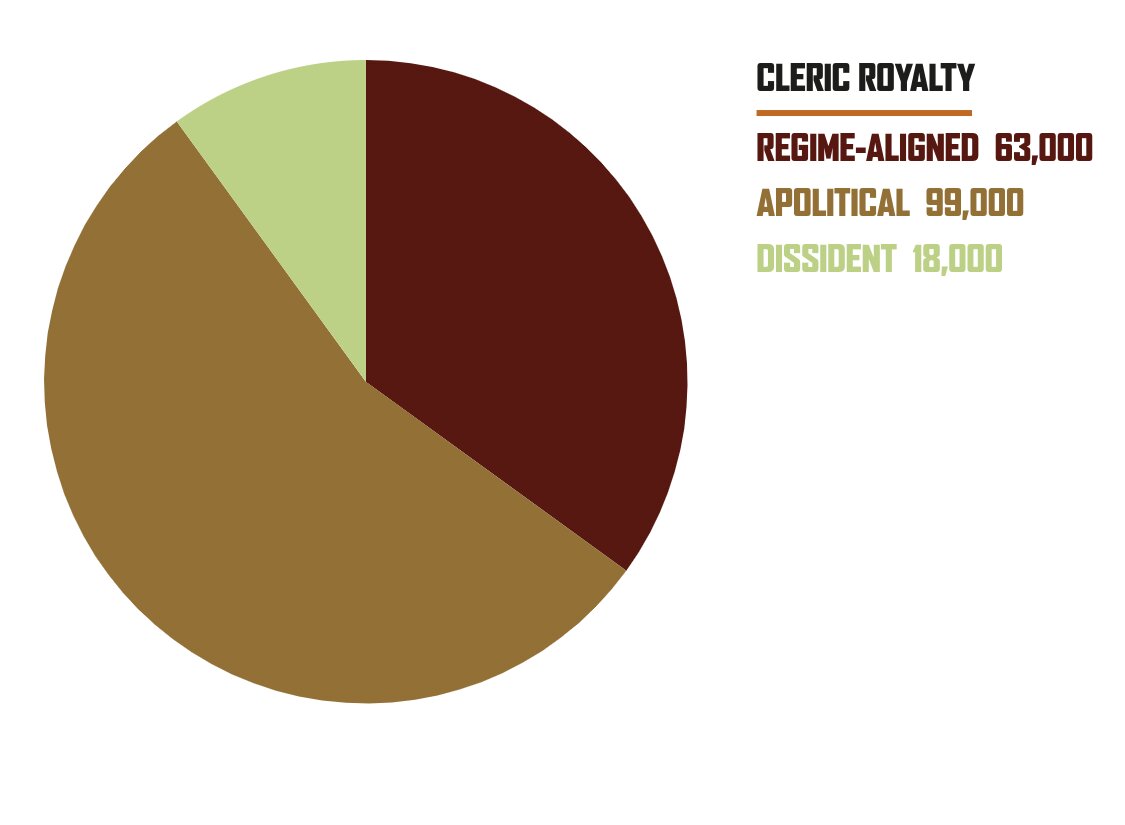
Governance follows Velayat-e Faqih (Guardianship of the Islamic Jurist), vesting ultimate authority in the Supreme Leader and loyal senior clerics. Many clerics remain politically neutral, prioritizing scholarship. A small minority openly challenges the regime’s legitimacy or its “absolute” interpretation of Velayat-e Faqih. Neutral or critical clerics are largely excluded from power, as institutions loyal to the Supreme Leader (e.g., Guardian Council, Assembly of Experts) vet and restrict broader clerical involvement.
Political Opposition
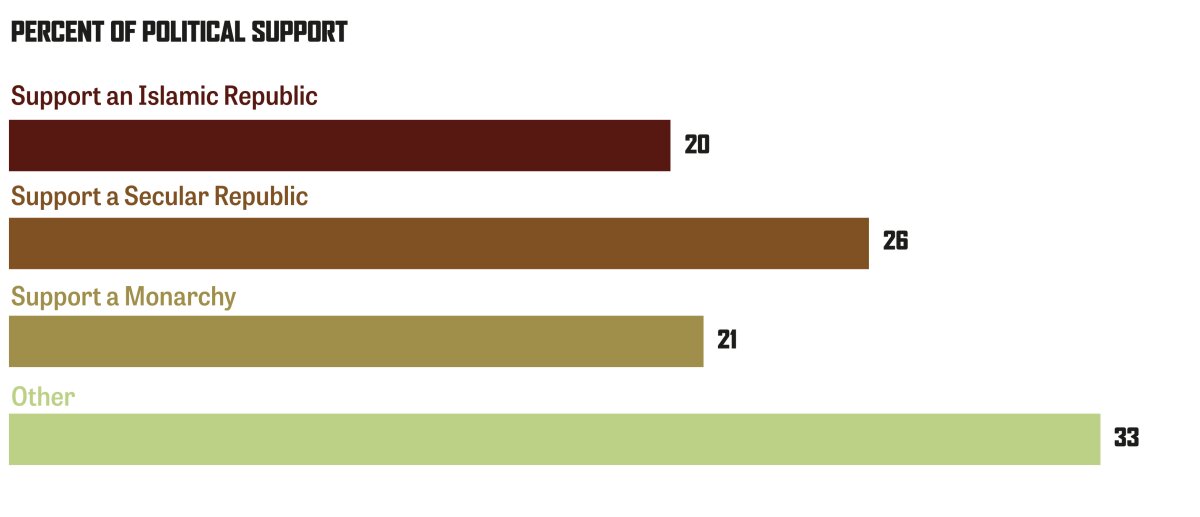
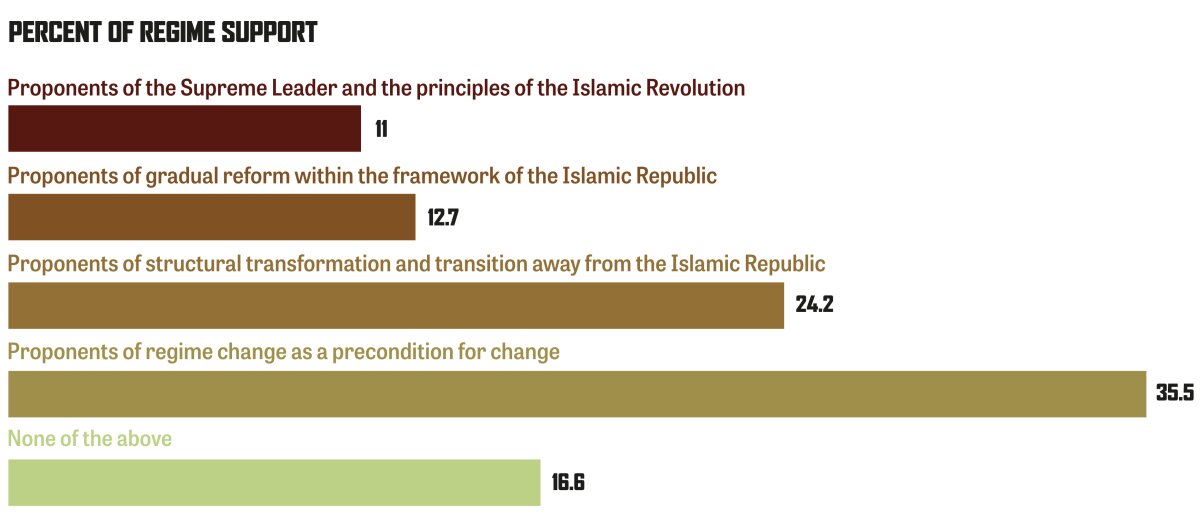
Independent surveys (e.g., GAMAAN’s 2024–2025 polls inside Iran) show around 70 percent opposition to the Islamic Republic’s continuation, with only 20 percent supporting retention and declining backing for the 1979 revolution and Supreme Leader). Opposition fragments across preferences: gradual theocratic reform, secular republic (unitary or federal), constitutional monarchy, or decentralized models. This split—strongest among youth, educated, and urban groups—enables the regime’s core supporters (20 percent or less) to use divide-and-rule tactics effectively.
Police State
Power centers on the Islamic Revolutionary Guard Corps (IRGC), a parallel paramilitary force (~190,000 active personnel per 2025–2026 estimates like IISS Military Balance) reporting directly to the Supreme Leader. It commands the Basij militia (core/active elements 90,000 to 450,000). The IRGC controls major economic sectors (estimates 30 to 60 percent or more of the economy via conglomerates and foundations). This military, intelligence, repressive and patronage power makes dismantling the IRGC essential for change. Absent foreign invasion, only the conventional Artesh (regular forces) could theoretically challenge it—but IRGC surveillance, rivalry and resource advantages render this improbable.
faraja is Iran’s national police force, with about 260,000 personnel including border guards. It handles public order, traffic, crime prevention and border security. It suppresses dissent, monitors dissidents through its intelligence unit, and coordinates closely with the IRGC’s Intelligence Organization and the Ministry of Intelligence
Iran’s conventional military, the artesh, predates the revolution and focuses on national defense. With about 420,000 personnel, it is the only force capable of challenging the IRGC, but this is unlikely due to IRGC intelligence networks monitoring the Artesh.
- Ground Forces: 350,000
- Navy: 8,000
- Air Force: 7,000
- Air Defense Force: 5,000
The islamic revolutionary guard corps (IRGC) is a parallel military reporting to Iran’s Supreme Leader, with about 190,000 personnel. It controls over half the economy and commands the Basij paramilitary, able to mobilize hundreds of thousands. Combined forces, including all reserves, exceed one million.
- Ground Forces: 150,000
- Navy: 20,000
- Aerospace Force: 15,000
- Quds Force: 5,000
- Basij (reserves): 450,000
Parallel Institutions
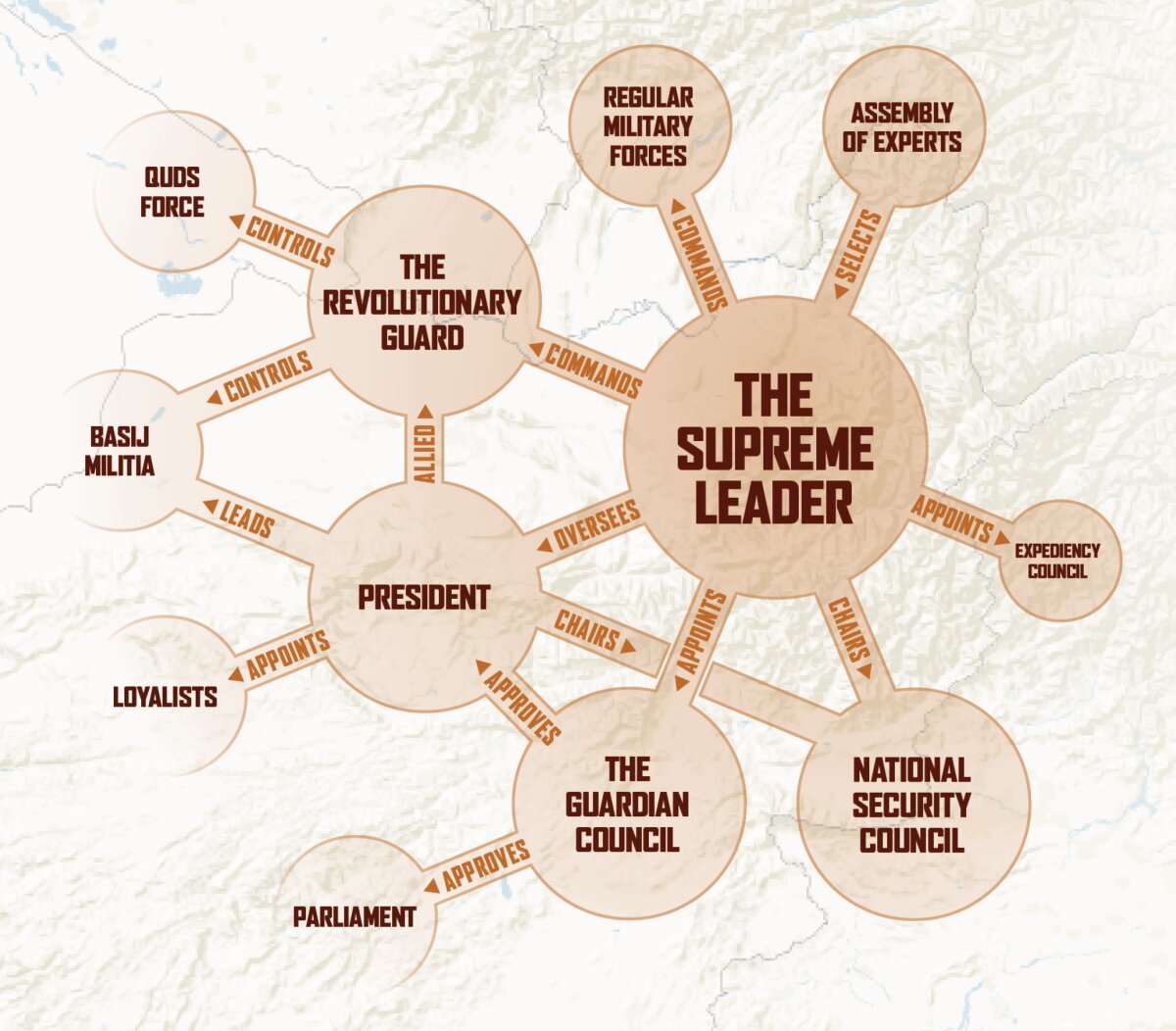
Power disperses across overlapping bodies: the Guardian Council vets laws and candidates for Islamic compliance; the Assembly of Experts selects the Supreme Leader; the presidency and parliament manage daily affairs but remain subordinate. This redundancy absorbs shocks: If one pillar falters, others sustain continuity. Analysts warn that incomplete attacks on the regime could paradoxically strengthen the
IRGC by weakening rival branches.
Strategic Deterrent
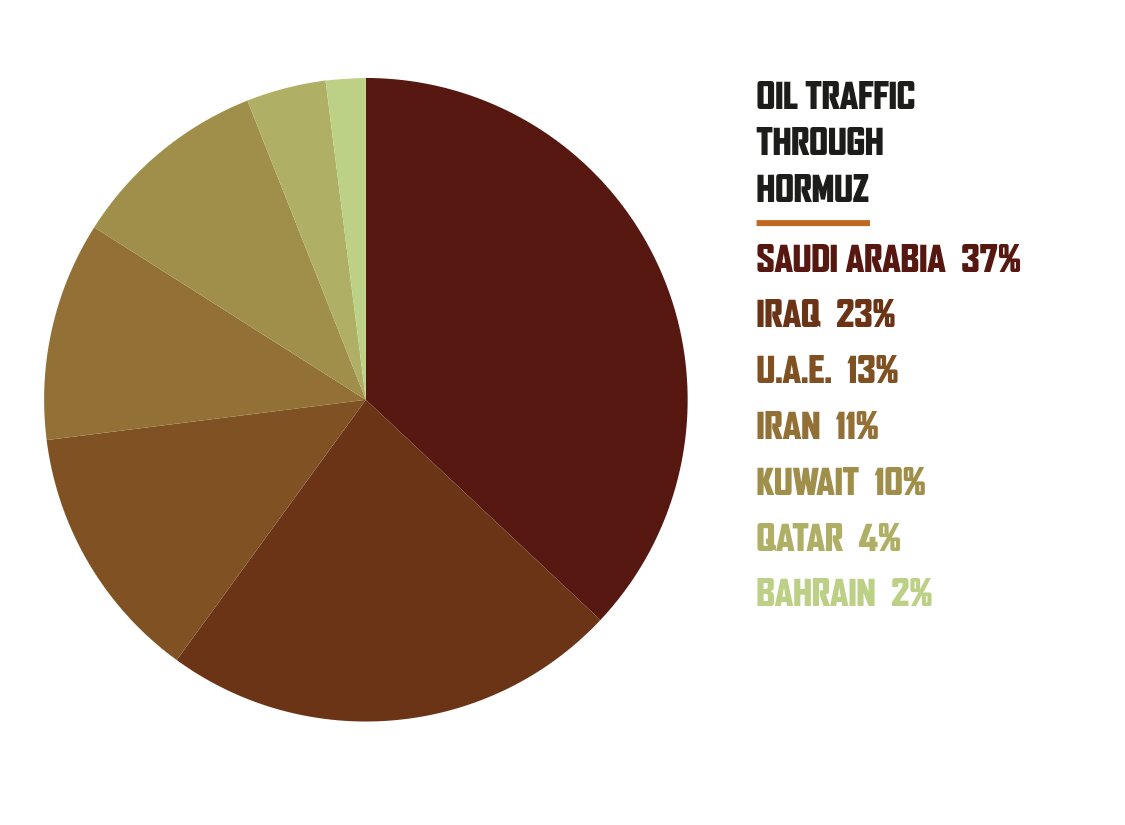
Iran’s strongest asymmetric tool is control over the Strait of Hormuz, through which some 20 million barrels of oil flow daily—20 percent of global petroleum consumption and 25 percent of seaborne oil trade. Prolonged disruption could spike prices, trigger inflation, and cause global economic havoc. While full closure faces naval resistance and
limited bypasses, partial interference
raises invasion costs dramatically.
See complete infographic.