
Video Games: The Hidden Dangers
It was just too much fun. John began playing games before he was a teenager. Soon Roblox and Minecraft were all he and his friends talked about. Then it was all he wanted to do.
His homework was late, then not done at all. He stopped doing chores. He skipped classes, then dropped out of school entirely.
At that point, the games really took over. Confident that Britain’s “generous” welfare state would take care of his every need, he didn’t pursue education or look for a job. Video games became his life.
For Paul, real life was too stressful. He was married, with kids, and it was tough to make ends meet. Fed up with arguing with his wife, he retreated to his computer, playing video games for hours a day. He has offloaded money problems and the kids onto his wife and escaped to a virtual reality.
Sue doesn’t play games, but most of the 7-to-8-year-olds she teaches do. Having learned to walk and talk during the covid era, they are used to living life through screens. Many of them can’t hold a simple conversation or sit still, but can concentrate on their games. The class’s favorite? Call of Duty, a first-person shooter game that is, in theory, available only to players age 17 and above.
These are common, real-life examples. In fact, there are probably millions of similar stories around the world.
The entertainment world has gone through a massive transformation in the last few decades. For young people, it no longer means tv and movies. They play games, browse social media, and watch videos on TikTok or YouTube; teachers complain their students no longer have the attention span to watch movies. Yesterday’s entertainment is today’s chore.
The revolution has transformed adulthood as well. Yesterday’s teen gamers are today’s parents. Smartphones have put video games in the pockets of billions.
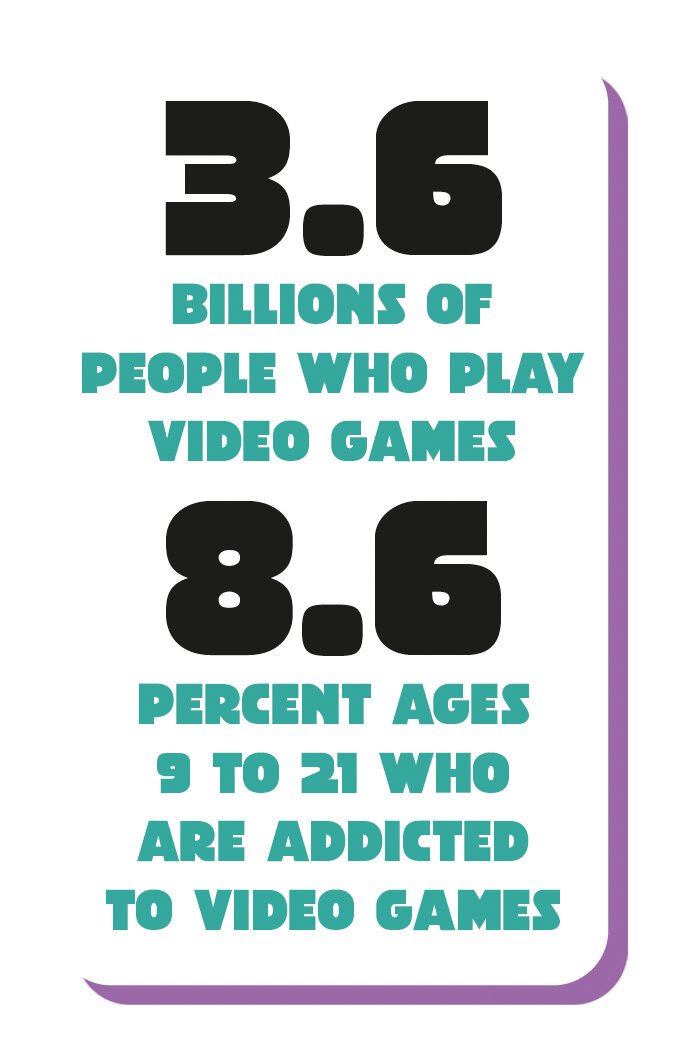
Close to half the global population—3.6 billion people—play video games, according to market research agency Newzoo. That includes a grandmother playing Candy Crush on her phone, a father gaming on his work computer, a teen on his handheld, a child playing on his console. The average video game player is 34 to 36 years old. Thirty percent are over age 50.
The revolution has brought once taboo subjects into the mainstream. Games about demons and the occult, or robbing banks and killing the cops, are now normal—hundreds of millions play them. Horror movies rarely break into the top of box office charts, yet games with horror themes are among the best performing.
Video games are transforming childhood, family life and interpersonal relationships. Yet too few are awake to the dangers this has brought. With 212 million Americans playing, and 96 percent viewing them as beneficial, it’s been called America’s favorite pastime.
Is it really beneficial? Could you or your family be exposed to the dangers inflicted by this pastime? You have to know the answer.
A World Addicted
Many video games promote poisonous themes: violence, horror, pornography and criminality. They also bring “stranger danger” into the homes of millions of kids—opening them up to sexual exploitation in the comfort of their bedrooms. These risks are real and must be dealt with.
There are popular games that avoid many if not all these risks. But even these fail to avoid the greatest video game danger of all: the theft of time.
A 2024 Pew survey concluded that on average, each 15-to-19-year-old American spends 80 minutes per day gaming. A separate study found that for boys, this figure is close to three hours per day.
Over the course of their teenage years, 80 minutes a day amounts to more than 3,400 hours—three hours a day adds up to more than 7,600 hours. Considering that most boys start gaming before age 13 and continue after age 19, the average young man has probably spent more than 10,000 hours gaming. You can easily see how, if he continues to play into his 30s and beyond, as many do, the average teen could end up spending 20,000 or 30,000 hours of his life on these games.
Malcolm Gladwell famously observed that 10,000 hours of focused practice is roughly the required time to achieve world-class mastery in a skill. Think what we could be producing instead.
There’s clearly something very addictive about even the most seemingly benign games. It has led to a new global pandemic.
Analysis of hundreds of studies conducted worldwide suggests around 2 to 3 percent of the global population has a “gaming disorder”: so addicted to games for at least 12 months that other activities, including sleeping, eating, personal hygiene, work and time spent with others, are pushed aside. Generally they are playing at least 8 to 10 hours a day. Another study estimates 8.6 percent of those ages 9 to 21 are addicted.
Similar numbers of boys and girls say they play video games—but boys spend more time playing and are 2 to 3 times likelier to become addicted. In 2022 the World Health Organization warned that around 1 in 6 school-age boys worldwide shows signs of “problematic gaming.”
If anything, these figures may be too low. They generally rely on people to give honest answers about their behavior. Studies repeatedly show that addicted gamers significantly underestimate the time they’re playing and how much it’s affecting their life.
These studies all put a high bar on what they consider a “disorder” or “addiction.” Millions more play hours a day but aren’t included in their count. In America, 41 percent of teen gamers say they experience sleep problems due to their gaming but they are not counted. This is becoming a major problem for most teenage boys and a great many young men.
A Whole New Ball Game
As gaming is growing more popular, the world of video games is changing. A couple of decades ago, video games were largely one-off purchases: Spend $50, and you had your game. Today there are more options. You can play free games, funded by ads. Many will try to entice you with a small sample each day, but payment is required to unlock more content. Others work on a subscription model. Microtransactions, where just a dollar or two will unlock in-game bonuses, are common. Even the traditional buy-a-game approach now uses expansions and game passes to generate more cash.
A game is less a fixed product and more an ever changing experience. It makes life harder for parents. Vetting a game once is no longer enough, because later updates could make it a whole new game.
But the biggest result of the shift has been to increase the addictive effect of the games. With revenue coming from ads, subscriptions or microtransactions, more time playing brings in more cash. Developers are more incentivized than ever to keep you hooked.
“The video gaming industry has transitioned from a group of backyard innovators to an industry of multibillion-dollar companies, hiring psychologists, neuroscientists and marketing experts to turn customers into addicts,” wrote The Conversation in 2017. “The latest trend is the creation of ‘whales,’ people so addicted to games that they spend their entire life savings to keep playing.”
In fact, law professor Allison Caffarone argued in the Duke Law and Technology Review that video game companies have worked so hard to make their games addictive that they could be guilty of civil battery. She argues that game companies are no better than cigarette manufacturers that work to keep their customers addicted while hiding the research from them.
“It is an ‘open secret’ in the gaming industry that video game developers are hiring scientists and behavioral psychologists to engineer games that trigger physiological changes in the brain (a concept known as neuroplasticity) with the purpose of addicting the games’ users,” she wrote. These techniques usually aim to overstimulate dopamine production in the brain to levels that rival powerful stimulant drugs and can “nearly shut down the prefrontal regions.”
Every few years, new mechanisms, often based on the gambling world, are brought in to raise the likelihood of addiction. The right technique can generate billions.

Roblox:
Stranger Danger
Now that most devices are connected to the Internet, gaming is becoming a less solitary affair. Voice or text chat is built into most games. A growing number of teens no longer meet up with friends after school; they get together virtually. Players ages 7 to 70 from around the world chat within multiplayer games.
The shift to social gaming may look positive. But for many, it adds to their addiction. Kids fear becoming virtual pariahs if they don’t join in.
The anonymity or lack of face-to-face contact in chatting through a headset tends to bring out the worst in people. Researchers from Offenburg University in Germany studied the chats in 120 games of the online shooter game Valorant: 80 percent contained profanity; 26 percent, general verbal abuse; and 14 percent, sexual comments or sexual insults. The harassment of women in these gaming platforms has become a major problem.
But the greatest danger is to children. “In many ways, the gaming environment provides an ideal setting for grooming,” warns the United Nations Children’s Fund. “Offenders often use multiple platforms simultaneously to contact young people, starting chats on public platforms and moving to more private or encrypted platforms later.”
In September 2023, the fbi published a bulletin that warned of the 764 network, a group that is “deliberately targeting minor victims on publicly available messaging platforms to extort them into recording or live streaming acts of self-harm and producing child sexual abuse material. These groups use threats, blackmail and manipulation to control the victims into recording or live streaming self-harm, sexually explicit acts, and/or suicide; the footage is then circulated among members to extort victims further and exert control over them.” The fbi says the group has caught thousands of children in its net. The United States is conducting 250 investigations into the 764 network; people connected to it have been arrested across eight countries.
This is just one twisted organization. How many loners are out there looking to prey on kids?
One of the biggest chat dangers comes from one of the most innocent-looking games: Roblox.
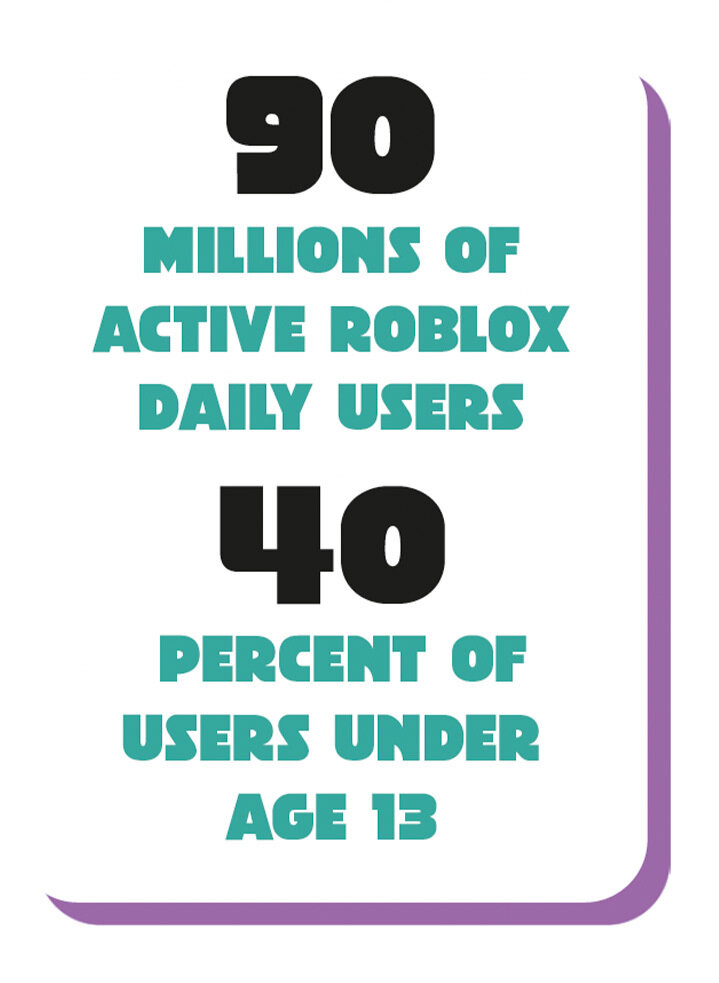
This game is especially popular, with nearly 90 million active daily users. The developers claim that half of all American kids under age 16 play Roblox every month; 40 percent of its users are under age 13. It is marketed as being safe for kids, and millions of parents trust it.
Roblox is a platform that allows users to design their own games and sell them to other users. It also allows children as young as 5 to wander around virtually and chat to anyone they encounter.
Would you allow your 5-year-old to roam around town and talk with any stranger who approached without you being there or able to hear the conversation? Nearly every parent would know better than to allow that. Yet millions permit exactly that in this virtual world.
A report last year from Revealing Reality found that strangers accessing Roblox could talk publicly with 5-year-olds and chat privately with those 13 and older. The authors set up an account as a 10-year-old, and their game character could visit rooms designed to mimic hotel rooms, with characters dressed in sexually suggestive outfits, gyrating on a bed. They said age-verification measures were “easily circumventable.”
The Guardian reached out to its readers about Roblox. The stories it received “include that of a 10-year-old boy who was groomed by an adult he met on the platform, and a 9-year-old girl who started having panic attacks after seeing sexual content while gaming.” Last year, U.S. authorities arrested six people on charges of using Roblox to sexually exploit children.

Grand Theft Auto:
Pinnacle of Human Achievement?
While many start with innocent titles, gamers can quickly be drawn into darker games—and there are ample options.
Minecraft, the most profitable game of all time, is rated as appropriate for players as young as 10 in the U.S. for its cartoonish violence and blockish monsters. Number three on the list is Wii Sports, rated as suitable for all ages, and there is almost nothing objectionable about its actual content.
Second on the list is Grand Theft Auto V. Rated for ages 18 and older in the U.S., it offers players an immersive world—and prompts them to rob banks, fight the police, murder rivals, hire prostitutes to regain health points, and kill them to get their money back. When the game was released in 2013, it became the fastest-selling entertainment product in human history, earning $800 million in its first day. It has earned an estimated $10 billion total, including hundreds of millions annually for its online version (and not including the hundreds of millions made by previous versions of the same game).
Many more games revolve around shooting opponents, themed in the Wild West, World War ii, modern era or in space. Fantasy, magic, monsters and demons are common themes. Elden Ring was the second-bestselling game of the year in 2022 and has won many awards. In this game, players fight undead monsters, cast spells and summon spirits to help them. In 2023, Hogwart’s Legacy, set in the wizards-and-magic universe of Harry Potter, was the bestselling game in the U.S.
The games are designed to draw people gradually toward the darkness. Minecraft looks like an online version of Lego—yet popular editions of the game allow players to build a portal to “the Nether,” a burning, hell-like dimension populated by ghosts, skeletons and fire spirits. But it’s all still in a childish blocky style—perfect to guide young people gradually toward games like Elden Ring.
These are all popular mainstream games. Dive into the world of niche games, and you can find just about anything: a “tormented soul within the depths of hell”; a grieving father sadistically killing girls to re-animate his daughter’s corpse; a worker in a morgue trying to trap demons in the correct body before incinerating them. A surprising number of games have you play as a deranged mass shooter trying to kill as many people as possible. Another common theme is players discovering that the world they know is not real. There are lots of pornographic or sexual games out there as well.
Darker games are not the only temptation that chronic players of more innocent titles could be drawn to. Computer gaming means lots of time spent on the computer—and they can be a portal to a host of dangers. A 2021 study found individuals with problematic gaming habits were more likely to also have problems with online gambling, shopping and pornography. A 2015 study also found that those with video game addiction are much likelier to compulsively view pornography—though some become so obsessed with games that they lose interest in everything else, including pornography.

Counter-Strike:
Gateway to Gambling
The gaming-to-gambling pipeline is well paved and a powerful example of how video games can draw people more deeply into other online addictions.
One way developers have learned from the gambling world is through mechanisms known as “loot boxes.” In Roblox and many other games, players are awarded with virtual containers that open to reveal some kind of in-game reward. Opening them is generally accompanied by animation that mimics a slot machine. Often the virtual boxes are available for purchase with real cash.
The Counter-Strike series of multiplayer shooters was one of the pioneers of this technique, enabling players to buy loot boxes containing unique “skins” or decorations for guns. Valve, Counter-Strike’s owner, promised players “all the illicit thrills of black-market weapons trafficking without any of the standing around in darkened warehouses getting knifed to death.” They also set up a store for people to trade these skins, with Valve taking a cut of the transaction. By one estimate, Valve sold 1.9 billion of these loot boxes.
So this virtual slot machine gives a reward that could be worth pennies or thousands. Isn’t this gambling?
Not according to U.S. regulators, because Valve doesn’t provide a way to trade these skins for real-life cash. A gamer has to go to third-party websites for that. Outsourcing that simple step allows Counter-Strike to sidestep gambling restrictions in most countries.
Now, actual online casinos have sprung up where these skins can essentially be used as poker chips.
Turns out, piggy-backing off video games is a great way to get kids addicted to gambling. And that is a wildly profitable thing to do. Kids may not have much money, but they also don’t have as much life experience or self-control—and often they can access Mom’s credit card. It’s easier to turn kids into problem gamblers than it is adults—and casinos make most of their money from addicts.
Seventy percent of those involved in Counter-Strike gambling got started underage. You generally don’t need an ID to get started. These casinos often do not check, or check only when someone tries to withdraw his money.
How profitable could such a niche gambling scene really be? One rough estimate concluded that the combined revenue from all Counter-Strike casinos was twice the revenue of the biggest mainstream online casino. And that’s the casino ecosystem for just one game. Other casinos cater to other gamers. “Kid-friendly” Roblox, though not as lucrative as Counter-Strike, has the same loot box mechanism and the same third-party casinos.
That money feeds a network of “streamers” and “influencers.” These are people who not only play video games for hours but stream or record videos of themselves playing video games for hours—and millions of people watch (sidebar, page 23). Most do it for fun. Some do it and make a little extra spending money. But some are approached by online casinos and offered life-changing amounts of money—as in hundreds of thousands of dollars a month. Why? So kids who tune in to get some tips on how to beat their friends in Counter-Strike are persuaded to sign up for casinos.
Surely encouraging gambling addiction in kids is so obviously evil that it would be a line most would refuse to cross. But some influencers have admitted to being paid around $5 million a year to advertise casinos. These are ordinary people, often struggling to afford rent, suddenly tempted with enough cash to buy houses outright. Most of them overcome their moral qualms.
How bad is video gaming actually? This is just one example from one game you’ve likely never heard of, and it has hooked huge numbers of people, young and old, watching people’s videos about a video game, then spending much more time playing and getting addicted to the gameplay, continuously spending real money on loot boxes within the game, and learning to gamble through online casinos based on the game.
Fake Accomplishment
For most people, the more mainstream games are the most dangerous. Parents are put at ease by the family-friendly content. In-game chat is more limited than in some other games, so they consider them safe. But the game starts users down a road that often leads them to addiction and, in many cases, to more extreme games.
After decades in development, video game addiction has become multigenerational. Fathers want to share with their kids the games they grew up playing. Limiting the kids’ gaming would limit their own prized hobby, which they don’t want to do.
Consider the fruits of a society addicted to video games. These games can seem more fun than anything else. Yet a generation saturated in this “fun” is more depressed than ever. In 2023, 40 percent of U.S. high schoolers said they were persistently sad or hopeless. Nearly a third said they had felt “so sad or hopeless almost every day for two or more weeks in a row” that they stopped their regular activities. A quarter of British 16-to-24-year-olds have a mental health disorder.
With online chats and team video games, today’s young people are the most connected generation in history. They’re also the loneliest. A 2018 survey of 55,000 young people ages 16 to 24 found that 40 percent said they were lonely often or very often.
A study published earlier this year tracked 5,000 U.S. adolescents for four years. It found that those who showed signs of video game addiction were at greater risk of suicidal behavior and thoughts and symptoms of depression.
Not all the problems among young people are the result of video games. Social media has also played a major role. Both boys and girls have been caught up with both of these modern addictions, but in general, social media is harming more women than men, while video games are harming more men.
Video games are a mirage, promising virtual fun and virtual friendship. They provide constant thrills, immersive entertainment and the illusion of accomplishment: You’ve just stormed a beach at Normandy, become a mafia kingpin in Los Angeles, saved the world or gotten the girl, all from the comfort of your bedroom at 2 a.m. And you can do it again, and again and again. Real accomplishment is much more rewarding, but far harder. Finishing a book, playing Chopin’s Prelude in A Major, or learning how to sketch a hand without it looking weird takes a lot more time. Why bother?
Yet the virtual accomplishment never fills that desire in the long run.
The result is thousands of hours of wasted potential, and a generation of depressed, lonely teens.
The Architect of Addiction
Video games have proved to be a perfect trap for millions. A wide range of seemingly child-friendly games draws them in when they’re young. And they then spend tens of thousands of hours on worthless pursuits that provide no long-term satisfaction.
The idea of “gaming in moderation” becomes a trap for many. I can use this to relax a little—just like I would any entertainment. For parents, video games are the easy way to keep kids quiet. Surely a little gaming can do no harm?
But other recreational activities have more benefits and come with fewer downsides. Sports, for example, benefit health, mind and character. Some will insist you can learn skills, even about academic subjects, from games. For some that may be true. But there is much more harm and much less benefit in that mix than with other activities.
But the big danger is that for many, video games are so addictive that they can’t keep it “in moderation.” In so many cases, they take over and become the only thing a person finds enjoyable.
A little bit of gaming can seem innocent, but the evils are abundant: the thousands of hours wasted; the millions of people pulled away from positive, productive activities; the millions robbed of ambition, the desire to succeed and real accomplishment in life; the relationships destroyed and those never begun; the millions drawn into violent and demonic games, pornography or online gambling. The kids neglected. The lives wasted.
There is a critical, hidden reason for all these negative fruits from video games.
Regardless of game designers’ intentions, there is another entity that knows the human mind better than anyone else, and he is thrilled to addict millions of children, men and women to video games.
The Bible describes a very real spirit world. Satan the devil is identified as this world’s god (2 Corinthians 4:4). Ephesians 2:2 calls him “the prince of the power of the air,” influencing minds through moods, attitudes and emotions.
Many have recognized his evil influence behind games focused on death, crime, zombies and evil spirits. Yet can you recognize it within games that seem benign?
We live in a world where few people “have time” to go to church, pray or study the Bible. There is so much else to do. Video games not only consume time, they consume attention. They draw addicts into a fake world that becomes all they can think about. It robs them of the potential to succeed in the real world and to succeed spiritually.
“Man’s potential is so stupendous,” wrote Trumpet editor in chief Gerald Flurry. “Satan is very jealous of our future and will do anything to prevent us from fulfilling our potential” (Trumpet, November 1992).
Video games may be one of Satan’s most powerful attacks on young men right now.
Dousing the Spark
God created man physical but with an incredible spiritual potential. This physical life is designed to allow man to build character to prepare for his spiritual future. One aspect of physical character that God can use for spiritual success is something Herbert W. Armstrong called a spark of ambition, “the vital ingredient that has been missing in most human lives.”
Someone may have ambition only for worldly success. Yet Mr. Armstrong wrote, “Such ambitious fellows, of course, may not have right goals—they may not know the real purpose of life, or the true way of life, and they may be energetically pressing on only toward more vanity and ‘a striving after wind,’ as Solomon puts it. But at least they are mentally alive and not dead! And once circumstances do shake them and bring them to themselves, and humble them and open their minds to the true values, they are already in the habit of exerting enough energy so that, turned at last in the right direction, something is really accomplished” (Autobiography of Herbert W. Armstrong).
Video games prevent people from developing ambition, exerting energy and experiencing the thrill of real achievement. Achievement in business, sports, academics or anything in the world is empty without God. But God plans to offer salvation to all those currently ignorant of or uninterested in the Bible. He can use those experiences and attributes to develop holy, righteous character in them once He calls them. There is little or nothing He can use from a life consumed with video games. These aim to prevent men from coming close to their full potential, physically or spiritually.
Video games can be immensely appealing. They promise entertainment more intense than anything man has ever developed. Yet they rob people of what is most valuable and fulfilling: their time, their relationships, their accomplishments, and their spiritual potential. Can you see the danger?
As the world embraces these games, be different. Take a stand for yourself and the young men in your life. Resist the pull of video game addiction.