
A Look at the Heavens in Astonishing Detail
On April 24, 1990, the Hubble Space Telescope was launched, forever changing much more than the world of astronomy. The heavens were revealed as never before. Its “deep field” images showed the universe contains more galaxies than mankind could have believed possible.
On Dec. 25, 2021, its successor, the James Webb Space Telescope, was launched, revealing yet more stars. In May it published its deepest look into the universe ever with a photograph of the galaxy cluster Abell S1063. A side-by-side contrast of images from the two telescopes makes clear how much more jwst gives us.
In June, a brand-new telescope published its first images. Expect to be inundated with images of the cosmos like never before. The Vera C. Rubin Observatory was dubbed by science communicator Dr. Becky Smethurst as “the most ambitious astronomy project ever.”
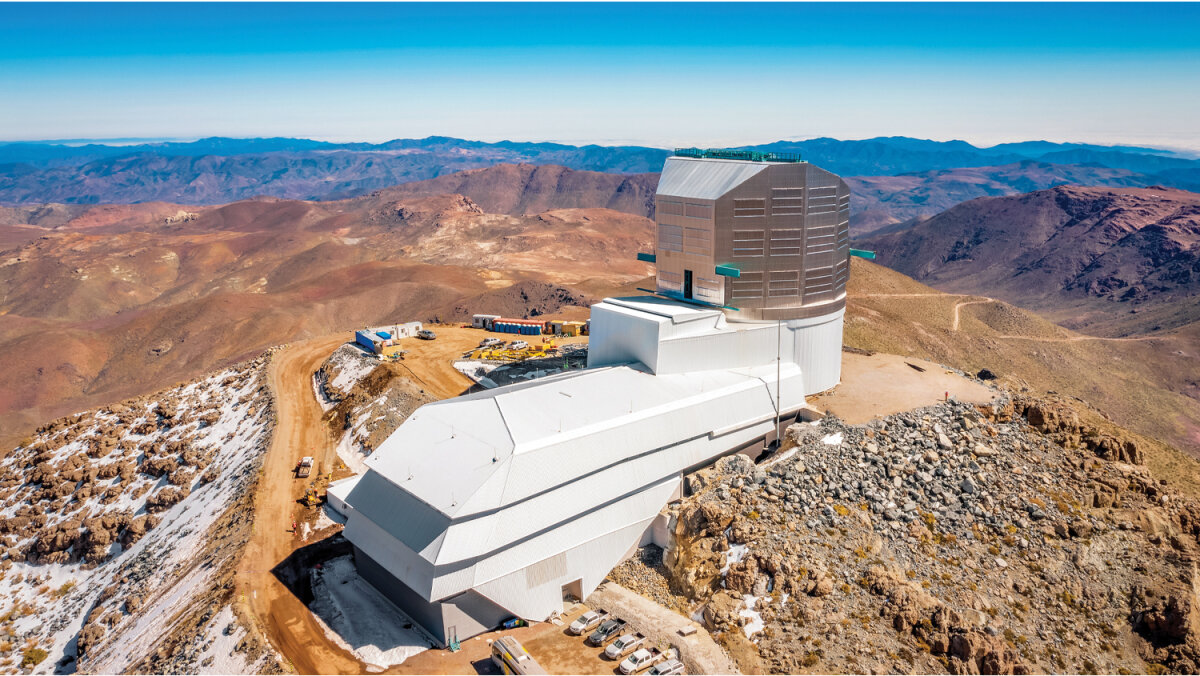
History’s Most Powerful Camera
You can look at its first images at rubinobservatory.org. If you do, be sure to zoom in and give the image a few seconds to resolve into even greater detail.
There is a reason for the incredible amount of detail. These images are taken by the most powerful digital camera ever made. The camera used by the Vera C. Rubin Observatory has 3.2 gigapixels and takes photos in enough detail to spot a golf ball on the moon. It would take 400 4k screens to display its photos in full resolution.
The telescope can take in a fairly wide area of the sky—equivalent to 45 full moons. It can also move quickly, shifting and ready to photograph a new patch of sky in just 39 seconds.
The camera alone weighs about 3 tons. The whole setup is 386 tons. There is no way we could build a telescope that heavy in space. Instead, scientists spent 11 years and $500 million building it atop a 9,000-foot-high mountain in northern Chile. The air there is thin and dry, with stable atmospheric conditions, reducing distortions from the atmosphere.
The result will be a lot of photographs. The Hubble Telescope produces 70 gigabytes of data every month—enough to fill 70 complete sets of encyclopedias. Rubin makes that look pathetic. It will produce 20 terabytes (that’s 20,000 gigabytes) of data in just one night. In its first year, it will produce more data than all other optical observatories ever, combined.
This level of detail means the photos already published are full of stars and galaxies never seen before.

Secrets of the Universe
A key reason for all this detail is to help us spot things that are moving and changing. The telescope will spend a decade on the Legacy Survey of Space and Time. It will continuously photograph the night sky, recording the whole thing every three nights. Comparing the images will help us spot what is moving and how.
Small dots moving quickly, for example, will be asteroids in our own solar system. Rubin’s test images revealed 2,104 previously undiscovered asteroids in the solar system.
Once it is finished, we expect to know of 10 to 100 times more objects in our own solar system than have currently been discovered.
It will also map out the motion of more distant stars, helping to give us a better idea of where matter is. Evidence is strong that there is a lot of matter out there that we cannot see: dark matter. But by observing the motion of stars and galaxies, we can learn how gravity is pulling them around and get a handle on where that dark matter is.
The telescope will also spot any stars that change in brightness. It will help us track supernovas and black holes flaring up, and see neutron stars merging.
We have never had this kind of constant look at the sky before. Rubin could capture events we have never seen—and never even known to look for.
It will be able to alert scientists within 60 seconds whenever it spots a change. In fact, it is expected to fire off 10 million alerts per night with artificial intelligence being used to sort through them and work out what is most important.
All this is tremendously exciting, because the Bible shows that in revealing the universe in even greater detail, Rubin is revealing your future in greater detail.
Purpose of the Universe
The beauty, structure and order in the universe point you back to its Creator. None but a great, all-powerful God could have made all that.
And it has a direct connection to you. Hebrews 2:8 states that God has put “all things in subjection” under man. In the first chapter, the Moffatt translates “all things” as “the universe.” Hebrews 2:8 goes on to say that God “left nothing that is not put under him.” This is just one of many passages that connect man’s future with the universe. Of course, as the verse goes on to say, the Creator has “not yet” put the endless universe under us—but He will.
“In other words, for those willing to believe what God says, He says that He has decreed the entire universe—with all its galaxies, its countless suns and planets—everything—will be put under man’s subjection,” Herbert W. Armstrong wrote in The Incredible Human Potential.
God commands His servants, “Cry aloud, spare not, lift up thy voice like a trumpet, and shew my people their transgression …” (Isaiah 58:1). This world is full of sin and the dark suffering that results. We need to warn people about the terrible consequences of their actions.
But Isaiah also wrote: “Lift up your eyes and look to the heavens: Who created all these? He who brings out the starry host one by one and calls forth each of them by name. Because of his great power and mighty strength, not one of them is missing” (Isaiah 40:26; New International Version).
God wants us to see Him and understand that He is allowing world events to happen within the context of a stunning plan for mankind—one where man has the opportunity to be born into God’s Family, to be “sons of God,” to “be like Him” (1 John 3:2) and rule the universe. Isaiah 45:18 says the God who created the earth and the heavens “created it not in vain” and “formed it to be inhabited.”
“It surely isn’t mere coincidence that right now, amid these dire global threats, our view of and appreciation for the cosmos is undergoing such a spectacular revolution,” Trumpet editor in chief Gerald Flurry said in a 2011 Key of David program. “Human beings, made in the image and likeness of God, are probing deeply into the universe as never before—observing the Creator’s handiwork. You can be sure God is paying close attention. He is very interested in this program and what people are saying about it.”
In fact, as Mr. Flurry said, “God clearly wanted us to make these cosmic discoveries.”
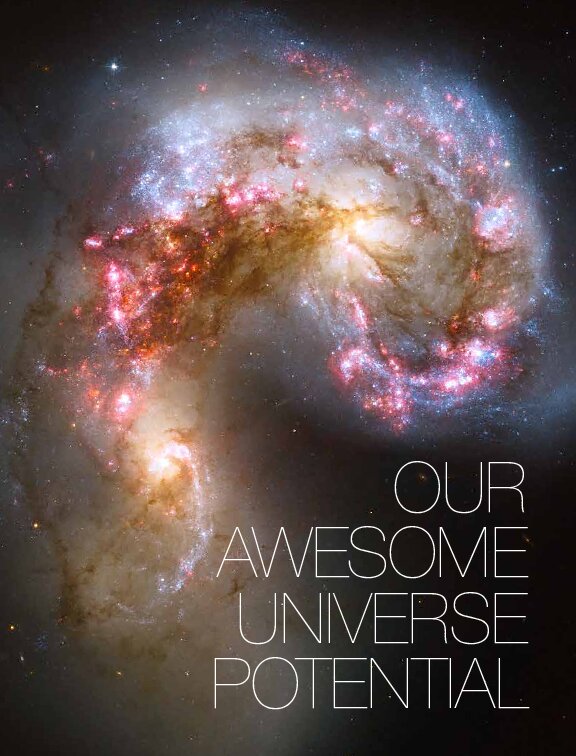
“I think God had a hand in the Hubble Telescope,” he said just over a year later. “We need to see our potential in all of this. Why is man on this Earth? Why are we here? What God has for us to see—see with our eyes—ought to just set our imaginations on fire. It is that soul-stirring, it is that wonderful.”
Amid all the terabytes of data, there will certainly be more “soul-stirring” images from Rubin.
In the meantime, our free booklet Our Awesome Universe Potential shows you some of the best images we have already and connects them to your Bible. This booklet helps you prove from your Bible your connection to the future. You can read it online, but to take full advantage of all the photos, it is worth getting the print version. As with all our material, it is completely free, with no shipping costs or follow-up.